What Is an Underground Water Line Leak?
Most properties receive water through a buried water service line, the pipe that runs from the supply connection and water meter to the building's plumbing system. The main water line and its connections sit underground for their whole run, so when a section of pipe, a joint or a connection begins to fail, the escaping water goes into the soil rather than onto a floor where you would see it.
Not every wet yard is a service-line leak, and not every buried pipe is the same system. Irrigation lines are also buried, but they are only pressurized when the sprinkler system runs. Drain and sewer lines carry water away rather than supplying it under pressure, and they produce different symptoms. Sorting out which buried system is losing water is the first job of an underground leak inspection. Layouts and responsibility for sections of a service line vary by property, so no one should assume your configuration matches your neighbor's. For the full range of services, see the DeSoto leak detection overview.
Signs of a Possible Underground Water Leak
Each sign below has more than one possible cause. What raises concern is a pattern, especially signs that persist, worsen, or appear together:
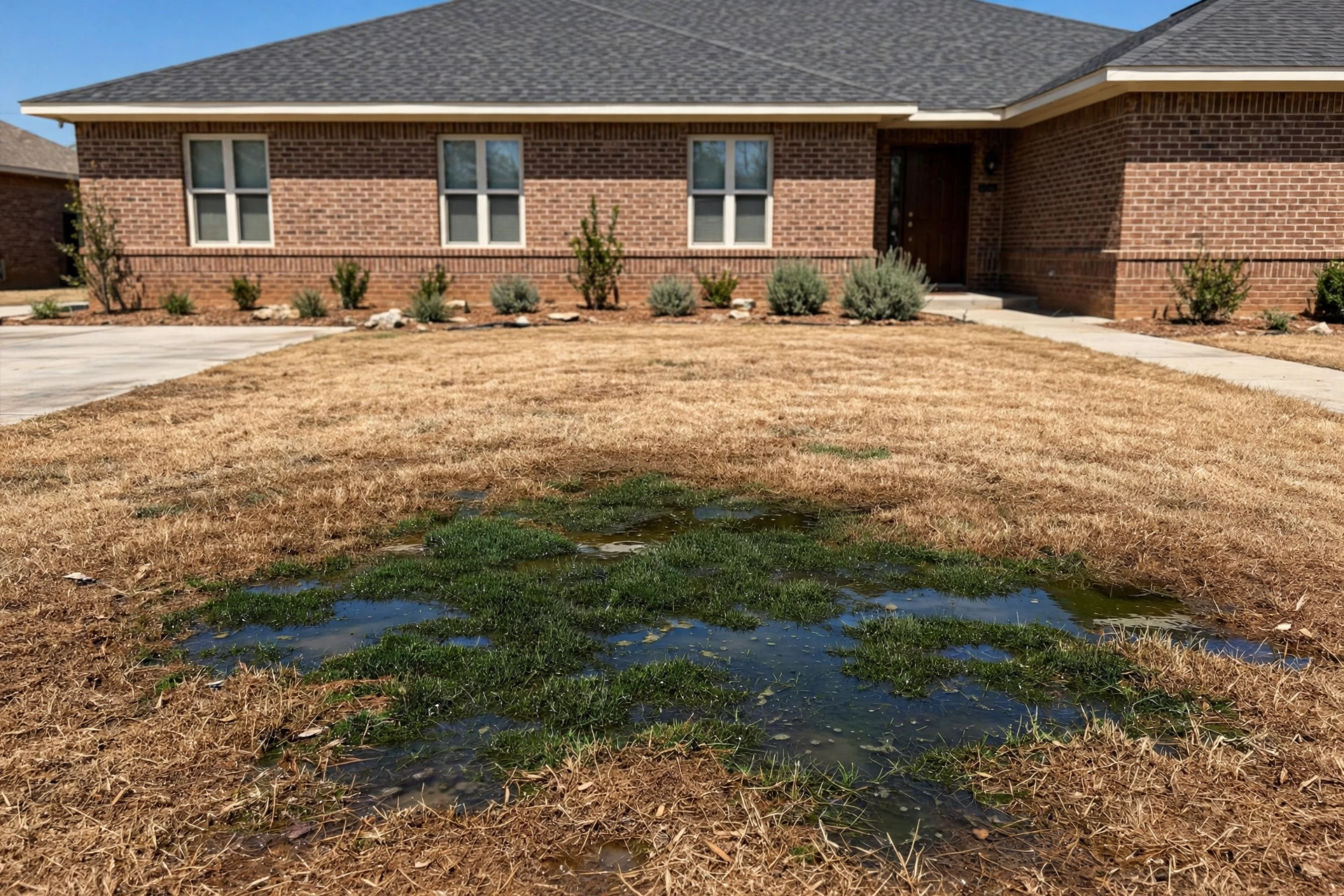
- A persistently wet area in the yard with no explanation. Soil that stays soggy, soft or muddy through dry weather, away from normal drainage and downspouts.
- Water pooling in a localized area. Standing water on the ground or surfacing near a driveway or pavement edge when it has not rained and sprinklers have not run.
- Unexpected increases in water consumption. A bill or usage reading that climbs without a change in habits, the service line is pressurized around the clock, so a leak there loses water continuously.
- Water-meter movement when all fixtures are off. A meter that still registers flow after allowing for appliances, ice makers, water softeners and irrigation controllers suggests water is escaping somewhere. The guide on how to check a water meter for leaks explains how to observe this safely.
- Unexplained changes in water pressure. A noticeable pressure drop can accompany a significant supply-line leak, though pressure problems have several other causes too.
- An unusually green or lush strip of vegetation. One narrow area of lawn growing faster than everything around it can be receiving extra water from below.
- Recurrent moisture with no clear source. Damp soil or wet patches that return after drying out, in the same place, deserve investigation.
The absence of a wet patch does not rule a leak out: depending on soil, depth and paving, water can disperse underground or surface some distance from the actual break. That is why meter and usage evidence matters alongside what you can see. The detailed guides on signs of an underground water line leak and a wet yard with no rain go deeper on each clue.
What to Check Before Calling
Safe, simple observations make the inspection faster and more accurate. Before you call, note:
- Where the moisture or pooling appears, and whether it lines up with the route between the meter and the building.
- When the symptoms began, and whether they are constant or come and go.
- Any change in water bills or usage you can point to.
- Whether the water meter moves when all fixtures are off, only where checking is safe and permitted, and remembering that automatic appliances and irrigation systems can affect the reading.
- Whether the problem recurs in the same spot after dry weather.
- Any recent irrigation use, plumbing work or digging on the property.
- The full property address and ZIP code, so service coverage can be confirmed.
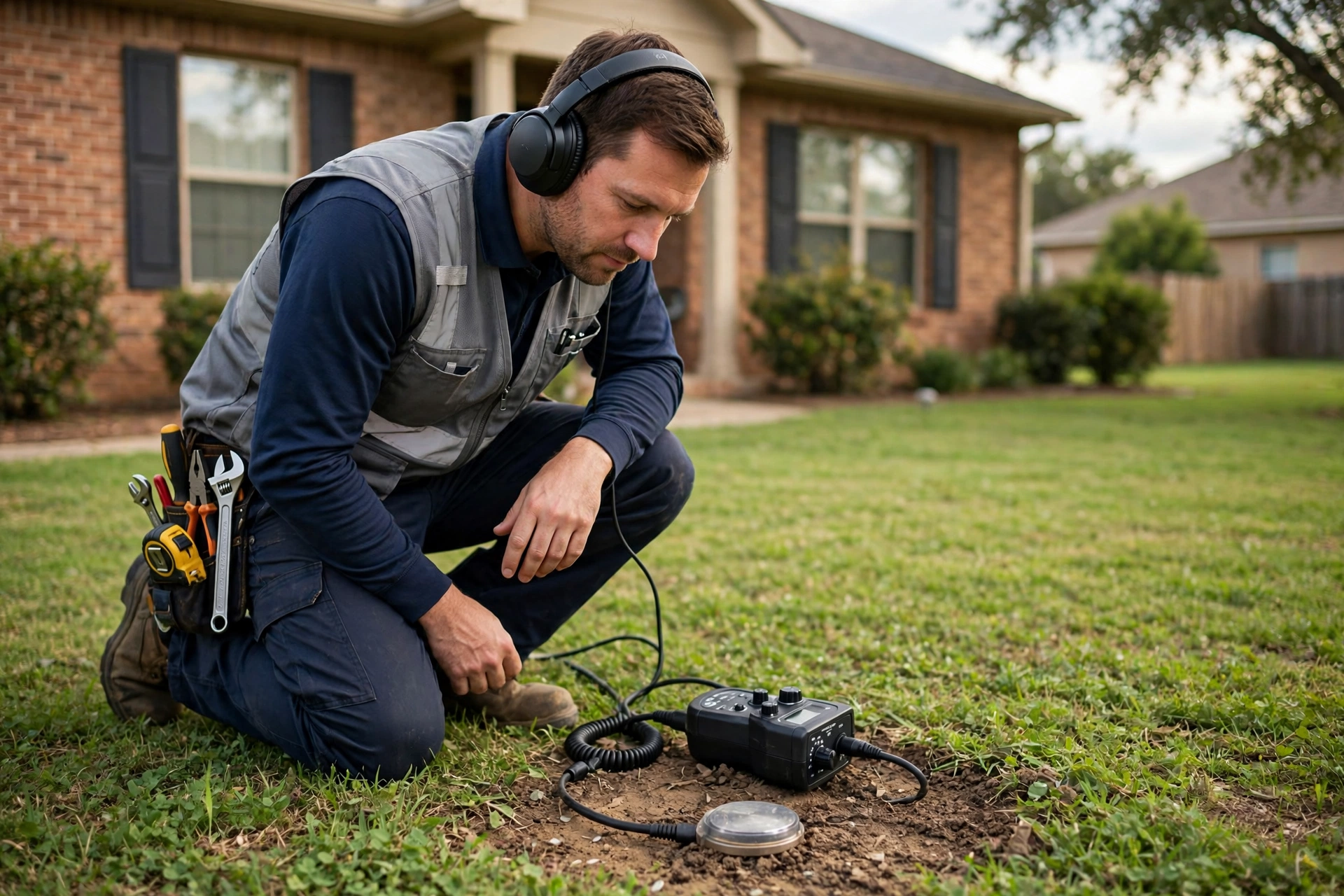
- Where the meter box sits and whether the ground around the curb stop stays damp, since those points mark the start of the service line on many properties and are checked with an acoustic ground microphone along the line route.
Do not dig into buried utilities, cut into pipes, or open restricted utility equipment to investigate on your own. If digging ever becomes part of a repair plan, utility lines must be located first, see the note on 811 in the "after a leak is located" section below.
Main Water Line Leak or Irrigation Leak?
These two are easy to confuse because both are buried and both can produce a wet yard. A few distinctions help a provider, and you, think clearly:
- Pressurization. The water service line is pressurized all the time. Irrigation lines are generally pressurized only when a zone runs. A meter that moves with fixtures off and the irrigation system off points more toward the supply side.
- Location of the wettest ground. Irrigation leaks often show near sprinkler heads, valve boxes or along a single zone's piping; a service-line leak often appears along the meter-to-building route, but water travels through soil, so location alone is not proof.
- Timing. Wetness that worsens right after irrigation cycles suggests the sprinkler system; wetness that never dries suggests a continuously pressurized line.
- Other systems. Drain or sewer problems are not pressurized and usually present differently; the comparison in sewer line leak vs. water line leak explains how they differ.
A water meter can show that water is being lost, but it cannot by itself establish which buried line is leaking or where. That distinction is what the professional investigation is for, typically by isolating systems and testing them separately.
How Underground Water Leak Detection Works
There is no single universal procedure. The actual sequence depends on the provider, the pipe's depth and material, site conditions and the evidence available. A typical investigation follows this shape:
Collect symptom and site information
Where moisture appears, when it started, recent usage changes, irrigation patterns, and what is known about the line's route.
Review water usage and meter observations
Meter behavior and billing patterns help establish whether water is being lost continuously, and roughly how much.
Select diagnostic methods for the site
Listening equipment, pressure or isolation testing and line locating are chosen based on depth, pipe material, access and noise conditions.
Assess the evidence and explain findings
The provider explains where the evidence points, what was ruled out, and whether further testing, access or a repair assessment is the right next step.
Detection Methods for Buried Water Lines
Each method contributes a different kind of evidence, and each has limits set by depth, pipe material, soil, paving and background noise:
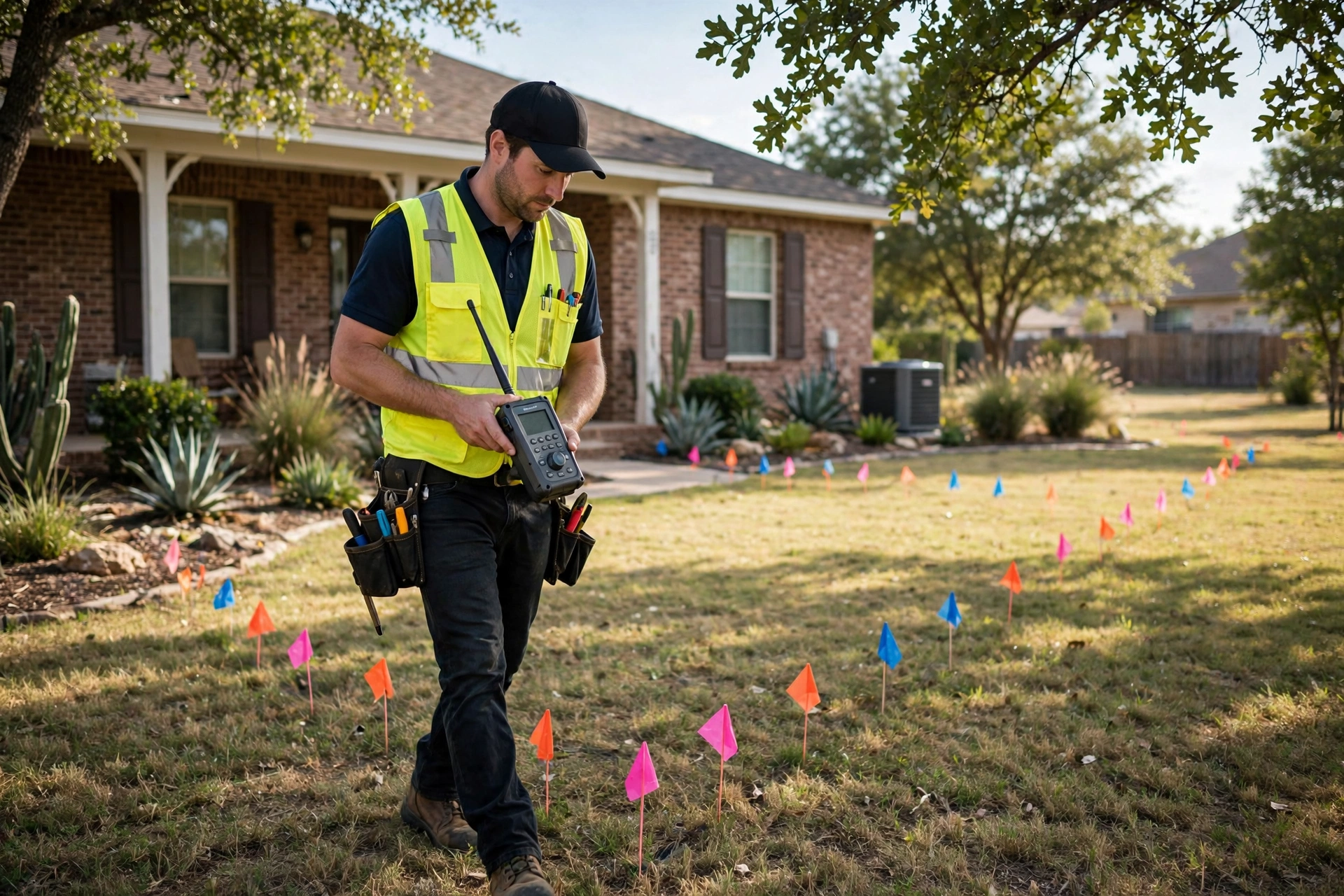
Non-invasive testing narrows the search considerably, but it cannot be promised to pinpoint every leak in every soil and paving condition, some cases need further investigation before any digging is justified. Deeper reading: acoustic ground microphone testing, thermal imaging & moisture scans and tracer gas line testing.
Property-Specific Concerns
- Houses with buried supply lines. The meter-to-house run is the classic service-line scenario: continuous pressure, continuous loss, and symptoms that show up in the yard or the bill before anywhere else.
- Homes with unexplained outdoor water loss. When usage climbs but nothing indoors explains it, the buried systems, service line first, then irrigation, are the logical place to investigate.
- Properties with paved driveways or hard access. Water from a leak beneath or beside paving often surfaces at an edge or low point, which may be some distance from the break. Locating the line and the leak before any excavation matters most on these properties.
- Properties with irrigation systems. Sprinkler lines can imitate a main-line leak closely. Expect the investigation to separate the two systems, for example, by checking meter behavior with the irrigation isolated.
What Affects Underground Leak Detection Cost?
This website does not set inspection prices, and a figure quoted without knowing your property would be misleading. A provider's price generally reflects:
- The suspected leak location and the length of line involved.
- The pipe's depth and how accessible the route is.
- The plumbing configuration and pipe materials.
- Which testing methods the site conditions require.
- How complex or ambiguous the symptoms are.
- Whether further investigation is needed after the first round of evidence.
Detection fees, excavation and repair are three different things: the inspection price covers the diagnostic work and findings, while any digging or pipe repair is quoted separately, after the evidence is in. The guide to leak detection cost factors explains the full picture.
What Happens After a Leak Is Located?
Locating a suspected leak is the middle of the process, not the end. The findings are used to decide the next step: confirmation testing if the evidence is not yet conclusive, a repair plan if it is, or a further assessment when the problem turns out to involve a different system than first suspected. Locating the problem does not by itself determine the repair method or the total repair cost, and it is not guaranteed that the same provider performs every downstream task, confirm that directly.
One distinction matters here: leak detection is not utility locating. Detection finds the source of the water problem; utility locating marks buried lines so digging can be done safely. Before any excavation, contact Texas 811, homeowners and contractors are expected to request locates at least two business days before digging, and the requirement applies on private property too. Your provider can explain how this fits into the repair plan.
Why the Provider's Qualifications Matter
Because the independent provider performs the actual work, ask questions that reveal how the inspection will really be handled:
- Do you handle the type of supply line involved at my property?
- Which diagnostic methods may be suitable here, and why?
- What exactly is included in the quoted inspection?
- Are excavation and repair excluded, or priced separately?
- What credentials or licensing apply to the proposed work?
- Will you explain the findings and the recommended next steps before any repair is agreed?
These are general evaluation questions, not verified claims about any specific provider. See also questions to ask a leak detection provider.
Underground Leak Detection in the DeSoto Area
This page focuses on underground and main water line leak detection for properties in DeSoto, Texas, including the 75115 and 75123 ZIP code areas. Those ZIP codes are coverage references, not a guarantee that every address can be served, when you call, give the full property address so the provider can confirm eligibility. If your symptoms point indoors instead, stains, damp walls, flooring changes, the interior wall & ceiling leak detection page is the better starting point, and the DeSoto service-area directory lists the wider coverage.
Frequently Asked Questions
What are the common signs of an underground water leak?
Common signs include a persistently wet or soggy area in the yard with no rain, water pooling in one spot, an unexplained increase in water usage or your bill, a water meter that keeps moving when all fixtures are off, an unexplained drop in water pressure, an unusually green strip of lawn, and moisture that keeps returning to the same place. Each has other possible causes, so the pattern matters more than any single sign.
Can a wet yard indicate a leaking water line?
Yes, it can, a leaking buried line often shows up as wet ground. But a wet yard can also come from irrigation leaks, drainage patterns, grading or a high water table, and the wettest spot is not always directly above the leak, because water travels through soil. A wet yard is a reason to investigate, not proof by itself.
What if the water meter moves when all fixtures are off?
It means water is flowing somewhere. First account for legitimate uses, ice makers, water softeners, humidifiers, irrigation controllers and appliances on timers. If the meter still moves with everything accounted for and off, water is likely escaping from a pressurized line, which warrants a professional investigation. The meter shows that water is being lost; it cannot show where.
How can a water service line leak differ from an irrigation leak?
The service line is pressurized continuously, so its leaks lose water around the clock and keep the ground wet even in dry weather with the sprinklers off. Irrigation lines are usually pressurized only when a zone runs, so their leaks tend to follow the watering schedule and appear near heads, valves or one zone's piping. A provider can separate the two by isolating the irrigation system and re-checking the meter.
Can underground leaks occur without a wet patch?
Yes. Depending on the soil, the depth of the pipe and any paving above it, leaking water can drain away underground, spread out, or surface at a distance from the break. That is why a climbing water bill or a moving meter deserves attention even when the yard looks dry.
Which methods may be used to detect a buried water leak?
Depending on depth, pipe material, access and site conditions, a provider may use acoustic listening and ground microphones, pressure or isolation testing, pipe-location equipment, moisture or thermal observations as supporting evidence, or tracer gas testing for difficult cases. Not every property needs every method, and no method guarantees a pinpoint result in all conditions.
Does detecting a leak include the repair?
No. Detection investigates and locates the suspected problem; excavation and repair are separate work with their own scope and price, quoted after the findings are known. The provider you are connected with will confirm whether they offer repair and on what terms, it is not automatic, and DeSoto Leak Detection does not perform either the inspection or the repair.
What factors influence underground leak detection cost?
The main factors are the suspected location and length of line, the pipe's depth and accessibility, the plumbing configuration and materials, the testing methods the site requires, the complexity of the symptoms, and whether further investigation is needed. Detection fees are separate from excavation and repair costs. This website does not set prices, ask the provider what the inspection includes and what it costs before booking.
What information should I have ready before calling?
Where the moisture or pooling appears, when it started, any water-bill or usage changes, whether the meter moves with fixtures off if you have observed it, recent irrigation use or plumbing work, and the full property address with ZIP code so coverage can be confirmed.
How does the DeSoto Leak Detection referral process work?
You call (972) 947-9742 and describe the symptom, the property type and the address. Your request is directed toward an independent provider for underground line inspection, and that provider confirms the inspection scope, availability, pricing and next steps directly with you. DeSoto Leak Detection does not perform the inspection, excavation or repair itself.
Is there a tool to find a water leak underground?
Yes, several tools are used together. An acoustic ground microphone listens for the sound of pressurized water escaping a buried line, and readings are compared along the route from the meter box toward the building. Line locating, pressure testing and meter checks help confirm which section of the service line is losing water.
What happens if you have a water leak under your house?
Water escaping under a house can keep raising the water bill, soften or wash out soil under the slab, and feed damp conditions that affect flooring and indoor air. The leak rarely stops on its own. Testing first narrows the location, so any access or repair that follows is targeted rather than exploratory.
Can a sewer camera find a water line leak?
Not a pressurized one. A sewer camera travels inside drain and sewer lines, so it can show blockages, roots, offsets and breaks in those lines, and its locator can mark where a drain line runs. A water line (supply) leak sits in a separate pressurized network, so it is confirmed with pressure testing and narrowed with acoustic or tracer methods. Our sewer camera inspection guide explains what the camera can and cannot show.