
What gas & hvac refrigerant leak detection is designed to identify
Connect customers with qualified professionals for specialized gas-leak and HVAC refrigerant concerns that require dedicated equipment and safe handling. The useful starting point is the relationship between the symptom, the suspected line or system and the property. A visible stain, damp floor, wet soil area or unexplained water loss does not automatically identify the source.
For broader leak detection in DeSoto, TX, this service is one spoke in a larger topic cluster. Exploring related services can help when the symptom could involve more than one potential source.
Safety comes before diagnosis
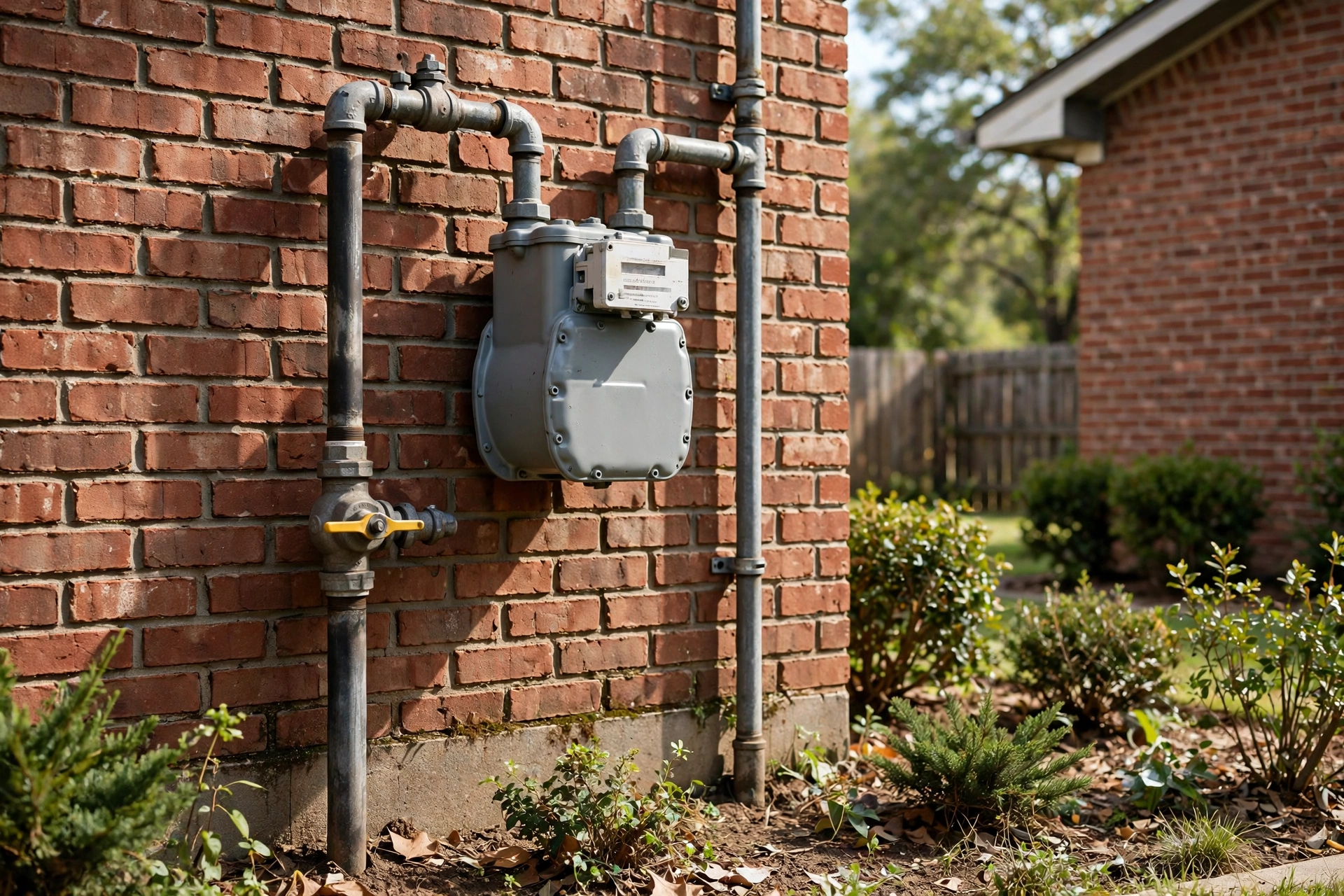
Gas leaks are safety-sensitive. If you smell or hear gas, leave the property and contact the local gas authority or emergency service from a safe location. Do not use electronics in the affected area.
Water, gas and refrigerant are different problems
A water leak can create dampness and water-use changes; a refrigerant leak affects an HVAC circuit; a gas leak can create an immediate combustion or poisoning hazard. Each requires a different professional response.
Why refrigerant handling is regulated
EPA Section 608 rules govern the handling and recovery of refrigerants used in stationary refrigeration and air-conditioning equipment. This is a professional service issue rather than a DIY leak-testing task.
How gas leak detection is carried out
Gas leak detection starts with safety, not with instruments. Once the property is safe and the utility has been notified where required, a provider can check the suspected area with a combustible gas detector, an instrument that reacts to gas in the air and reports its concentration in parts per million (ppm). An electronic sniffer is a handheld version of the same idea: the technician moves the sensor slowly along joints, valves and appliance connections, and the reading rises as the sensor nears the source. Readings are compared point by point, because a single high reading shows that gas is present, not exactly where it is escaping.
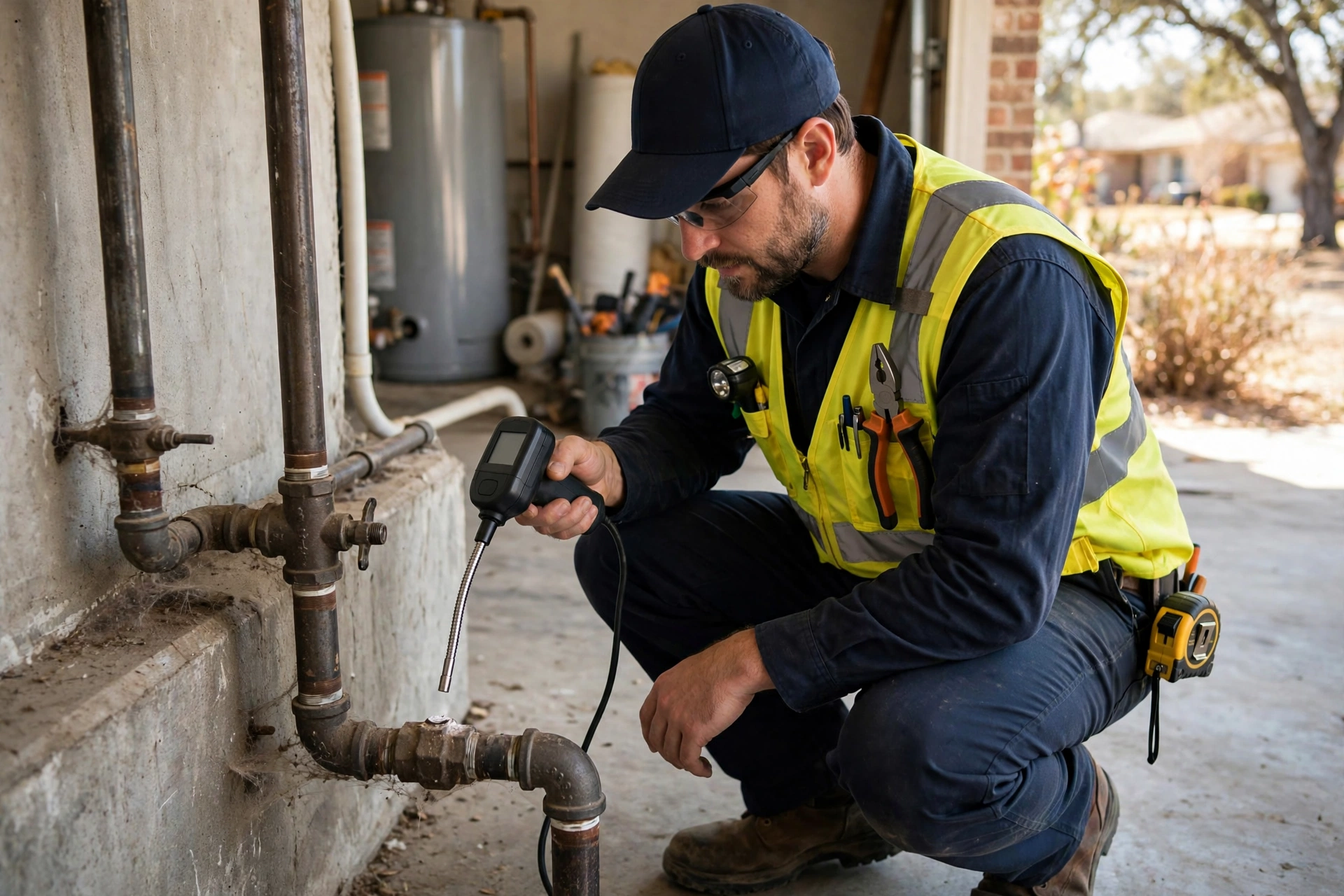
In DeSoto, many homes use natural gas for water heating, furnaces and cooking, and lines can run through walls, attics and, in some slab homes, under the floor. Summer heat in Dallas County also means long air conditioning run times, which is why gas and refrigerant concerns are often reported together even though they involve different systems and different professionals. If the concern turns out to be a water leak instead, the overview at leak detection desoto tx routes each symptom to the right inspection.
How HVAC refrigerant leak detection is carried out
Refrigerant leaks are checked differently. A manifold gauge set connects to the HVAC system and shows the pressures on both sides of the circuit, and readings that drift from the expected range for that refrigerant can point to a low charge. An electronic sniffer rated for refrigerant is then used along coils, joints and line sets to find where refrigerant is escaping, and the technician confirms the finding before any repair or recharge is discussed. Because refrigerant handling is regulated, this work belongs with a qualified HVAC professional rather than a general handyman.
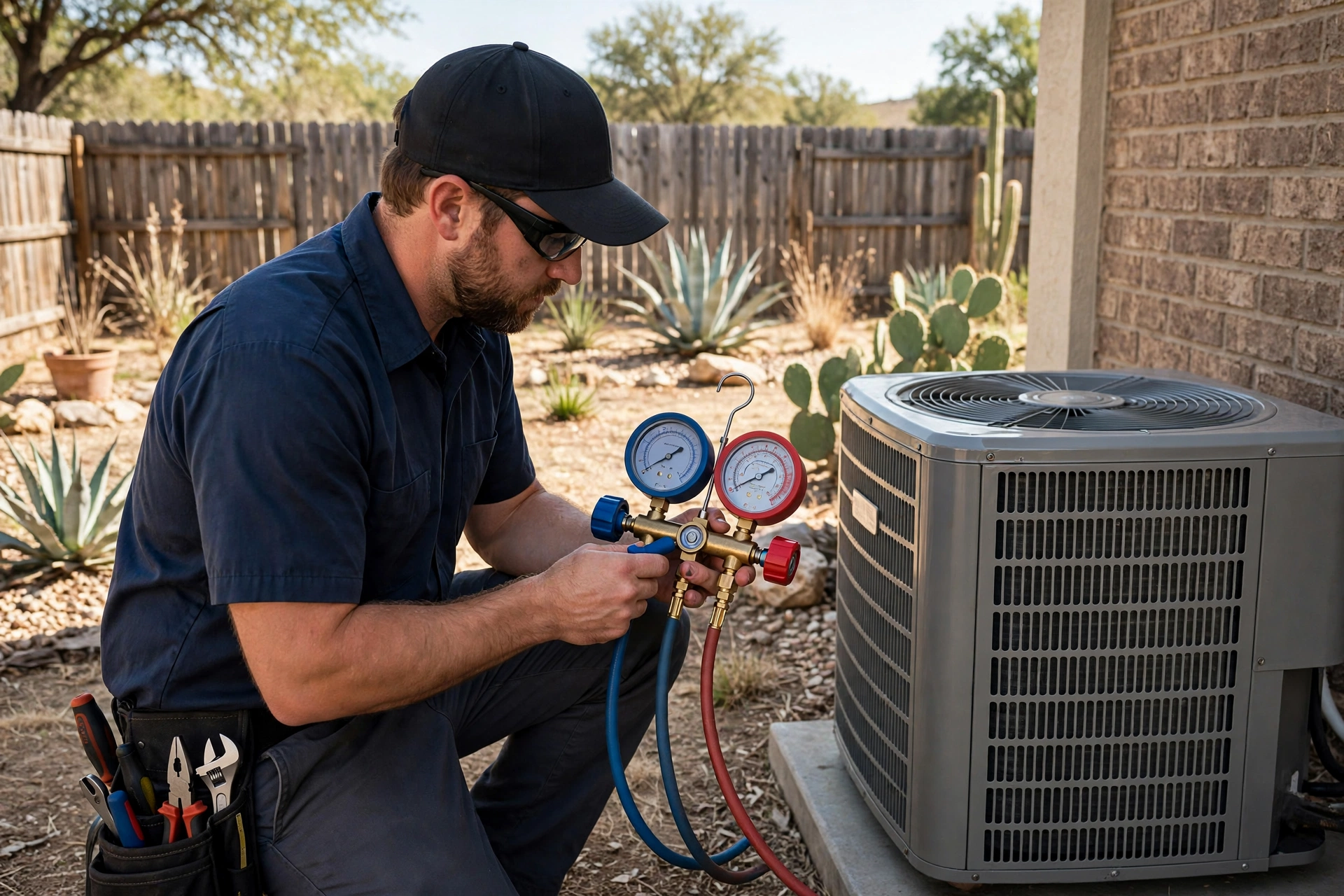
Common clues include air that no longer cools as it should during a DeSoto summer, ice forming on a line or coil, longer run times, and a system that was recharged recently and is already losing performance again. None of those clues proves a refrigerant leak on its own, since airflow and equipment faults can imitate them, which is why measurement comes before conclusions.
Texas context for gas and refrigerant work
Texas treats gas and plumbing work as licensed trades, and refrigerant handling carries its own federal certification requirements, so the provider who attends should be able to explain which qualifications apply to the system being checked. Ask what was tested, what the instruments showed, and what the findings mean, and keep any documentation with the property records. That record helps if the same symptom returns, and it gives the next professional a starting point instead of a guess.
What to ask the provider
Ask which system is being evaluated, which professional qualifications apply, what the diagnostic scope includes, and how the provider will handle the substance or equipment safely.
Common signs and situations
- suspected gas odor
- HVAC performance changes
- suspected refrigerant loss
- hissing near equipment
- line connection concerns
How a professional may approach the diagnosis
Confirm the symptom and suspected system
Provider-led step based on the property and suspected source.
Select diagnostic observations and equipment
Provider-led step based on the property and suspected source.
Narrow the likely leak location
Provider-led step based on the property and suspected source.
Document findings and explain next steps
Provider-led step based on the property and suspected source.
Why detection method selection matters
No single instrument works in every setting. Acoustic listening can be useful for sound from pressurized lines; thermal imaging and moisture meters can help with suspicious indoor areas; pressure testing can isolate certain plumbing circuits; tracer gas can be considered for difficult concealed leaks. The provider selects what fits the conditions.
When you call, explain where you see the symptom, whether it changes with water use, how long it has been present, and whether the property is a home, business or other facility.
Long-tail questions about gas & hvac refrigerant leak detection
What are common signs related to gas & hvac refrigerant leak detection?
Signs can include suspected gas odor, HVAC performance changes, suspected refrigerant loss. Those clues do not prove the source, so the provider should evaluate the pattern before choosing a test.
Which detection methods may be used for gas & hvac refrigerant leak detection?
The appropriate method depends on the suspected leak, piping, pressure, access and site conditions. Potential methods include acoustic listening, thermal or moisture checks, pressure testing, electronic detection or tracer gas where appropriate.
Does detection automatically include repair?
Not necessarily. This website is a referral service. The independent provider determines whether they offer repair, the scope, pricing and licensing requirements.
How can I prepare for a gas & hvac refrigerant leak detection call?
Describe the location of the symptom, when it began, whether it is intermittent, and any change in water use. For gas concerns, follow emergency safety instructions and do not attempt DIY leak testing.
What are the three types of leak detection?
Leak detection is often grouped into three broad types: listening methods, such as acoustic testing that follows the sound of escaping water or gas; electronic methods, such as sniffers and sensors that react to a substance; and imaging or measurement methods, such as thermal cameras and moisture meters. Providers combine types to fit the system.
What should I do if I smell gas in DeSoto, TX?
Leave the property right away and move to a safe distance. Do not use phones, switches, or electronics inside the affected area, and do not try to find the leak yourself. From outside, call the gas utility or 911. Only return when emergency responders or the utility say it is safe.
Explore local area pages
Service intent often combines with neighborhood or community intent. These pages provide a local pathway back to the main DeSoto leak-detection hub.
Need help with gas & hvac refrigerant leak detection in DeSoto?
Start with the broader DeSoto leak detection hub or call (972) 947-9742 and describe the symptom.