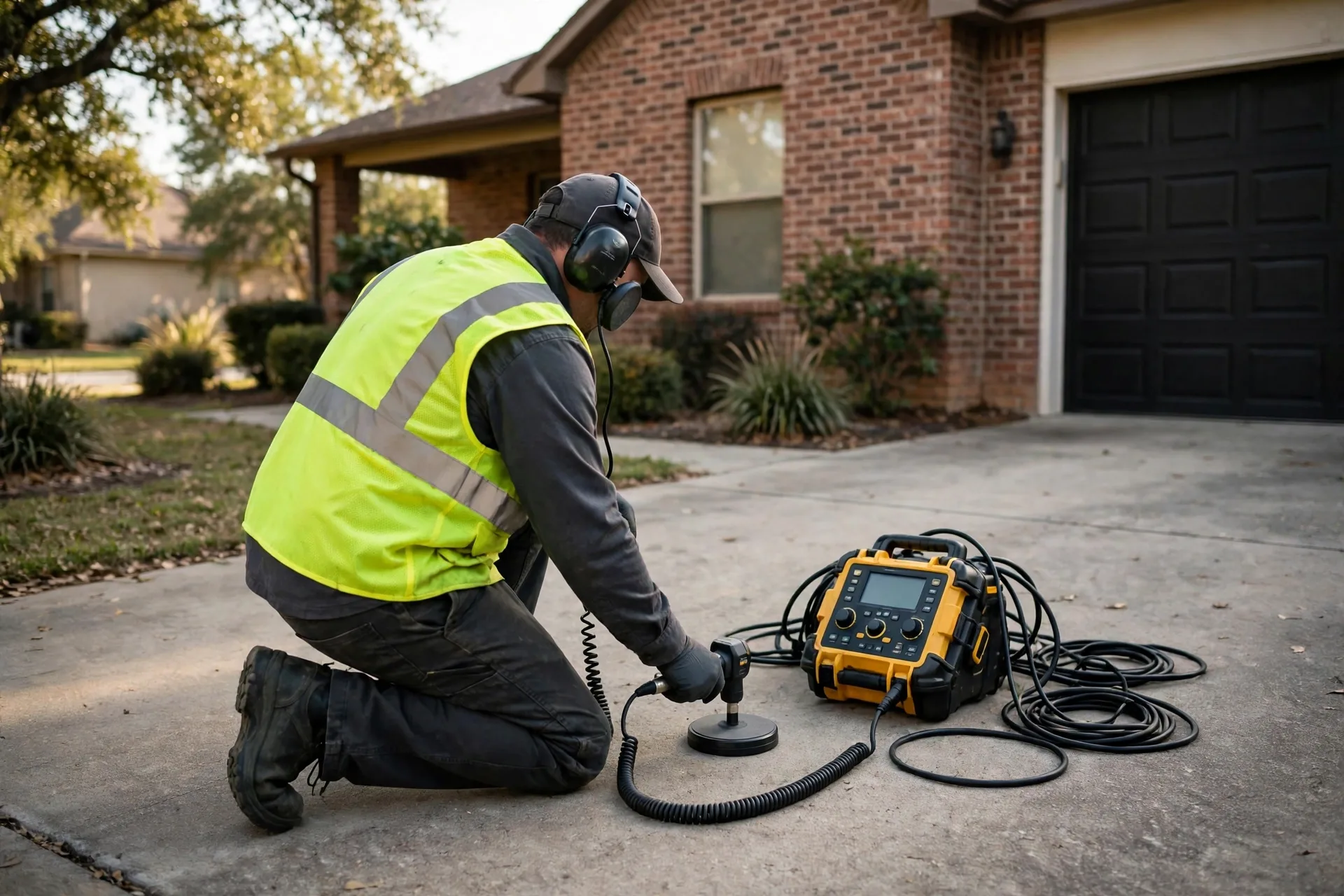
What Is Acoustic Leak Detection?
Acoustic leak detection is a diagnostic method that uses sound as evidence. When water escapes from a pressurized water line, the escaping water and the vibration it creates in the pipe produce noise. Electronic listening equipment amplifies and filters that noise so a leak detection professional can assess where it is strongest, and the strongest point is often near the leak.
It is an evidence-gathering method, not a guarantee. Whether it works depends on the suspected pipe, the leak's pressure and size, and the ground and surroundings between the pipe and the microphone. It suits pressurized water systems, supply lines and plumbing, and is not a universal answer for every kind of leak: drains, for example, are not pressurized and behave very differently. For the full range of situations this site covers, see the DeSoto leak detection overview.
This page focuses on arranging acoustic testing for a suspected pressurized line. If you want the educational background first, read how an acoustic ground microphone works and how its readings are interpreted.
What Is a Ground Microphone?
A ground microphone is a listening device placed on the ground, pavement or another surface above or near a suspected pipe run. It picks up sound transmitted through the soil or surface material, amplifies it, and lets the operator compare sound levels from point to point along the line. Moving the microphone and comparing readings, louder here, quieter there, is how a general area narrows to a likely location.
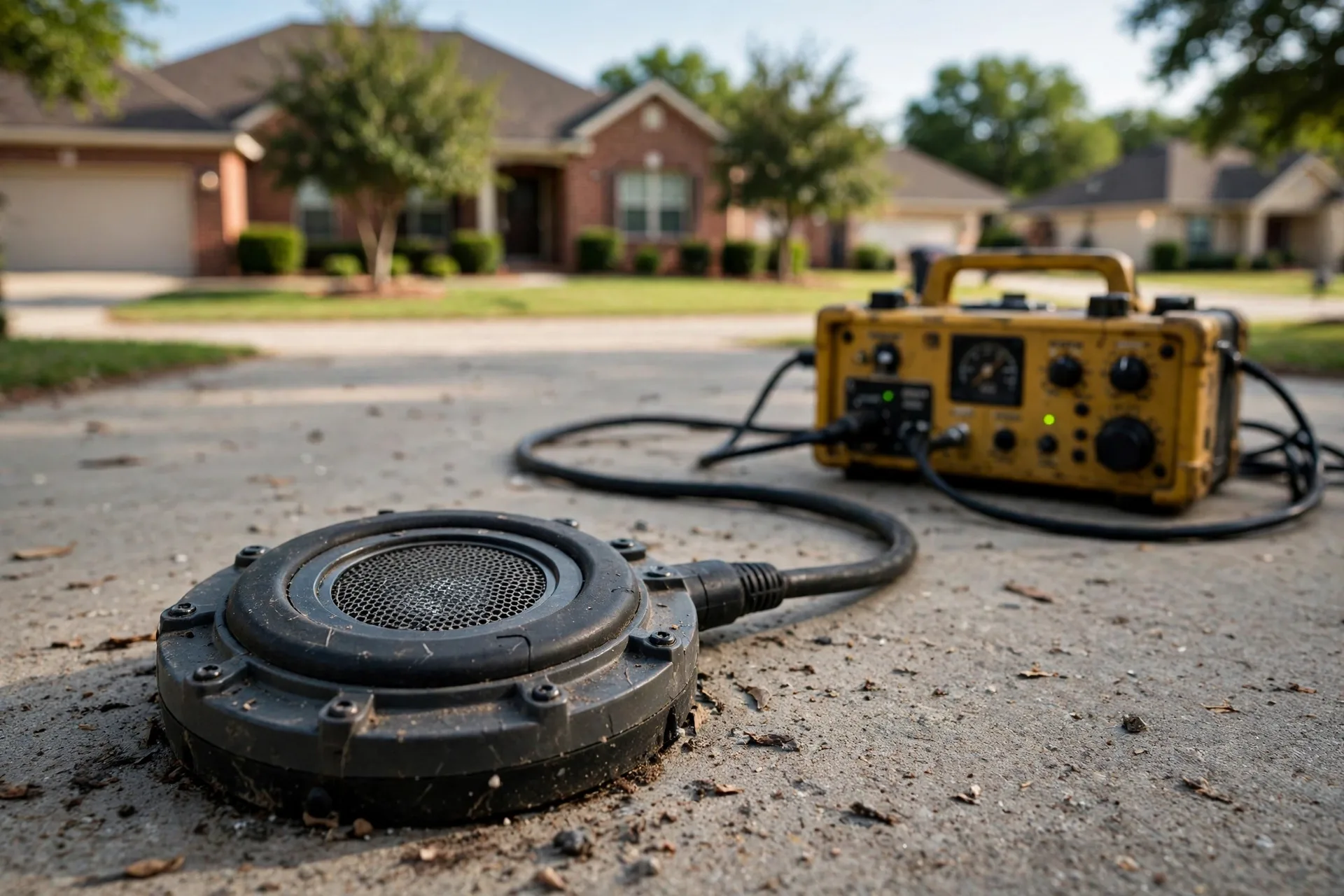
Related listening tools exist for other situations, such as sensors placed directly on accessible pipes and fittings. What they share is the principle: they do not "see" the leak, they hear evidence of it. A ground microphone on its own does not identify an exact leak point in all circumstances, its output is evidence a professional interprets alongside everything else they know about the system.
Situations Where Acoustic Testing May Help
Acoustic testing tends to earn its place when:
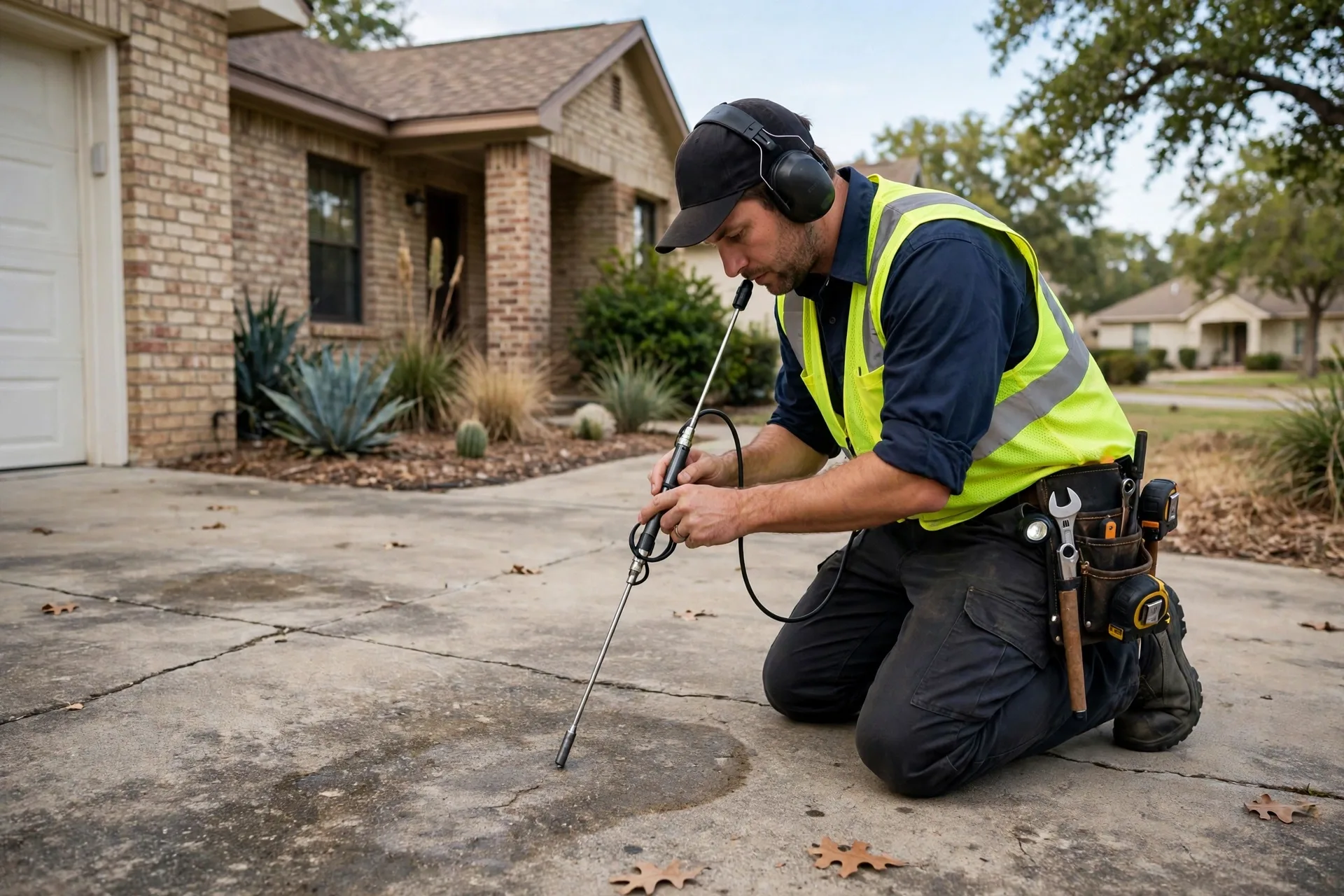
- A pressurized water line is the suspect. Supply lines and pressurized plumbing are the systems most likely to generate detectable leak sound.
- An underground water-line leak is suspected. A rising bill, meter movement or wet ground with no visible source, the classic case for listening along the buried line's route. The symptom side of that problem is covered on the underground main line detection page.
- A leak under a slab or hard surface needs narrowing before anyone considers opening anything, sound through the surface can reduce the search area.
- Other evidence already points to a section of pipe, and listening can refine where within that section the problem sits.
Not every wet yard, ceiling stain or high bill is a leak that can be found acoustically, suitability is a judgment the provider makes from the symptoms, the system and site conditions. If the suspicion is really about the slab or the buried line itself, those pages describe the full investigation; this page is about the listening method within it.
How Acoustic Leak Detection Works
Providers vary in their exact workflow, but a typical acoustic investigation follows this shape:
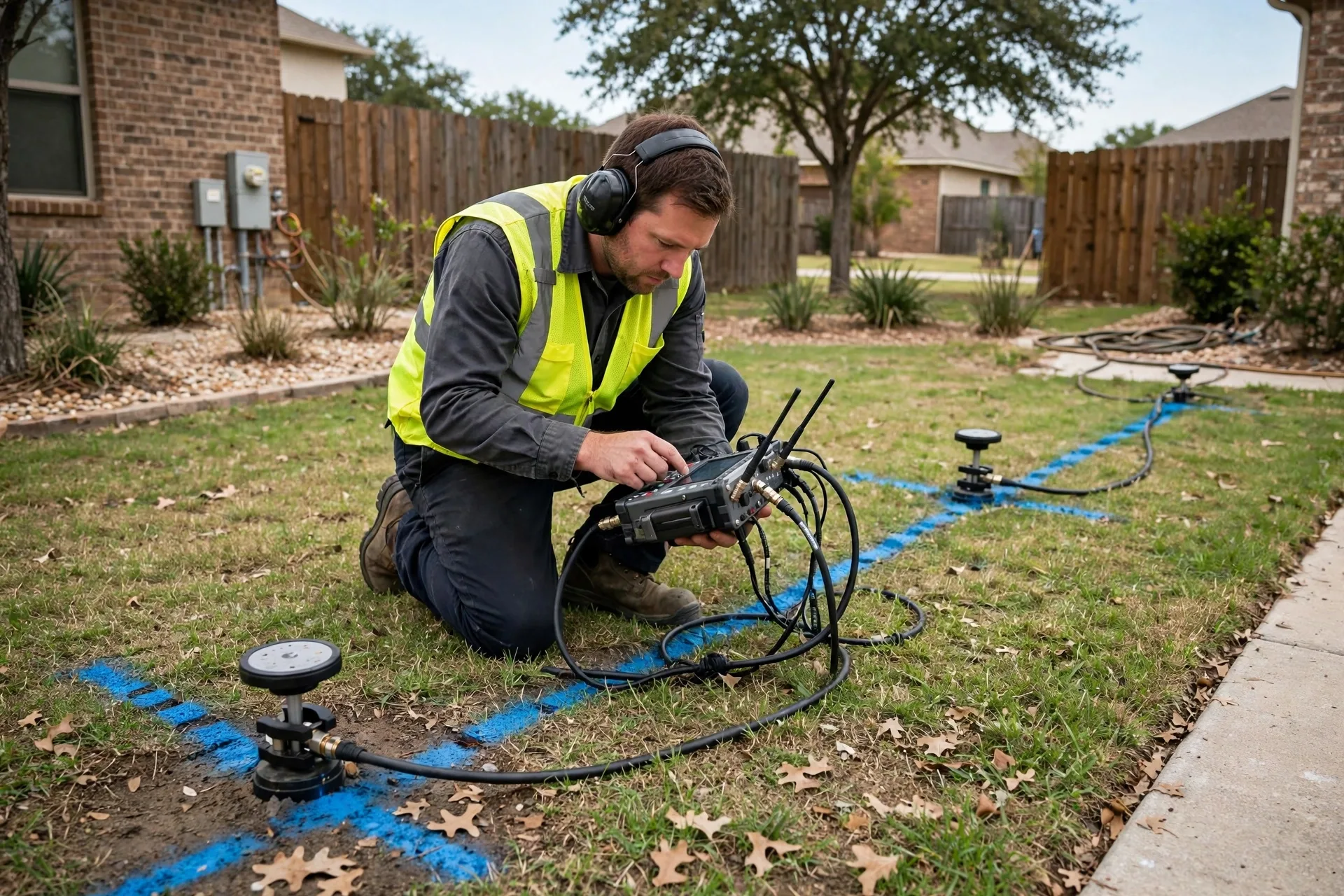
Gather system information
The symptoms, the suspected plumbing system, the pipe route if known, and meter or usage evidence suggesting a pressurized leak.
Assess listening conditions
Accessible surfaces along the pipe run, background noise, and the points where listening equipment can be placed or attached.
Listen and compare
Sound is sampled at successive points; the pattern of stronger and weaker readings narrows the area of interest.
Interpret and recommend
Sound evidence is weighed with everything else; if it is inconclusive, the provider recommends corroborating tests or next steps.
What Can Affect Acoustic Leak Detection?
This is the section that decides whether the method succeeds, and honest providers will talk about it openly:
- Background noise. Traffic, wind, HVAC equipment, running water elsewhere in the building, all compete with leak sound and can mask it.
- Pipe material. Sound travels differently through metal and plastic pipe; some materials carry leak noise well, others dampen it quickly.
- Pipe depth and accessibility. The deeper the pipe and the more material above it, the weaker and more diffuse the sound arriving at the surface.
- Pressure and flow conditions. Leak sound depends on water escaping under pressure; low pressure or a very small leak may produce little usable sound.
- Soil and surface material. What lies between pipe and microphone, soil type, concrete, paving, shapes how sound transmits and where it seems loudest.
- Distance from the source. Sound fades with distance along the pipe and through the ground, which is why comparative point-by-point listening matters.
- The leak's own characteristics. A split pipe, a pinhole and a loose joint do not sound alike, and some configurations are simply quiet.
Because of these factors, no honest provider quotes accuracy figures or detection ranges in advance, the conditions on your property are part of the test.
Acoustic Testing vs. Other Methods
Each method collects a different kind of evidence, and they are combined rather than treated as rivals:
For the companion methods in depth, see thermal imaging & moisture scans and tracer gas line testing.
What to Prepare Before Calling
- The general location of the suspected leak, or the area where symptoms appear.
- Which system you suspect, a supply line, under-slab plumbing, or another part, if you have a view.
- When the symptoms began and how they have developed.
- Any water-usage increase or meter observations (for example, the meter moving with everything off).
- Any known changes in water pressure.
- Property and access information: surfaces over the suspected line (lawn, driveway, slab), gates, and anything that affects access.
- The full property address and ZIP code, so the provider can confirm coverage.
It is tempting to start excavating where the ground is wettest, but the wettest point is often not the leak, and digging destroys the surface conditions the listening equipment needs. If digging ever becomes necessary, the provider will advise; public utility locates through Texas 811 apply before excavation.
What Affects the Cost of an Acoustic Leak Inspection?
This website does not set inspection prices, and quoting a figure without seeing the property would be misleading. A provider's price generally reflects:
- The plumbing system being investigated.
- How accessible the suspected area and pipe run are.
- How complex the symptoms are.
- Which equipment and diagnostic methods the case requires.
- Background and site conditions that affect testing.
- Whether additional or corroborating testing is needed.
- Whether a separate repair assessment follows.
Inspection charges are separate from any excavation and repair costs, which can only be priced after findings are known. See leak detection cost factors for how these charges are generally structured.
After Testing: What Happens Next?
An acoustic inspection ends in one of three honest outcomes. The sound evidence may support a likely location, which the provider explains along with how strong the evidence is. It may narrow the area without pinpointing it, in which case a corroborating method, pressure testing, tracer gas or a targeted follow-up, is the sensible next step. Or conditions may make acoustic evidence inconclusive, and the provider will say so rather than guess.
An acoustic observation is not the same as a confirmed final diagnosis, and it is never the repair. If a location is supported, repair is scoped and priced separately with the provider, including any excavation. DeSoto Leak Detection does not perform the testing or any repair itself, and does not guarantee a result. The guide leak detection vs. leak repair explains the boundary.
Choosing the Right Provider: Questions to Ask
- Do you offer acoustic leak detection for this type of plumbing system?
- Is a ground microphone appropriate for the suspected location?
- Which other tests might be useful if listening is inconclusive?
- What does the inspection include?
- Are further tests or repair services charged separately?
- What credentials or licensing apply to the proposed work?
- How will you explain the findings and next steps?
These are general evaluation questions, not verified claims about any specific provider. See also questions to ask a leak detection provider.
Acoustic Leak Detection in the DeSoto Area
This page focuses on acoustic ground microphone testing for homes and properties in DeSoto, Texas, including the 75115 and 75123 ZIP code areas. Those ZIP codes are coverage references, not a guarantee that every address can be served, when you call, give the full property address so the provider can confirm eligibility. If the suspected problem is under the home itself, the slab leak detection page covers that investigation in full. The DeSoto service-area directory lists the wider coverage.
Acoustic testing is one part of the wider leak detection desoto tx investigation process described on the homepage, especially when the suspected line is buried or below a hard surface.
Frequently Asked Questions
What is acoustic leak detection?
It is a diagnostic method that uses electronic listening equipment to detect and interpret the sound of water escaping from a pressurized pipe. By comparing sound levels at different points, a provider can narrow where a suspected leak is located. It works best on pressurized water systems, and its usefulness depends on the pipe, the leak and the conditions between the pipe and the surface.
What does a ground microphone do?
A ground microphone is a listening device placed on the ground, pavement or another surface above a suspected pipe run. It picks up sound transmitted through the soil or surface material, amplifies it, and lets the operator compare how strong the sound is from point to point. The pattern of readings helps narrow the likely leak area. It hears evidence of a leak rather than seeing the leak itself.
Can a ground microphone find an underground water leak?
It can help, in suitable conditions: a pressurized underground leak that produces sound, a pipe material and depth that transmit that sound, and a reasonably quiet site. Where those conditions line up, comparative listening can narrow the location considerably. Where they do not, deep or quiet leaks, noisy sites, sound-dampening pipe, the provider may recommend a different or additional method such as tracer gas testing.
How accurate is acoustic leak detection?
There is no honest universal figure. Accuracy depends on background noise, pipe material and depth, water pressure, the soil or surface above the pipe, and the character of the leak itself. In favorable conditions the method can narrow a location very usefully; in poor conditions it may only narrow an area, or be inconclusive. Any provider quoting a guaranteed accuracy percentage in advance is not describing how the method really behaves.
What factors can affect acoustic testing?
The main factors are background noise (traffic, wind, equipment), pipe material, pipe depth and accessibility, pressure and flow conditions, the soil or structural material between the pipe and the surface, distance from the suspected source, and the size and type of the leak. These are why the provider assesses conditions on site before relying on the method.
Can acoustic testing locate every type of leak?
No. Acoustic methods depend on leak-related sound, so they suit pressurized water lines best. Unpressurized systems such as drains, very small or low-pressure leaks, and leaks in sound-dampening conditions may produce nothing usable to hear. Those cases call for other methods, pressure or isolation testing, tracer gas, thermal imaging or moisture assessment, which is why providers combine techniques.
How does acoustic leak detection differ from thermal imaging?
They collect different evidence. Acoustic detection listens for the sound of escaping water and is aimed at locating a leak in a pipe. Thermal imaging maps surface temperature patterns that can accompany moisture and helps decide where to investigate, but a temperature pattern does not prove a leak or pinpoint one underground. A provider may use thermal imaging to guide where to listen, then acoustic testing to narrow the pipe location.
What affects the cost of an acoustic leak inspection?
The main factors are the plumbing system being investigated, the accessibility of the suspected area, the complexity of the symptoms, the equipment and methods required, site and background conditions, and whether additional testing is needed. Inspection pricing is separate from excavation and repair costs, and this website does not set prices, ask the provider what the inspection includes and what it costs before booking.
Does leak detection include the repair?
No. Detection investigates the suspected leak and narrows or identifies its location based on the evidence; repair is separate corrective work, excavating if needed, fixing the pipe, with its own scope and price, agreed with the provider after the findings. Detection never automatically includes repair.
What information should I have ready before calling?
The general location of the suspected leak or where symptoms appear, which system you suspect if you know, when symptoms began, any water-usage increase or meter observations, any known pressure changes, and property access information such as what surface lies over the suspected line. Have the full property address and ZIP code ready so coverage can be confirmed.
How does the DeSoto Leak Detection referral process work?
You call (972) 947-9742 and describe the symptoms, the suspected system and the property address. Your request is directed toward an independent provider for acoustic leak inspection, and that provider confirms suitability, availability, testing scope, pricing and next steps directly with you. DeSoto Leak Detection does not perform the testing or any repair itself.