What Is Pool Leak Detection?
Pool leak detection investigates unexplained water loss from a swimming pool, spa or hot tub. The first question is whether the loss is a leak at all, because evaporation, splash-out and filter backwashing remove water too. If the loss is faster than those normal causes explain, the investigation sorts the likely source into one of three categories:
- Plumbing leaks, in the suction lines, return lines, fittings or joints that move water between the pool and the equipment.
- Equipment leaks, at the pump, filter, heater, valves or seals on the equipment pad.
- Structural leaks, in the pool shell itself, or around the skimmer, tile line, lights and other built-in fittings.
Each category produces different clues and needs different tests, so the categories matter more than any single symptom. For household plumbing leaks inside the home instead, see the DeSoto leak detection overview. You can also start from the main leak detection desoto tx page to compare every service in one place.
Signs Your Pool or Spa May Be Leaking
No single sign proves a leak, evaporation and heavy use imitate several of them. A pattern of two or more, or one sign that clearly outruns the weather, is what justifies a professional assessment:
- The water level drops faster than evaporation explains. You are adding water noticeably more often than in similar weather in previous seasons.
- An automatic filler runs frequently, or the water bill climbs. An auto-fill that keeps topping up can hide the loss while quietly confirming it.
- Wet or soggy areas around the pool or equipment pad. Ground that stays damp in dry weather, especially along the plumbing route or near the equipment.
- Air in the pump basket or the pump losing prime. Bubbles and air intrusion on the suction side can point to a suction-line or fitting problem.
- Water loss that changes with the pump. Losing more water while the pump runs suggests a pressure-side plumbing leak; losing it with the pump off points elsewhere, this comparison is a key diagnostic clue.
- Cracks, separation or movement. New cracks in the shell or deck, tiles loosening, or gaps opening around the skimmer or fittings.
- Difficulty keeping the water balanced. Constantly replacing water dilutes chemicals, a supporting clue alongside the stronger signs above, not proof on its own.
The companion guide why is my pool losing water? walks through these signs and the sensible order to check them in.
Pool Leak or Evaporation? How to Tell the Difference
Evaporation is real and variable: heat, sun, wind and low humidity all speed it up, so a pool can lose noticeable water in a hot, windy Texas week with no leak at all. Splash-out and backwashing the filter remove more. That is why the rate of loss has to be compared against something, not judged by feel. Providers describe that comparison as checking the loss against the normal evaporation rate, and the bucket test below is the simplest way to measure it at home.
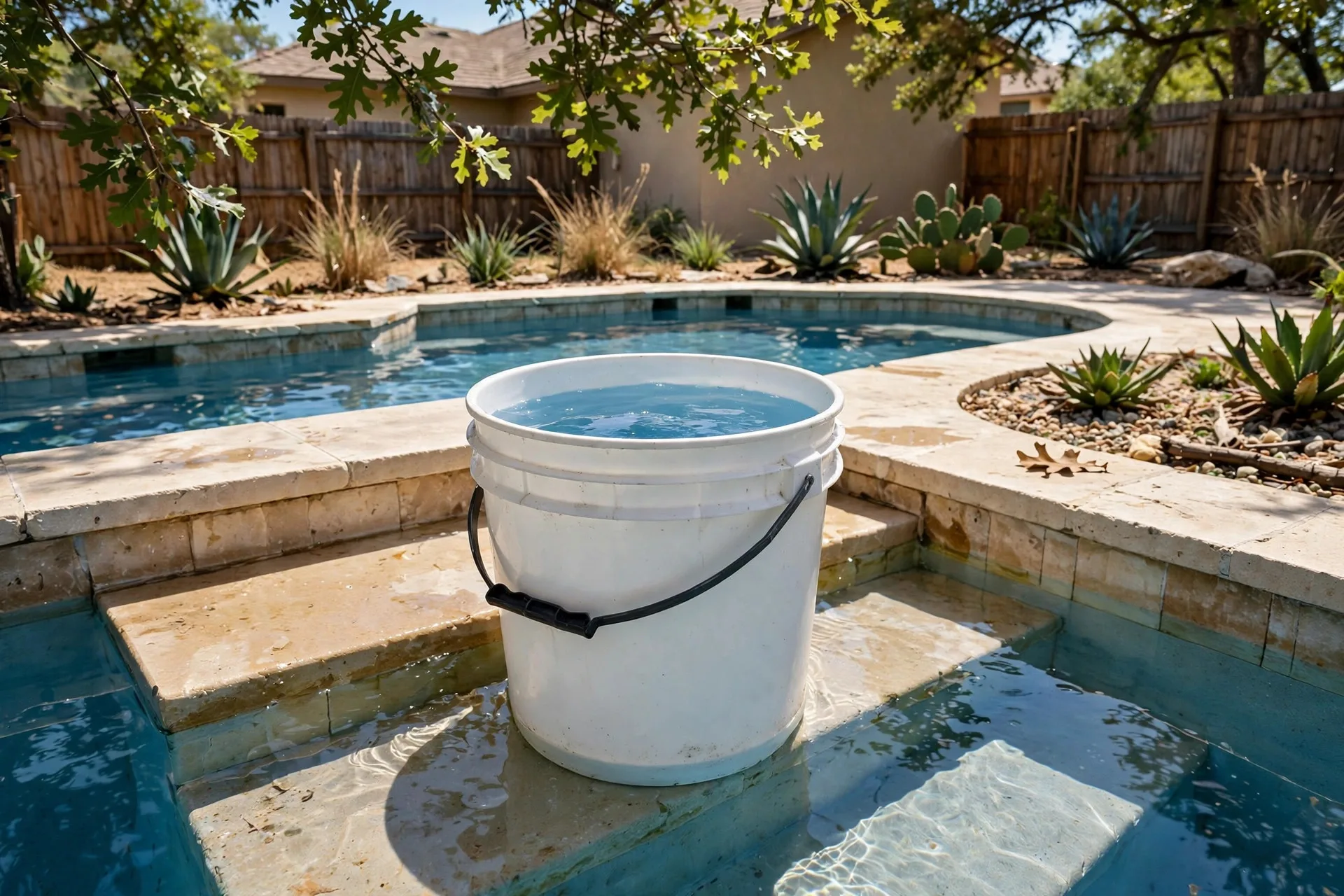
The standard comparison is the bucket test: set a bucket on a pool step, fill it to match the pool's water level, mark both levels, and compare them after about 24 hours. The bucket water only evaporates; the pool water evaporates and leaks, so if the pool level falls noticeably further than the bucket's, a leak is likely. The test has limits: rain, heavy splashing, a bucket placed in different sun or wind, and too short a test window can all distort it. It is a good screening step, not a diagnosis, and it cannot say where the leak is. A provider takes the same logic further, comparing loss with the pump running versus off, and isolating sections of the system one at a time. The fuller explanation is in pool leak vs. evaporation: how to tell the difference.
Where Pool Leaks Commonly Occur
Different parts of the system create different clues, which is how a provider plans the testing:
- Suction and return lines. The buried plumbing between pool and equipment. Clues include air in the pump (suction side), loss that worsens while the pump runs (pressure side), and damp ground along the line's route.
- Fittings and joints. Where pipes meet the pool, skimmer, jets and equipment, movement and age stress these connection points first.
- The equipment pad. Pump seals and lids, filter housings, heater connections and valves. Clues are visible drips, puddles under equipment, and corrosion or mineral staining at joints.
- The skimmer and light fixtures. Cracks or separation where these fittings meet the shell are a common structural leak point.
- The main drain and poolside fittings. The main drain at the deep end and the fittings checked during poolside leak detection sit below the waterline and connect to buried plumbing, so they are harder to rule in or out without testing.
- The pool shell and tile line. Cracks in the shell surface, or water escaping at the tile line, loss that continues with the pump off and plumbing ruled out points this way.
What a Complete Pool Leak Test Covers
A complete pool leak test works through the whole system instead of stopping at the first suspicious fitting. That matters in DeSoto, where summer heat can hide a real leak inside normal evaporation for weeks, and where a pool can lose water from more than one point at the same time.
- The shell and structure. The pool surface, steps, benches and tile line are inspected, and suspect cracks or separations are dye tested to see whether water is actually escaping there.
- The skimmer. The skimmer throat, basket well and the joint where the skimmer body meets the shell, a common separation point as materials age and shift.
- The main drain. The deep-end drain and its line, which sit below the waterline and connect to buried plumbing, so they cannot be ruled in or out from the surface.
- Suction and return lines. The buried plumbing is pressure tested in sections, so a line leak is separated from a shell leak and from normal equipment behaviour.
- Light fixtures. The niche and conduit behind each pool light, a classic hidden path for water to leave the pool without any visible sign.
- Pump and filter equipment. Pump seals and lids, filter housings, heater connections and valves at the equipment pad, checked for drips, staining and pressure loss.
Testing only one part can produce a false all-clear: a pool can pass a shell check while a return line is leaking underground. A complete test rules each part in or out, so the repair conversation that follows is about a confirmed location instead of a guess.
How Pool Leak Detection Works
The exact sequence varies with the pool, its plumbing layout and the provider, but a typical investigation follows this shape:
Document the water loss
How fast the level falls, over what period, under what weather and pump schedule, plus any bucket-test or refill records you have.
Inspect pool and equipment
A close look at the shell, fittings, skimmer, lights and the equipment pad for visible leaks, damage and telltale staining.
Test and isolate the systems
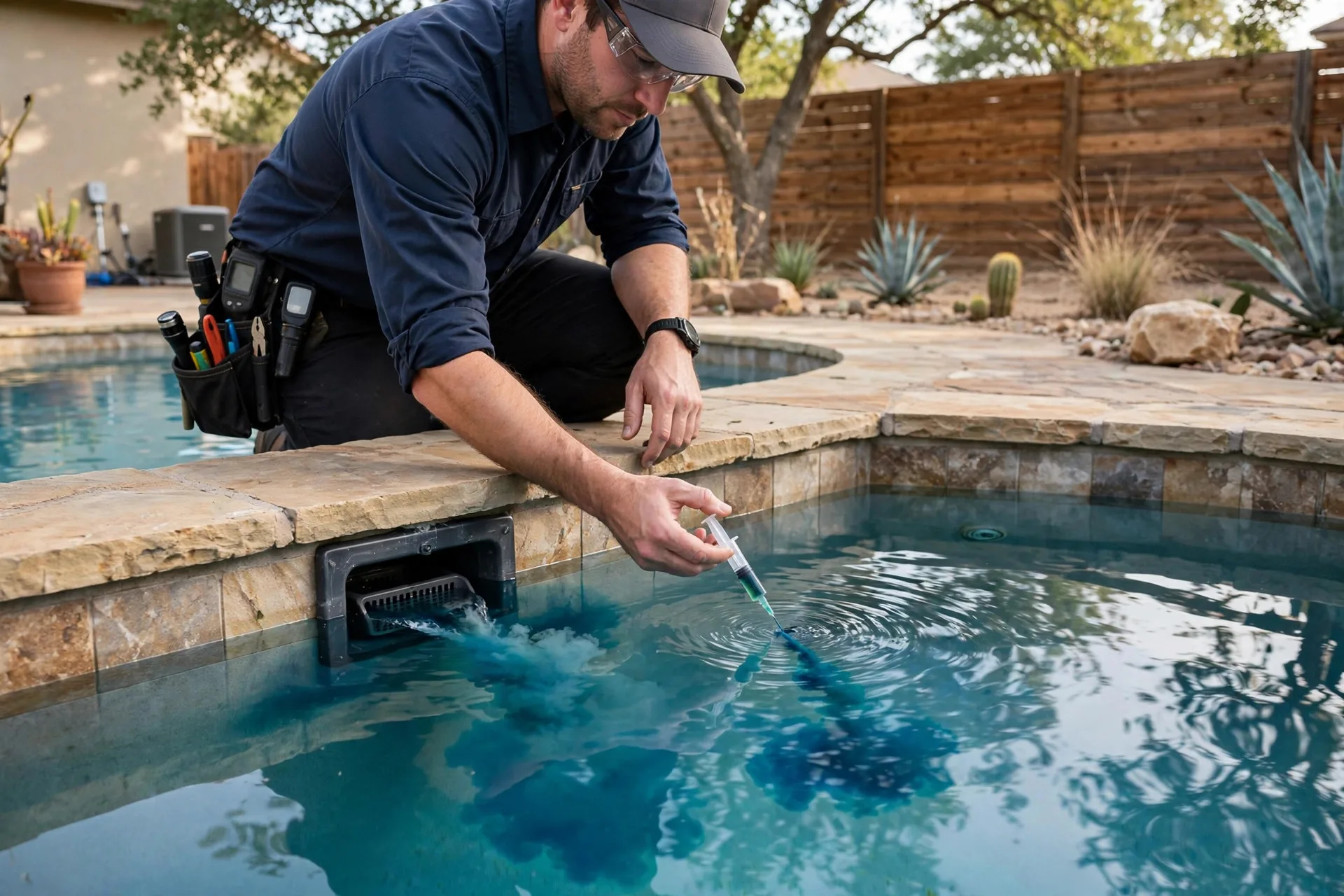
Pressure testing of plumbing lines, dye testing around fittings and structure, and pump-on/pump-off comparisons narrow the source category.
Explain findings and next steps
The provider reports what was found, what remains uncertain, and whether further testing or a repair assessment comes next.
Detection Methods for Pool and Spa Leaks
Each method answers a different question, and providers combine them rather than relying on one:
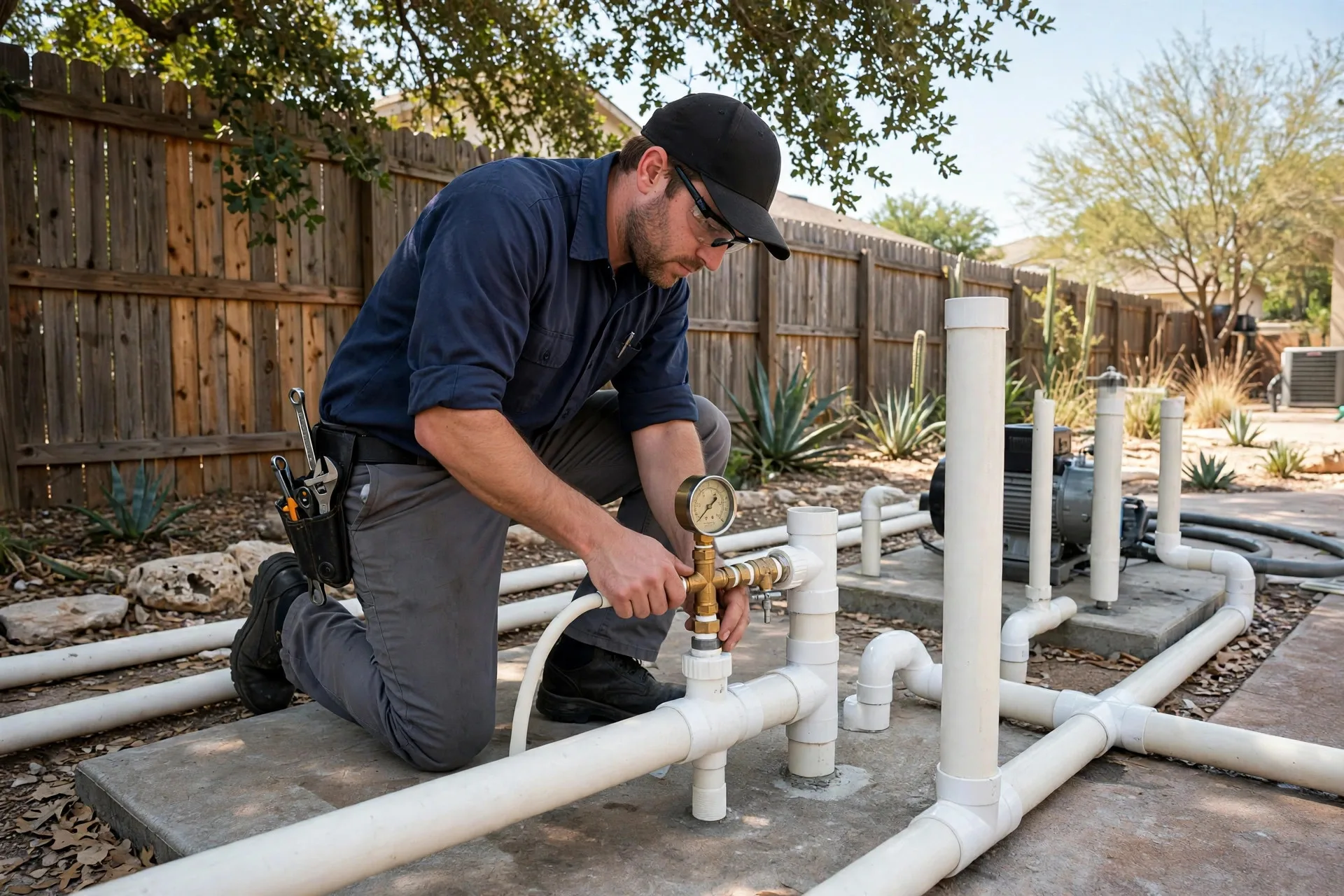
Home observations alone, watching the level for a few days, can suggest a leak but cannot rule out evaporation differences or locate anything, which is why the tests above exist. Not every provider offers every method. See acoustic ground microphone testing and tracer gas line testing for the specialist methods in depth.
What to Note Before Calling
A few observations gathered in advance make the inspection faster and more accurate:
- Roughly how much water the pool loses, for example, how far the level falls in 24 hours, or how often you refill.
- Whether you have tried a bucket test, and what it showed.
- Whether the loss seems worse with the pump running, or continues with it off.
- Any wet areas around the pool or equipment pad, and any visible drips at the equipment.
- Air bubbles in the pump basket, or the pump struggling to hold prime.
- Any recent work on the pool, plumbing or deck, and the pool's approximate age.
- Whether the concern is the pool, a connected spa, or both.
Pool equipment combines water and electricity: do not open electrical equipment or reach into equipment you are not qualified to handle. And if the water level is falling toward the skimmer, ask the provider what to do, running a pump dry can damage it. Describe what you can see; leave the testing to the inspection.
What Affects the Cost of Pool Leak Detection?
This website does not set inspection prices, and quoting a figure without seeing the pool would be misleading. A provider's price generally reflects:
- The size and complexity of the pool and spa system.
- How accessible the plumbing and equipment are.
- Which tests turn out to be necessary.
- Whether the leak appears to be plumbing, equipment or structural.
- Whether follow-up testing rounds are needed.
Keep two costs distinct: the detection work that finds and confirms the source, and the repair that fixes it. The inspection is quoted before work begins; a repair can only be priced after the findings are known. See leak detection cost factors for how these charges are generally structured.
After the Leak Source Is Identified
What happens next depends on the category. A plumbing leak leads to a repair assessment for that line or fitting; an equipment leak may mean a seal, valve or component repair; a structural issue at the shell, skimmer or tile line may involve a different kind of repair again, possibly a different specialist. If the first round is inconclusive, the provider may recommend further testing rather than guesswork.
Detection and repair remain separate throughout: the inspection identifies the source, and repair is quoted and agreed separately afterward. It is not guaranteed that the same provider performs the repair. Confirm what your provider offers directly. The guide leak detection vs. leak repair explains the boundary.
Choosing the Right Provider: Questions to Ask
- Do you test pools, spas or both?
- Which tests may be appropriate for this kind of water loss?
- What does the inspection fee include?
- How do you separate evaporation loss from an actual leak?
- Are plumbing, equipment and structural sources all checked?
- Is repair included, or assessed and quoted separately?
- What credentials or licensing apply to the proposed work?
These are general evaluation questions, not verified claims about any specific provider. See also questions to ask a leak detection provider.
Pool Leak Detection in the DeSoto Area
This page focuses on pool and spa leak detection for homes and properties in DeSoto, Texas, including the 75115 and 75123 ZIP code areas. Those ZIP codes are coverage references, not a guarantee that every address can be served, when you call, give the full property address so the provider can confirm eligibility. Buried pool plumbing that runs under soil or decking sometimes overlaps with the approach on the underground main line detection page. The DeSoto service-area directory lists the wider coverage.
Frequently Asked Questions
What are the common signs of a pool leak?
Common signs include the water level dropping faster than evaporation explains, an automatic filler running frequently, a rising water bill, wet or soggy ground around the pool or equipment pad, air in the pump basket or the pump losing prime, water loss that changes depending on whether the pump is running, and cracks or separation around the shell, skimmer or fittings. Single signs can have innocent causes; a pattern is what justifies testing.
How can I tell if my pool is leaking or just evaporating?
Compare the loss against evaporation rather than judging by feel: the bucket test, a bucket on a step filled to the pool's level, both marked and compared after about 24 hours, is the standard screening check. If the pool falls noticeably further than the bucket, a leak is likely. Weather, rain and splashing can distort the result, so treat it as screening evidence; a provider confirms with isolation and pressure testing.
What is the bucket test, and can I do it myself?
Yes, it is designed as a homeowner check. Place a bucket on a pool step and fill it until its water level matches the pool's, mark both levels, turn off any auto-fill, and compare after roughly 24 hours. Both lose water to evaporation, but only the pool can leak, a noticeably bigger drop in the pool points to a leak. Record the difference; it is useful information for the provider, though the test cannot locate the leak.
Where do pool leaks most commonly occur?
In three places: the plumbing, suction and return lines, fittings and joints between the pool and equipment; the equipment itself, pumps, filters, heaters, valves and seals; and the structure, the shell, tile line, skimmer and light fixtures. The clue pattern usually suggests the category first: air in the pump points to the suction side, visible pad drips to equipment, and loss that continues with everything off points toward the structure.
Does a pool leak inspection require draining the pool?
Usually not as a starting point. Most testing, pressure testing of lines, dye testing around fittings, equipment inspection and level comparison, is done with water in the pool, and dye testing actually requires it. If a specific finding later makes partial draining or direct access necessary, the provider explains why and agrees it with you first.
Which methods are used to detect pool leaks?
Providers combine methods depending on the clues: water-level and bucket comparison to confirm a leak exists, pressure testing to isolate a leaking plumbing line, dye testing around fittings and structure, acoustic listening for pressurized line leaks, and inspection of the equipment under operating pressure. Pump-on versus pump-off comparisons help separate plumbing losses from shell losses. Not every provider offers every method.
What affects the cost of pool leak detection?
The main factors are the size and complexity of the pool and spa system, the accessibility of the plumbing and equipment, which tests are required, whether the source looks plumbing, equipment or structural, and whether follow-up testing is needed. Detection pricing is separate from any repair cost, and this website does not set prices, ask the provider what the inspection includes and what it costs before booking.
Is pool leak detection the same as pool leak repair?
No. Detection confirms whether a leak exists and identifies or narrows its source; repair is the separate corrective work, fixing a line, replacing a seal, or repairing the shell or a fitting, with its own scope and price. Detection does not include repair, and it is not guaranteed that the same provider carries out the repair work.
Are spa and hot tub leaks investigated the same way?
Largely yes, because a spa usually shares the pool's circulation system or has a similar one of its own: the same logic applies, compare the loss, inspect the equipment and fittings, and pressure test the plumbing. A connected spa can also lose water back through valves, so the provider checks how the pool and spa interact as part of the inspection.
What information should I have ready before calling?
Roughly how fast the pool is losing water (level drop per day, or how often you refill), any bucket-test result, whether the loss changes with the pump running, any wet areas or equipment drips you have noticed, air in the pump or priming problems, the pool's approximate age and any recent work, and whether the concern involves the pool, the spa or both. Have the full property address and ZIP code ready so coverage can be confirmed.
How does the DeSoto Leak Detection referral process work?
You call (972) 947-9742 and describe the water loss, the pool or spa setup and the property address. Your request is directed toward an independent provider for pool leak inspection, and that provider confirms the inspection scope, availability, pricing and next steps directly with you. DeSoto Leak Detection does not perform the inspection or any repair itself.
How can I tell if my pool is leaking or just evaporating in DeSoto?
Compare the loss with normal evaporation for hot, windy DeSoto weather, then try the bucket test: set a filled bucket on a pool step, mark both water levels, and compare them after a day. If the pool drops faster than the bucket, a leak is more likely and testing should follow.
My pool is losing water with no visible leak in DeSoto, TX. What should I check?
Check the water level trend, the skimmer and pump area, wet spots around the equipment pad, and whether loss speeds up when the pump runs. Hidden losses often sit in return lines, the main drain, or fittings. Note what you find, then arrange testing so each section can be checked in turn.
How much does pool leak detection cost in DeSoto, TX?
The cost depends on the size of the pool and spa, which sections need testing, access to the skimmer, main drain and return lines, the equipment required, and whether documentation is needed. Detection and repair are priced separately. Ask the provider what the inspection includes and what it costs before booking.
Can a pool have more than one leak at the same time?
Yes. A pool is several systems sharing one body of water, so a skimmer separation and a return line leak can happen together. Fixing the first leak found can slow the water loss without stopping it, which is why a complete test checks the shell, fittings, lines and equipment before repair decisions are made.
What does a full pool leak test include?
A full test covers the pool shell and tile line, the skimmer, the main drain, suction and return lines, light fixtures and the pump and filter equipment. Providers combine dye testing, pressure testing of the plumbing and equipment inspection, then report which parts passed and which one is losing water.