What Is a Hidden Water Leak?
Water-supply and drain pipes run inside wall cavities, above ceilings and behind finished surfaces throughout a home. A hidden water leak is a leak in one of those concealed pipes or fittings. The water escapes out of sight, soaks into drywall, plaster, insulation or framing, and usually becomes visible somewhere else, a stain on a ceiling, a damp patch on a wall, paint that starts to bubble. Left damp, drywall and insulation can support mold growth, and peeling paint often follows as the moisture works its way outward.
Two things make these leaks tricky. First, water travels: it runs along pipes, framing and gravity, so the visible symptom can be feet away from the actual failure. Second, plumbing is not the only source of indoor moisture, roof intrusion, condensation and everyday water escape from baths and kitchens can produce very similar marks. A stain is a clue that moisture is or was present, not a diagnosis of where it came from. The DeSoto leak detection overview covers the other leak types this site handles. Start at leak detection desoto tx if the symptom does not match this page.
Signs of a Possible Hidden Water Leak
Each sign below can have more than one cause, and an old stain may simply be the remains of a problem that has already stopped. What justifies an inspection is an active, recurring or worsening pattern:
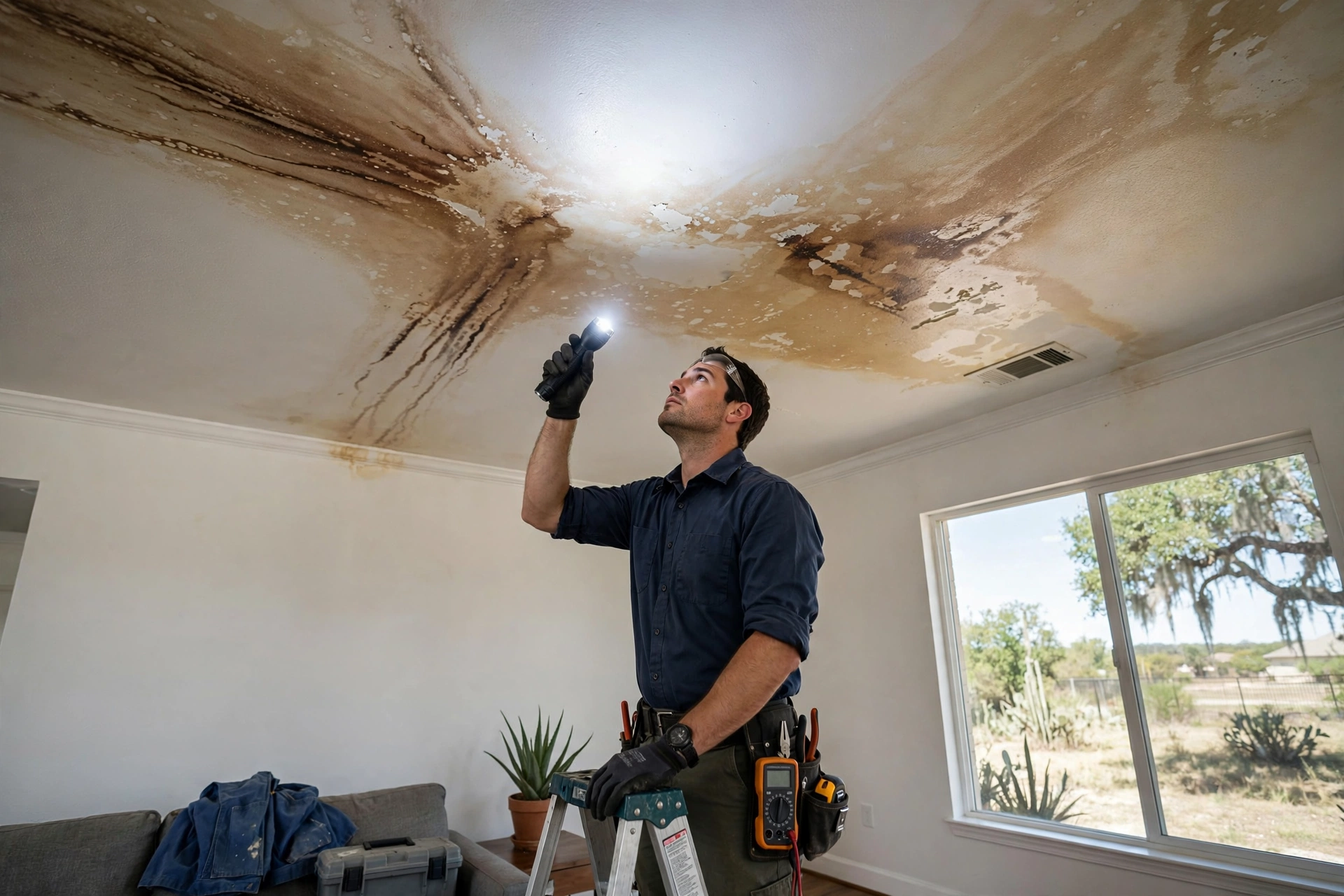
- Recurring ceiling water stains. A brown or yellow stain that appears, grows or returns, especially one that changes after the plumbing above is used.
- Damp or discolored drywall. A wall area that feels damp, looks darker, or stays soft or swollen compared with the surrounding surface.
- Bubbling or peeling paint. Moisture behind paint pushes it away from the surface; bubbling that keeps spreading suggests moisture is still arriving.
- Persistent moisture near baseboards. Damp baseboards, warped trim or flooring that lifts along one wall can point to water collecting at the base of a wall cavity.
- Water marks near fixtures and pipe penetrations. Staining around where pipes pass through walls, under sinks, or near tubs and showers.
- Dripping or running-water sounds when fixtures are off. Sounds inside a wall with nothing running deserve attention, particularly alongside any sign above.
- A persistent musty odor. A musty smell in one room or closet can accompany long-standing concealed moisture, it is a supporting clue, not proof of a leak.
- Unexpected water consumption. A rising bill or a meter that moves with fixtures off suggests a pressurized supply leak somewhere; this page's signs help localize whether it may be in a wall or ceiling. See how to check a water meter for leaks.
The fuller symptom guide, signs of a hidden water leak, and the focused guide on how to tell if there is a water leak behind a wall go into more depth on each pattern.
What Could Be Causing the Moisture?
Before assuming a pipe has failed, a good investigation weighs the other realistic sources, because the fix for each is completely different:
- Plumbing supply-line leaks. Pressurized lines leak continuously, often steadily worsen, and may show up in meter behavior even when the stain looks static.
- Drain-related leaks. Drain and waste lines leak when water is being discharged, so symptoms often appear or grow after showers, baths, laundry or dishwasher use, then pause between uses.
- Roof or exterior water intrusion. Stains that worsen after rain, especially on top-floor ceilings or exterior walls, may be coming from above or outside rather than from plumbing.
- Condensation. Warm humid air on cool surfaces, ducts, pipes, exterior walls, can wet surfaces without any pipe failing. Condensation follows weather and HVAC patterns rather than fixture use.
- Bathroom and kitchen water escape. Failed seals, grout, caulking or an overflowing fixture can send ordinary water into a wall or floor without any pipe leak at all.
- Moisture from adjacent spaces. Water from the room above, an adjoining bathroom, or an HVAC condensate problem can appear in a wall or ceiling some distance from its source.
Documenting the pattern helps separate these: when the stain appeared, whether it changes after showers or fixture use, after rainfall, or after the air conditioning runs. That history is some of the most useful evidence you can hand a provider.
How Fast Mold Can Follow a Hidden Leak
Mold is the main reason a hidden leak should not wait. EPA guidance notes that mold can begin growing on wet materials within 24 to 48 hours when conditions are right, and a leak inside a wall or ceiling keeps drywall, insulation and framing damp far longer than that window, often for weeks before a stain appears.
That is also why a musty smell often arrives before any visible mark: the wall cavity stays wet while the painted surface still looks almost normal. Finding and stopping the moisture source is the leak detection step. Cleaning or removing affected material afterwards is mold remediation, a separate trade with its own process, and it works best once the water has stopped.
If you suspect a hidden leak, act on the water first. Note where the smell or staining is strongest, avoid opening large sections of wall yourself, and arrange detection so the source can be confirmed and shut off. The sooner the materials dry, the smaller the remediation job usually is.
How Hidden Water Leak Detection Works
There is no single universal procedure, the approach varies with the property, the plumbing layout, accessibility and the provider. A typical investigation takes this shape:
Gather symptom history
Where the moisture appears, when it started, and what it seems to follow, fixture use, rain, HVAC operation or nothing obvious.
Review usage and inspect the area
Water-use and meter observations, plus a close visual inspection of the affected surfaces and the plumbing nearby.
Select diagnostic methods
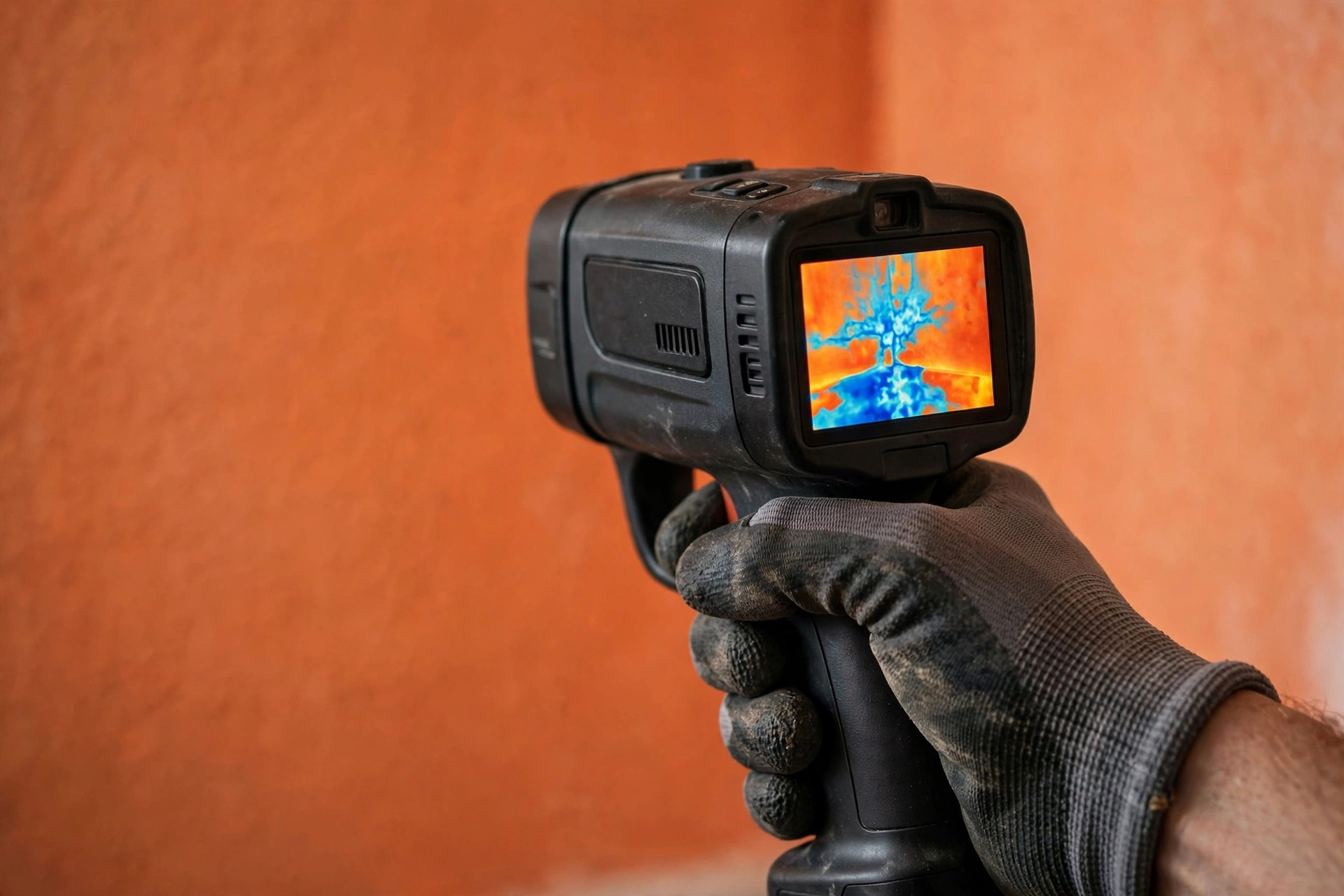
Moisture measurement, thermal imaging, acoustic listening or plumbing tests are chosen based on what the evidence so far suggests.
Interpret and explain next steps
The provider explains the likely source, what remains uncertain, and whether further testing, surface access or a repair assessment is needed.
Detection Methods for Concealed Leaks
Each method answers a different question, and none of them settles the matter alone:

A temperature pattern or a moisture reading is evidence to interpret in context, neither automatically proves a plumbing leak or its exact location. Not every provider offers every method. For the technology in depth, see thermal imaging & moisture scans and acoustic ground microphone testing.
What Information to Collect Before Calling
A few details gathered in advance make the inspection considerably more accurate:
- Which room or area is affected, and the exact surface, wall, ceiling, baseboard, floor edge.
- When the stain or moisture first appeared, and whether it is recurring, growing or unchanged.
- What the pattern seems to follow: showers or fixture use, rainfall, HVAC operation, or no clear trigger.
- Whether your water usage or bill has changed, and whether the meter moves with fixtures off, if you have checked.
- Whether the area is near a bathroom, kitchen, plumbing line or exterior wall.
- Whether a roof or plumbing issue in that area has already been investigated, and what was found.
- Whether there is any visible, active water right now.
Do not touch wet electrical outlets, switches or fixtures, and do not open walls or ceilings yourself to investigate, you could meet live wiring, and unnecessary opening can destroy the patterns the provider needs to read. Describe what you can see; leave the opening to the investigation.
What Affects the Cost of a Hidden Leak Inspection?
This website does not set inspection prices, and quoting a figure without seeing the property would be misleading. A provider's price generally reflects:
- How accessible the suspected source is.
- The size and location of the affected area.
- How complex the plumbing system behind the surface is.
- Which methods the investigation requires.
- Whether additional testing rounds are needed.
- Whether opening a surface is eventually required, a separate step, agreed separately.
Keep three costs distinct: the inspection, any repair of the pipe or fitting, and any restoration or reconstruction of the surfaces affected. The first is quoted before work begins; the others can only be priced after the findings are known. See leak detection cost factors for the full breakdown.
After the Leak Source Is Identified
What happens next depends on what the evidence shows. If a plumbing leak is identified, the next step is a repair assessment, scope, access and price agreed with the provider before work begins. If the moisture points to a different source, such as the roof or condensation, the right next step may be a different trade entirely. And if the result is inconclusive, the provider may recommend further testing or a small, deliberate access opening rather than guesswork.
Detection and repair remain separate throughout: identifying the source does not include fixing it, and it is not guaranteed that the same provider carries out repairs or restoration. Confirm what your provider offers directly. The guide leak detection vs. leak repair explains the boundary in detail.
Choosing the Right Provider: Questions to Ask
- Do you investigate this type of concealed plumbing problem?
- Which diagnostic methods may be appropriate here, and why?
- What does the inspection fee include?
- Could opening a surface or follow-up testing be necessary?
- Are repairs included, or quoted separately?
- What credentials or licensing apply to the proposed work?
- Will you explain the findings and the recommended next steps?
These are general evaluation questions, not verified claims about any specific provider. See also questions to ask a leak detection provider.
Hidden Leak Detection in the DeSoto Area
This page focuses on hidden water leak detection for homes and properties in DeSoto, Texas, including the 75115 and 75123 ZIP code areas. Those ZIP codes are coverage references, not a guarantee that every address can be served, when you call, give the full property address so the provider can confirm eligibility. If the symptom pattern points under the floor instead, start with slab leak detection; if it points outdoors to the buried line, start with underground main line detection. The DeSoto service-area directory lists the wider coverage.
Frequently Asked Questions
What are the common signs of a hidden water leak?
Common signs include recurring ceiling stains, damp or discolored drywall, bubbling or peeling paint, persistent moisture near baseboards, water marks near fixtures or pipe penetrations, dripping or running-water sounds when fixtures are off, a persistent musty odor, and unexplained increases in water use. Each sign can have another cause, so an active, recurring or worsening pattern matters more than any single clue.
How can I tell if water is leaking behind a wall?
You usually cannot be certain from outside the wall, but you can build strong evidence: dampness or staining that recurs or grows, paint bubbling in one area, sounds of water when nothing is running, and a water meter that moves with all fixtures off. Note whether the pattern follows fixture use. A provider confirms the suspicion with moisture measurement, thermal imaging and plumbing tests rather than guesswork.
What can cause a ceiling water stain?
Possible causes include a supply or drain leak in the plumbing above, roof or exterior water intrusion, condensation or an HVAC-related moisture problem, or an old stain from a problem that has already stopped. The stain also may not sit directly below the source, because water travels along framing and finishes. The timing pattern (after fixture use, after rain, after air conditioning) is an important early clue.
Can thermal imaging confirm a water leak?
No. Thermal imaging shows surface temperature patterns that can accompany concealed moisture or a warm water line, and those patterns tell the provider where to investigate further. Temperature differences have other causes, so thermal evidence is combined with moisture readings and plumbing tests before anyone concludes a leak exists or where it is.
Can a leak exist without visible water?
Yes. A slow leak inside a wall or ceiling cavity can run for a long time before it soaks through a visible surface. Sometimes the first evidence is indirect: a meter that keeps moving, rising water use, a faint sound of running water, or a musty odor, long before any stain appears.
What is the difference between a plumbing leak and condensation?
A plumbing leak releases water from a pipe, a supply leak is pressurized and continuous, so it often shows up in meter behavior and steadily worsens. Condensation is moisture from the air settling on a cool surface; it follows humidity, weather and HVAC patterns, does not move the water meter, and often affects wider surface areas rather than one growing spot. The two can look similar on a wall, which is why pattern and testing matter.
How is hidden water leak detection performed?
Typically it starts with the symptom history and a visual inspection, adds water-use or meter observations, then applies the methods the evidence calls for, moisture measurement and mapping, thermal imaging, acoustic listening, or pressure and isolation tests. The provider interprets the combined evidence, explains how certain the conclusion is, and recommends whether further testing, surface access or a repair assessment is the right next step.
What factors affect inspection cost?
The main factors are the accessibility of the suspected source, the size and location of the affected area, the complexity of the plumbing system, the methods required, and whether additional testing or surface opening becomes necessary. Inspection charges are separate from repair and restoration costs, and this website does not set prices, ask the provider what the inspection includes and what it costs before booking.
Does leak detection include repair?
No. Detection investigates the moisture and identifies or narrows its source; repair is separate corrective work with its own scope and price, and restoring surfaces is a further step again. Detection does not automatically include any of them, and the provider you are connected with will confirm what they offer and on what terms.
What information should I have ready before calling?
Which room and surface are affected, when the stain or moisture first appeared, whether it is recurring or changing and what it seems to follow (fixture use, rain, air conditioning), whether water usage has changed, whether the area is near a bathroom, kitchen, plumbing line or exterior wall, whether anything has already been investigated, and whether there is visible active water. Have the full property address and ZIP code ready so coverage can be confirmed.
How does the DeSoto Leak Detection referral process work?
You call (972) 947-9742 and describe the symptom, the property type and the address. Your request is directed toward an independent provider for concealed-leak inspection, and that provider confirms the inspection scope, availability, pricing and next steps directly with you. DeSoto Leak Detection does not perform the inspection or any repair itself.
What is the most common water leak in a house?
There is no single leak that fits every home, but the leaks found most often are small and easy to overlook: dripping faucets, running toilets, worn supply lines to toilets and washing machines, and leaking valves or fittings. Because they start small, a meter check and a room by room look often reveal them first.
I have a water stain on my ceiling in DeSoto, TX. Who should I call?
Start with leak detection rather than a repair guess, because a ceiling stain shows where water collected, not where it started. Call (972) 947-9742 and describe the stain, when it appeared, and whether it is growing. An independent provider can test the area and trace the moisture back to its source.
Can there be a water stain on the ceiling but no active leak?
Yes. A stain can be the mark left by an earlier leak that has already stopped, or by a one time overflow or condensation event. Color alone cannot prove activity. A moisture meter reading and thermal imaging help show whether the drywall is still damp, and monitoring shows whether the stain changes over time.
How fast can mold grow after a hidden leak?
EPA guidance notes mold can begin growing on damp materials within 24 to 48 hours in the right conditions. A hidden leak keeps wall and ceiling materials wet continuously, so growth can be well established before a stain shows. Stopping the leak and drying the cavity quickly is what limits the damage.