
What Is Tracer Gas Leak Testing?
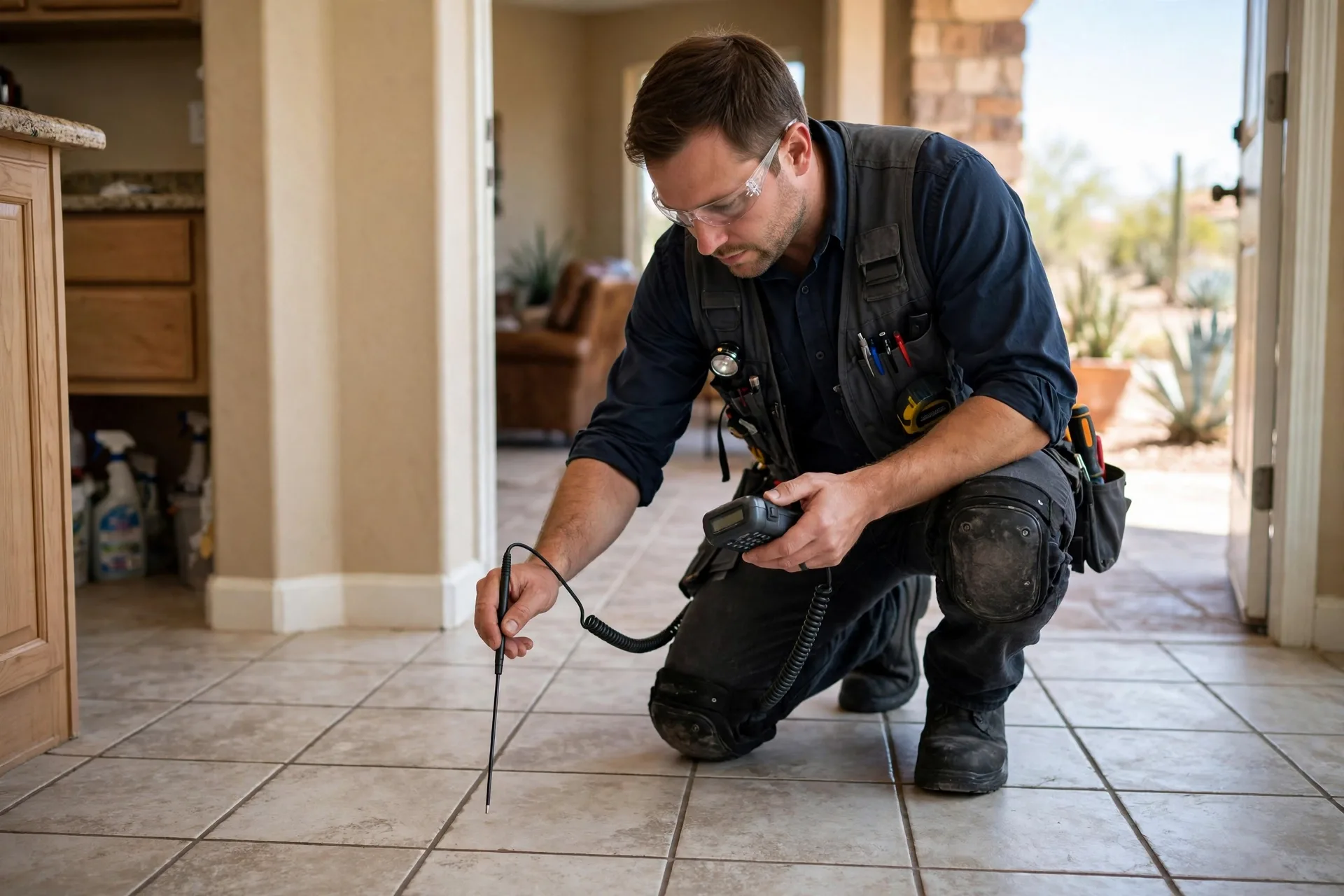
Tracer gas testing is a specialist leak-location method for water and plumbing pipes. In outline, a qualified provider isolates the section of pipe being investigated, introduces a detectable tracer gas into it, and then uses a sensitive gas detector at the surface to find where the gas is escaping, which corresponds to where the water has been escaping. Because the gas travels through soil, paving joints and other pathways to the surface, the method can work where listening equipment hears too little to be useful.
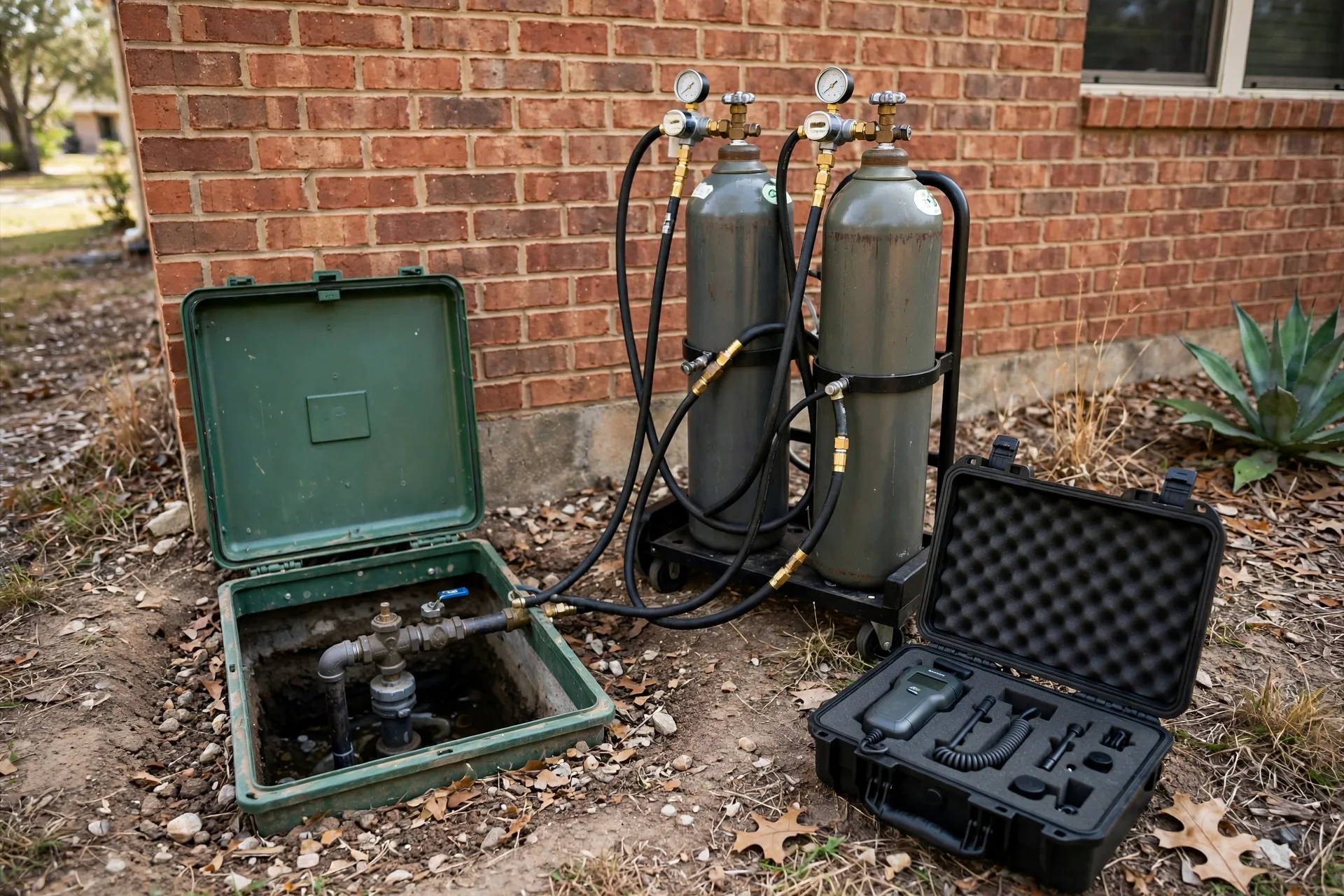
Homeowners searching for tracer gas leak testing are often at that stage: a meter, pressure or isolation check suggests a concealed plumbing leak, but surface methods have not produced a clear point.
It is deliberately a second-line method rather than a first resort: it needs specialist equipment, a system that can be isolated and prepared, and qualified handling throughout. The exact gas, equipment and procedure vary between providers and systems, and this page intentionally stays at the level of what the method is, the operational details belong to the qualified provider doing the work. For the broader investigation picture, see the DeSoto leak detection overview.
An Important Distinction: This Is Not Natural-Gas Line Testing
The word "gas" causes a reasonable confusion, so it is worth being explicit: tracer gas testing uses a test gas as a diagnostic tool to locate water leaks. It is not a service for diagnosing or repairing natural-gas lines, and a suspected problem with a gas supply line is a different matter handled by different professionals. Concerns about gas lines and related systems sit on the gas line & HVAC refrigerant leak detection page.
Do not use this page or the referral line as your first step. Leave the affected area, avoid operating electrical switches and anything that could create a spark or flame, and from a safe location contact your gas utility or emergency services (911) and follow their instructions. A suspected gas leak is a safety emergency, not a routine service request.
When Tracer Gas Testing May Be Considered
A provider typically considers tracer gas when the usual methods have run out of road:
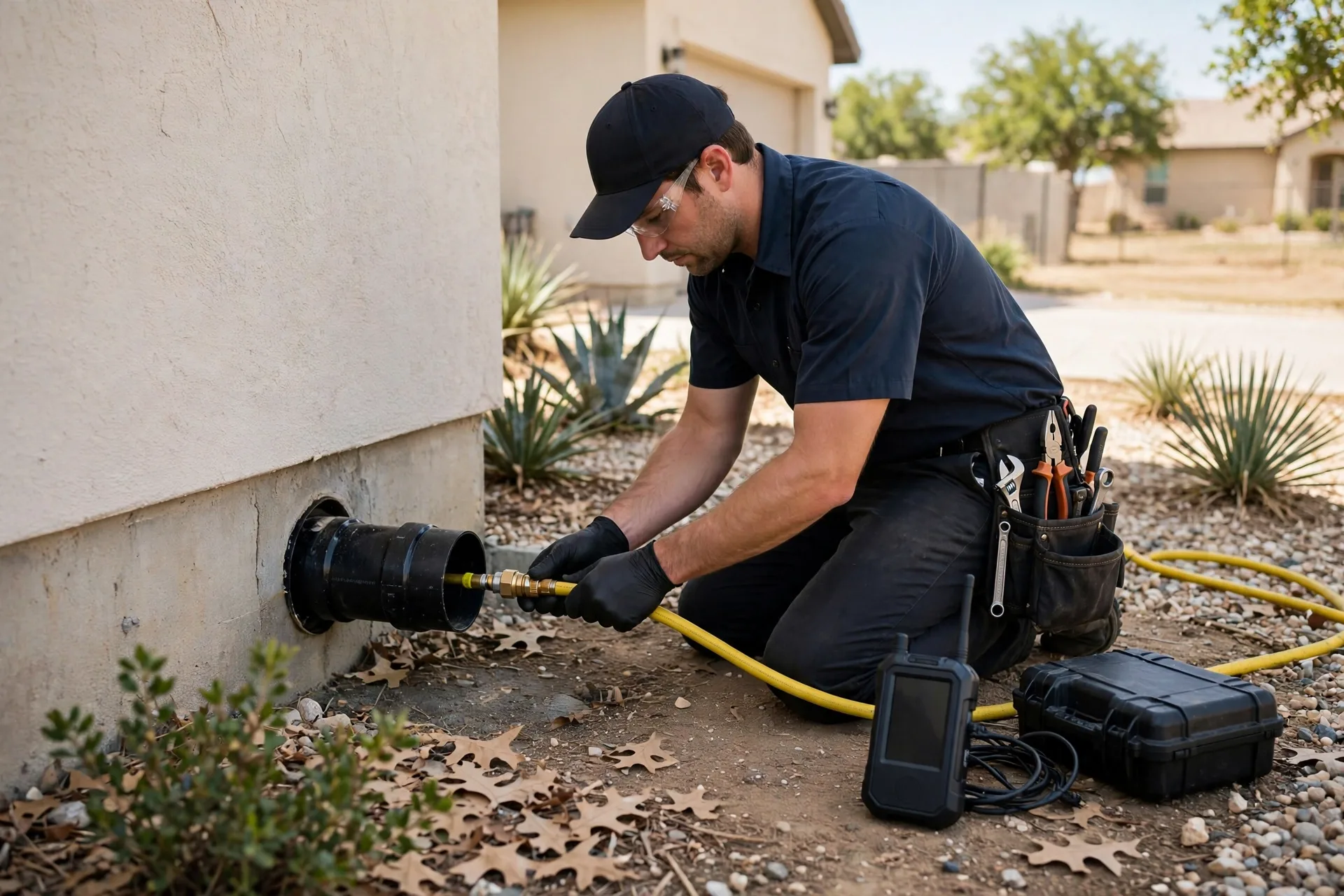
- The leak appears to be real but quiet. Pressure or isolation testing suggests a section of line is losing water, but acoustic listening produces no usable sound, low pressure, sound-dampening pipe material or a small leak can all cause that.
- The pipe is deep, concealed or under hard surfaces. Buried lines under concrete, paving or flooring, where surface evidence is weak or misleading.
- A long run needs narrowing. Where a line's route is lengthy and excavation on a guess would be the expensive alternative.
- Earlier investigation narrowed the system but not the spot. Tracer gas is often the step that follows inconclusive acoustic or pressure results.
It is not a universal test. Suitability depends on the type of system and pipe, whether the line can be isolated, what the system normally carries, access, site conditions and safety considerations, and not every pipe, property or suspected leak qualifies. It is not the tool for every buried pipe, slab, interior, pool or drain problem, and it is never a do-it-yourself procedure. Where the suspicion is really about the buried supply line or the slab itself, start with underground main line detection or slab leak detection; tracer gas may then feature inside that investigation if the provider judges it appropriate.
How Tracer Gas Testing Differs From Other Methods
Each method gathers a different kind of evidence; tracer gas is the specialist addition, not a replacement for the rest:
No method is universally superior, and tracer gas is not "the accurate one" by default, it answers a specific kind of problem under specific conditions. See acoustic ground microphone testing and thermal imaging & moisture scans for the alternatives in depth.
What the Inspection Process May Involve
Providers vary, and nothing here is a mandatory procedure, but a tracer gas engagement typically involves:
Gather system information
The symptoms, the suspected system and section of line, and what earlier testing has already established or ruled out.
Assess suitability
The provider judges whether tracer gas fits the pipe type, isolation options, access and site conditions, or whether another method serves better.
Confirm scope and safety
Testing scope, site requirements and safety arrangements are agreed before the qualified provider carries out the assessment.
Discuss findings
What the testing showed, how strong the evidence is, and whether follow-up testing or a repair assessment is the right next step.
What Tracer Gas Testing Can and Cannot Establish
Used on a suitable system, tracer gas testing can provide strong evidence of where a leak is located, sometimes the clearest evidence available for a quiet, concealed line. That is its genuine value.
Its limits deserve equal clarity. The gas surfaces where it can escape, which is usually but not invariably directly above the leak, soil, paving and voids can divert it. A positive finding identifies an escape point for the gas; interpreting that as the exact repair point is the provider's professional judgment, informed by the system layout. The test says nothing about the pipe's overall condition, does not identify the repair method or its cost, and may still conclude inconclusively on an unsuitable system. It does not guarantee a precise location, a single visit, or that surface access can be completely avoided if repair follows. Findings from any method are evidence for a qualified professional to interpret, not a verdict the equipment delivers on its own.
Detection vs. Repair: What Testing Does Not Include
Tracer gas testing is diagnostic. If it supports a location, the next step is a repair assessment: the provider confirms the findings, explains the corrective options, which may involve excavation or opening a surface at the identified point, and prices that work separately for your approval. Testing does not include the repair, does not commit you to it, and the presence of tracer gas evidence does not by itself define the repair solution. Confirm scope, qualifications, access arrangements and pricing directly with the independent provider. The guide leak detection vs. leak repair explains the boundary in full.
What Affects the Cost of a Tracer Gas Inspection?
This website does not set inspection prices, and quoting a figure without seeing the system would be misleading. A provider's price generally reflects:
- The type of system being investigated.
- The complexity and location of the suspected leak.
- How accessible the site and the line are.
- The specialist equipment and professional expertise the method requires.
- Whether additional diagnostic testing is needed.
- Whether a repair assessment follows, always quoted separately.
Diagnostic fees and repair charges are separate things; ask for both to be stated clearly rather than bundled. See leak detection cost factors for how these charges are generally structured.
Preparing to Contact a Provider
- Identify the property and the suspected system or section of line.
- Describe the observed symptoms, water loss, meter behavior, wet areas, pressure changes.
- Note when the problem began and how it has developed.
- Mention any previous inspection findings, especially acoustic or pressure results that were inconclusive.
- Have the full property address and ZIP code ready so availability can be confirmed.
- Be ready to ask: is tracer gas suitable for this specific problem, what does the proposed test include, what are the fees, and how are repairs quoted?
Never attempt tracer gas testing yourself, and do not alter, pressurize or open a pipe system to "help" before the visit. This method involves specialist gas handling and pressurized systems and belongs entirely to qualified providers. Describe the symptoms; leave the system exactly as it is.
Choosing a Suitable Provider: Questions to Ask
- Do you offer tracer gas testing for this specific application?
- Are you appropriately qualified for the system being tested?
- What does the proposed test include?
- Are additional tests charged separately?
- How will the findings be explained to me?
- Is repair included, or separately quoted?
- What site-access or safety requirements apply?
These are general evaluation questions, not verified claims about any specific provider. See also questions to ask a leak detection provider.
Tracer Gas Testing in the DeSoto Area
This page focuses on tracer gas leak detection for homes and properties in DeSoto, Texas, including the 75115 and 75123 ZIP code areas. Those ZIP codes are coverage references, not a guarantee that every address or every application can be served, specialist methods depend on the provider and the system, so when you call, describe the suspected system as well as the address. The DeSoto service-area directory lists the wider coverage.
Frequently Asked Questions
What is tracer gas leak testing?
It is a specialist method for locating water leaks in pipes. A qualified provider isolates the section of pipe under investigation, introduces a detectable tracer gas into it, and uses sensitive detection equipment at the surface to find where the gas escapes, indicating where water has been escaping. It is generally used when other methods, such as acoustic listening, have not produced a clear location. It is a water-leak location technique, not a natural-gas line service.
When may tracer gas testing be appropriate?
Typically when a leak is strongly suspected, for example, pressure or isolation testing shows a section of line is losing water, but the leak is too quiet, too deep or too concealed for acoustic or surface methods to locate. Long pipe runs and lines under concrete or paving are common scenarios. The provider decides based on the pipe type, whether the line can be isolated, access and site conditions.
Is tracer gas testing suitable for every pipe system?
No. Suitability depends on the system and what it carries, whether the section can be isolated and prepared, accessibility, site conditions and safety considerations. Some pipes and some situations are better served by acoustic testing, pressure testing or another method entirely. Ask the provider directly whether the application fits your specific system rather than assuming it does.
How does tracer gas testing differ from acoustic leak detection?
Acoustic detection listens for the sound a pressurized leak makes and needs no system preparation, but fails when the leak is too quiet or conditions mask the sound. Tracer gas testing does not depend on sound at all: it detects gas escaping at the surface, which is why it is considered for the quiet, deep or concealed leaks acoustic methods struggle with. In exchange it requires specialist equipment, system isolation and qualified handling, so it is usually the later step, not the first.
How does tracer gas testing differ from thermal imaging?
Thermal imaging maps surface-temperature patterns that can accompany moisture and is used mainly to guide investigation of walls, ceilings and floors. It does not detect gas and does not locate a buried pipe leak directly. Tracer gas testing works on the pipe itself: the escaping test gas marks the leak's location at the surface. The two methods address different problems and are rarely substitutes for each other.
Does tracer gas testing guarantee an exact leak location?
No. On a suitable system it can provide strong location evidence, but the gas escapes where pathways allow, which is usually, not invariably, above the leak, and interpreting the finding against the pipe layout remains a professional judgment. Conditions can also make results inconclusive. Any provider guaranteeing an exact location in advance is overstating what the method can promise.
What affects the cost of a tracer gas inspection?
The main factors are the type of system being investigated, the complexity and location of the suspected leak, site accessibility, the specialist equipment and expertise required, and whether additional diagnostic testing is needed. Inspection fees are separate from any repair charges, and this website does not set prices, ask the provider what the test includes and what it costs before booking.
Does leak detection include repair?
No. Detection, including tracer gas testing, investigates the leak and produces location evidence. Repair is separate corrective work with its own scope and price, agreed with the provider after the findings are explained. Testing never automatically includes excavation or repair.
What qualifications should I ask a provider about?
Ask whether the provider offers the specific tracer-gas application your system needs, whether they are appropriately qualified for that system, what the proposed test includes, whether additional tests cost extra, how the findings will be explained, whether repair is included or separately quoted, and what site-access or safety requirements apply. Verify the answers with the provider directly; this website does not certify provider qualifications.
What information should I prepare before calling?
The property address and ZIP code, the suspected system or section of line, the symptoms you have observed (water loss, meter behavior, wet areas, pressure changes), when the problem began, and any previous inspection findings, particularly acoustic or pressure-testing results that were inconclusive, since those are often what lead to tracer gas being considered.
How does the DeSoto Leak Detection referral process work?
You call (972) 947-9742 and describe the symptoms, the suspected system and the property address. Your request is directed toward an independent provider, and that provider confirms whether tracer gas testing is offered and suitable for your case, along with scope, availability and pricing, directly with you. DeSoto Leak Detection does not perform the testing or any repair itself. If you suspect an active natural-gas leak, contact your gas utility or 911 first, do not wait on a referral.