What Is Commercial Leak Detection?
Commercial leak detection investigates possible leaks in the plumbing of a business property: the water supply system, distribution pipes, fixtures and connections serving offices, retail spaces and other commercial premises. The questions are the practical ones a business needs answered: is water actually being lost, where is it most likely coming from, and what should happen next?
Commercial buildings differ from homes in ways that shape the inspection. Plumbing is often distributed across multiple zones, restrooms, break rooms, mechanical and utility rooms, usage follows business hours rather than household routines, and access usually has to be coordinated with an owner, property manager or authorized site contact. The inspection approach follows the building, not a fixed script. For residential concerns, start with the DeSoto leak detection overview instead. The main leak detection desoto tx page covers every service this site routes.
Commercial Properties That May Need Leak Inspection
The common thread is a plumbing system plus a symptom that does not explain itself:
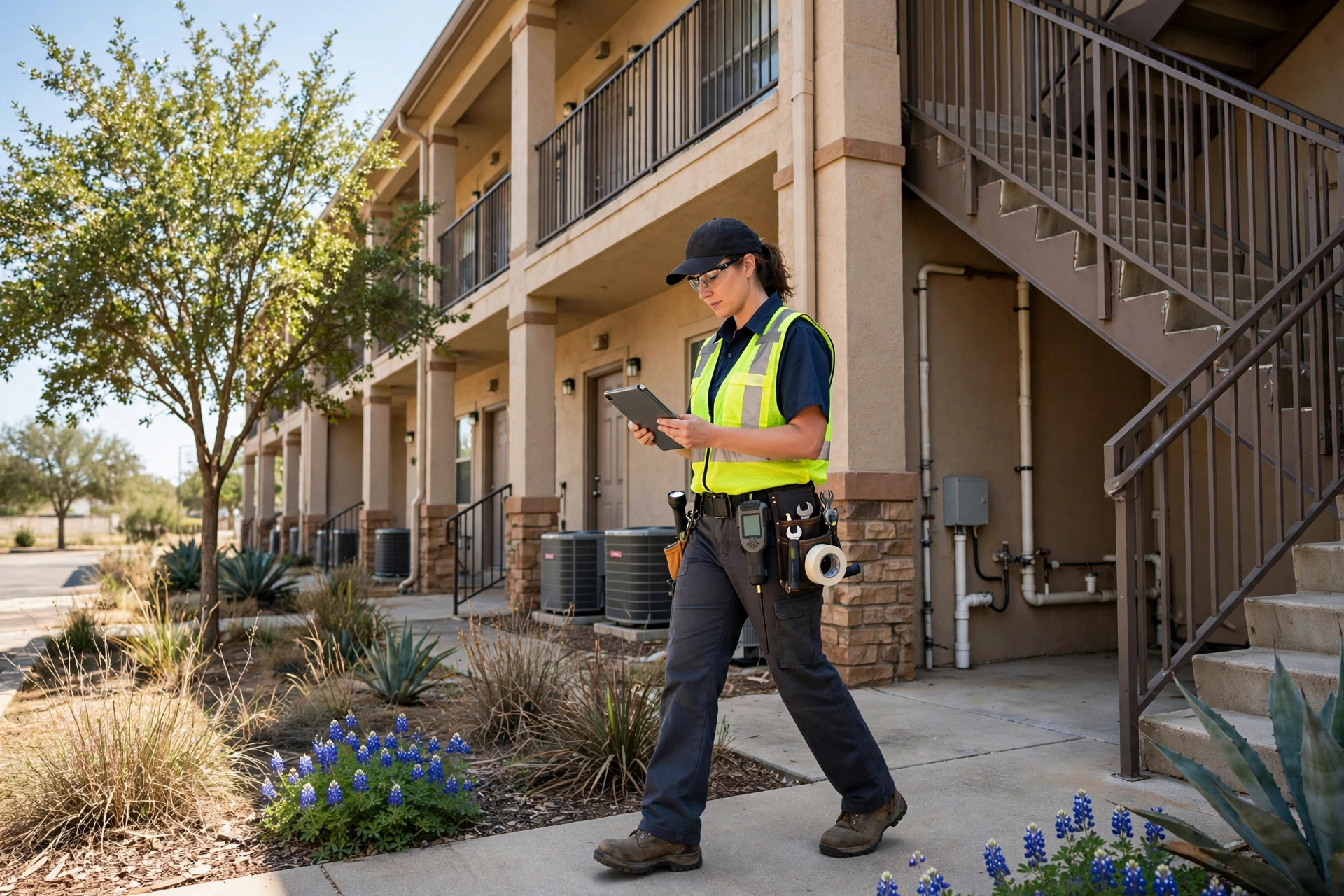
- Office buildings, restrooms, break rooms and mechanical rooms spread across floors, where a leak in one zone can show up as damage in another.
- Retail spaces and storefronts, where moisture or a ceiling stain is visible to customers and the source is rarely directly above it.
- Small commercial premises, standalone business buildings with their own supply line, meter and internal plumbing.
- Multi-unit and mixed-use buildings, shared plumbing makes source-location and documentation especially important; confirm with the provider that your building type and the suspected system are within their scope before booking.
- Any commercial property with applicable plumbing, washrooms, break-room fixtures, utility areas and service lines are the systems most often involved.
If the suspected problem is a single known fixture fault, a plumber may be the right first call. Detection earns its place when water is being lost, or moisture is appearing, and the source is not obvious.
Signs of a Potential Commercial Water Leak
Each of these observations has more than one possible cause, irrigation, HVAC condensate, a faulty fixture, a meter or billing error. They are reasons to investigate, not proof of a leak:
- Unexplained increases in water usage or utility bills. A sustained rise that occupancy or seasonal changes do not explain is the most common starting point.
- Unexpected water-meter movement. A meter that registers flow when the building is closed and no water should be running.
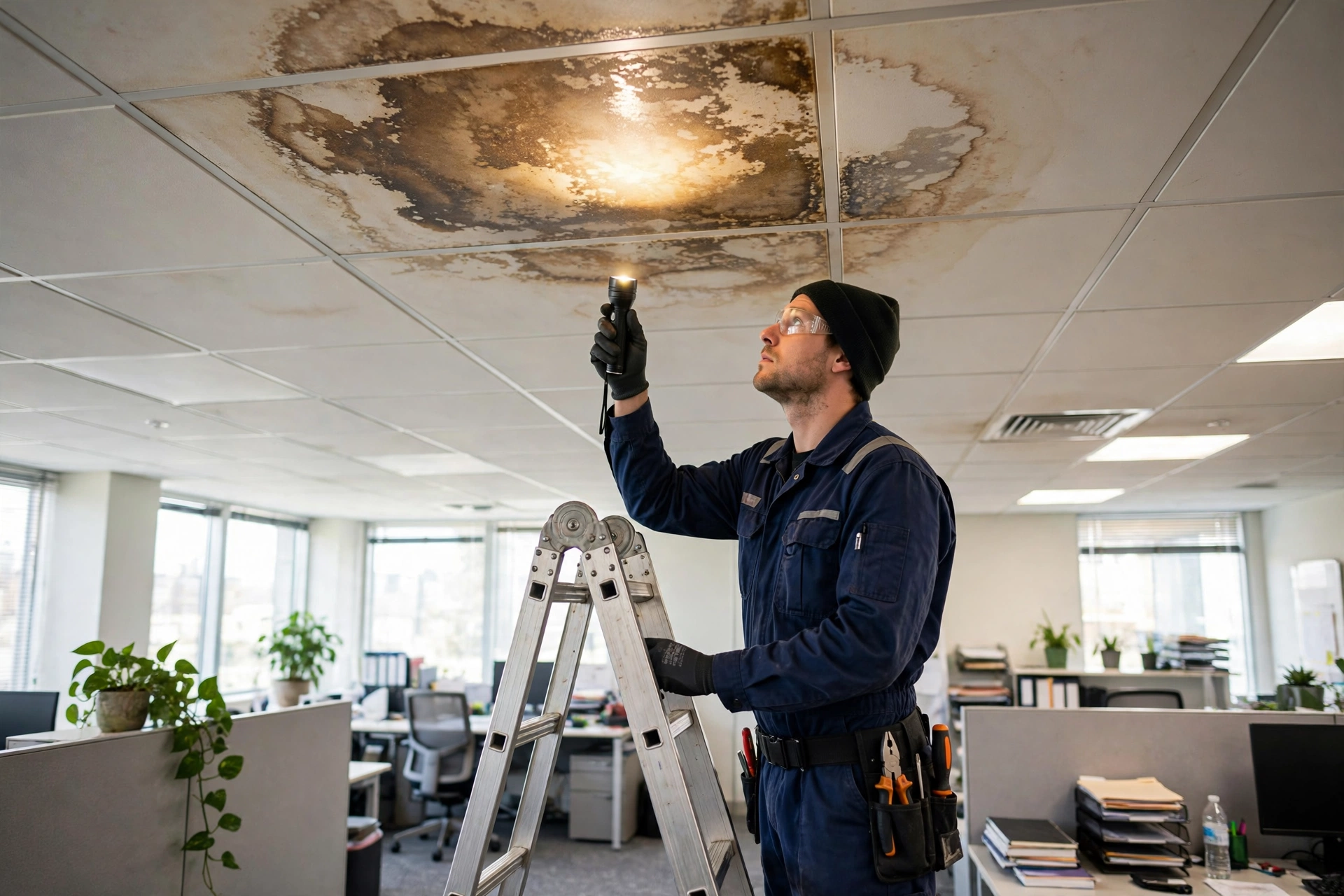
- Damp ceiling tiles or water stains on walls and ceilings. Especially stains that grow, recur after repair of the surface, or appear below restrooms and mechanical areas.
- Wet flooring near plumbing fixtures. Persistent damp around restrooms, break rooms, janitor areas or water heaters.
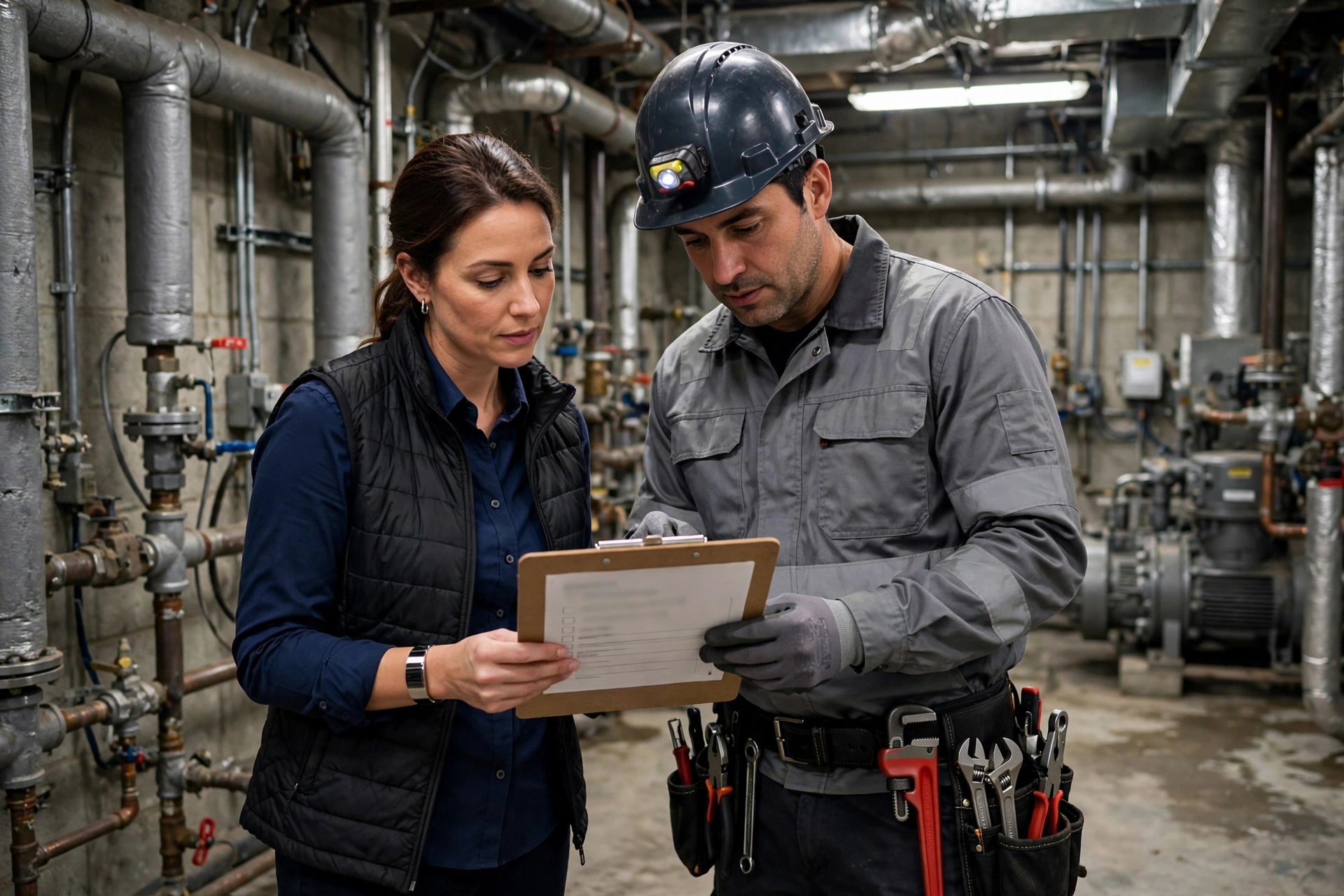
- Persistent moisture near service areas. Mechanical rooms, utility rooms and pipe chases that stay damp without a visible reason.
- Unexplained water-pressure changes. Pressure that drops or fluctuates in part of the building.
- Recurring symptoms across different areas. The same moisture or odor problem returning in multiple zones can indicate a shared supply or distribution issue.
The companion guide water leak signs in offices, retail stores and commercial spaces works through these in a business setting.
How Commercial Leak Detection Works
Procedures depend on the provider, the building and the evidence, but a typical engagement follows this shape:
Gather property information
The symptoms, the areas affected, the suspected plumbing system, and who authorizes access to each part of the building.
Review usage evidence
Water bills, meter observations and maintenance history are compared against the building's normal usage pattern.
Inspect and test
The provider selects methods suited to the system, inspection, listening, moisture or thermal checks, pressure or isolation testing.
Report findings, plan next steps
Findings are explained, remaining uncertainty is stated, and any repair is scoped and assessed separately.
For a property manager coordinating access across tenants, a preventive survey approach can also help: instead of waiting for a stain or a bill spike, the building is checked zone by zone and the findings are documented, so repairs can be scheduled with less disruption. The aim is to minimize downtime for the businesses inside, especially in multi-unit buildings where one leak can affect several tenants at once.
Diagnostic Methods for Commercial Buildings
No single method suits every system; the building and the symptoms decide the combination:
Not every provider offers every method, and not every method fits every building. For depth on two of them, see acoustic ground microphone testing and thermal imaging & moisture scans.
Commercial vs. Residential Leak Inspection: What Differs
The underlying physics is the same; the logistics are not:
- Scale and layout. More fixtures, longer distribution runs and multiple plumbing zones mean more candidate sources to eliminate.
- Usage patterns. Consumption follows operating hours and tenancy, so "normal" has to be established before "abnormal" means anything.
- Access and authorization. Tenant spaces, locked utility areas and after-hours restrictions all need an authorized site contact to coordinate.
- Mechanical and utility rooms. Central equipment concentrates both plumbing and clues in service areas homes do not have.
- Documentation. In shared or managed properties, written findings matter, owners, tenants and managers may all need the same record of what was found.
- Follow-up testing. Larger systems more often need staged testing across zones rather than one pass.
None of this means a commercial inspection is automatically longer or costlier than a residential one, a small retail unit can be simpler than a large house. It depends on the building and the system, which is why scope is confirmed per property.
Preparing for a Commercial Leak Inspection
A property manager or site contact can make the inspection considerably more efficient by preparing:
- The affected area or suspected plumbing system, as precisely as you can identify it.
- When the symptoms first appeared, and how they have changed.
- Water-usage or utility-bill records showing the change you are concerned about.
- Notes on previous plumbing work, prior leaks or recurring symptoms.
- The name of an authorized site contact who can provide building access.
- Access arrangements: tenant notification, locked areas, alarm or after-hours requirements.
- Any building drawings or plumbing plans you hold, useful context for the provider, if available.
- Your questions on scope and fees, ready to confirm before work starts (see below).
In shared and managed buildings, ask the provider at the outset what findings they will put in writing. A clear record of what was tested, what was found and what remains uncertain serves owners, tenants and managers long after the visit, and it is far easier to arrange before the inspection than after it.
What Affects the Cost of a Commercial Leak Inspection?
This website does not set inspection prices, and no honest figure exists without knowing the building. A provider's price generally reflects:
- The property's size and plumbing layout.
- Which plumbing system is suspected.
- How accessible the suspected source is.
- Which diagnostic equipment and tests are required.
- How complex or widespread the reported symptoms are.
- Whether additional testing rounds or follow-up assessment are needed.
Ask for the inspection scope and fee in clear terms before booking, and confirm whether follow-up testing is included or charged separately. Repair is always a separate quotation, made after the findings are known. See leak detection cost factors for how these charges are generally structured.
After the Inspection: Detection vs. Repair
If a likely source is identified, the next step is a repair assessment: the provider scopes the corrective work, access, parts, any excavation or surface opening, and prices it separately for your approval. If the evidence points away from plumbing (an HVAC condensate problem, for example, or roof intrusion above a top-floor space), the right next step may be a different trade. If results are inconclusive, staged follow-up testing may be recommended rather than guesswork.
Detection itself is only the investigation. It does not include repair, and it does not commit you to one: confirm the repair scope, the qualifications for that work, access arrangements, pricing and any separate agreement directly with the independent provider before authorizing anything. DeSoto Leak Detection does not carry out plumbing work. The guide leak detection vs. leak repair explains the boundary in full.
Choosing a Commercial Provider: Questions to Ask
- Have you handled this type of commercial plumbing system?
- Which inspection methods may be appropriate here, and why?
- What exactly does the proposed inspection include?
- What site-access arrangements do you need from us?
- Are additional tests or follow-up visits charged separately?
- Will you provide the findings and recommendations in writing?
- What credentials or licensing apply to the proposed work?
- If a leak is confirmed, how would the repair be quoted?
These are general evaluation questions, not verified claims about any specific provider. See also questions to ask a leak detection provider, and the commercial leak detection guide for DeSoto businesses.
Commercial Leak Detection in the DeSoto Area
This page focuses on commercial leak detection for business properties in DeSoto, Texas, including the 75115 and 75123 ZIP code areas. Those ZIP codes are coverage references, not a guarantee that every property can be served, when you call, give the full property address and building type so the provider can confirm eligibility. If the concern turns out to sit under the building's slab or in its buried supply line, the relevant pages are slab leak detection and underground main line detection; concealed moisture inside the building is covered by interior wall & ceiling leak detection. The DeSoto service-area directory lists the wider coverage.
Frequently Asked Questions
What is commercial leak detection?
It is the investigation of suspected water loss in a business property: reviewing water-usage evidence, inspecting the plumbing system, and applying diagnostic tests to identify or narrow the source before any repair is committed to. It covers the supply and distribution plumbing serving offices, retail spaces and other commercial premises, and it is performed by an independent provider, DeSoto Leak Detection is a referral service.
What are common signs of a commercial water leak?
Common signs include unexplained increases in water usage or bills, water-meter movement when the building is closed, damp ceiling tiles, water stains on walls or ceilings, wet flooring near fixtures, persistent moisture around mechanical or utility rooms, unexplained pressure changes, and symptoms recurring across several areas. Each sign can have another cause, so they justify investigation rather than proving a leak on their own.
Can an unexpected water bill indicate a possible plumbing leak?
Yes, a sustained increase that occupancy, season or irrigation changes do not explain is one of the most common triggers for a commercial inspection, and meter movement during closed hours strengthens the case. But a high bill is not proof: billing errors, a faulty meter, a running fixture or an irrigation fault can produce the same pattern, which is what the inspection sorts out.
Which methods may be used to investigate a commercial building?
Depending on the building and symptoms, a provider may combine visual inspection of plumbing and moisture indicators, acoustic listening for pressurized leaks, thermal imaging to map suspicious temperature patterns, moisture measurement and mapping, pressure or isolation testing of plumbing sections, and water-meter observation during closed hours. No single method fits every system, and not every provider offers all of them.
Does commercial leak detection include repair?
No. Detection investigates the water loss and identifies or narrows its source; repair is separate corrective work with its own scope, qualifications and price, agreed directly with the provider after the findings are known. An inspection never automatically includes repairs, excavation or restoration.
What affects the cost of a commercial leak inspection?
The main factors are the property's size and plumbing layout, which system is suspected, how accessible the suspected source is, which diagnostic tests are required, how complex the symptoms are, and whether additional testing or follow-up assessment is needed. This website does not set prices, ask the provider for the inspection scope and fee before booking, and confirm how follow-up testing is charged.
Can an inspection be coordinated with a building manager?
Yes, in commercial properties it usually must be. Inspections typically need an authorized site contact to arrange access to tenant spaces, mechanical and utility rooms, and any locked or alarmed areas, and to work around operating hours where necessary. Raise access arrangements when you call so the provider can plan the visit properly.
What information should a property manager prepare before calling?
The affected area or suspected system, when symptoms appeared and how they have changed, water-usage or bill records showing the concern, notes on previous plumbing work or recurring problems, the authorized site contact's details, building-access arrangements, and any plumbing plans you hold. Have the full property address, ZIP code and building type ready so eligibility and scope can be confirmed.
What qualifications should a business ask about?
Ask about experience with your type of commercial plumbing system, which methods the provider uses and why they fit your building, what the inspection fee includes, whether follow-up tests cost extra, whether findings are provided in writing, and what licensing or credentials apply to the proposed work, including any separate repair. Verify the answers with the provider directly; this website does not certify provider qualifications.
How does the DeSoto Leak Detection referral process work?
You call (972) 947-9742 and describe the symptoms, the property type and the address. Your request is directed toward an independent provider for commercial leak inspection, and that provider confirms eligibility, inspection scope, access arrangements, availability and pricing directly with you. DeSoto Leak Detection does not perform the inspection or any repair itself.
What are the most common causes of water leaks in commercial buildings?
Common causes include aging supply pipes and fittings, failed fixture connections, water heater and mechanical room lines, roof and HVAC condensate problems mistaken for plumbing leaks, and lines stressed by heavy daily use across restrooms and break rooms. A survey style inspection sorts which system is actually losing water before repairs are planned.
How much does commercial water leak detection cost in the Dallas area?
Cost depends on the size of the property, the number of zones, restrooms and mechanical areas to check, access conditions, the equipment required, and the documentation the owner or property manager needs. Multi-unit and larger buildings take longer to survey. Ask for the inspection scope and price before scheduling the visit.
Do you provide leak detection for apartment buildings in DeSoto, TX?
This site connects property managers with independent providers for leak detection referrals, including apartment and other multi-unit buildings in DeSoto. The provider confirms the building scope, unit access, availability and pricing directly with the manager. Share the property address, the affected areas, and any water use changes when you call to start the referral.