Water Leak Signs in Offices, Retail Stores and Commercial Spaces
In commercial settings, a leak may show up as an operational anomaly before a large visible water event occurs.
DeSoto Leak Detection GuideUpdated September 26, 2026Reader-focused resource
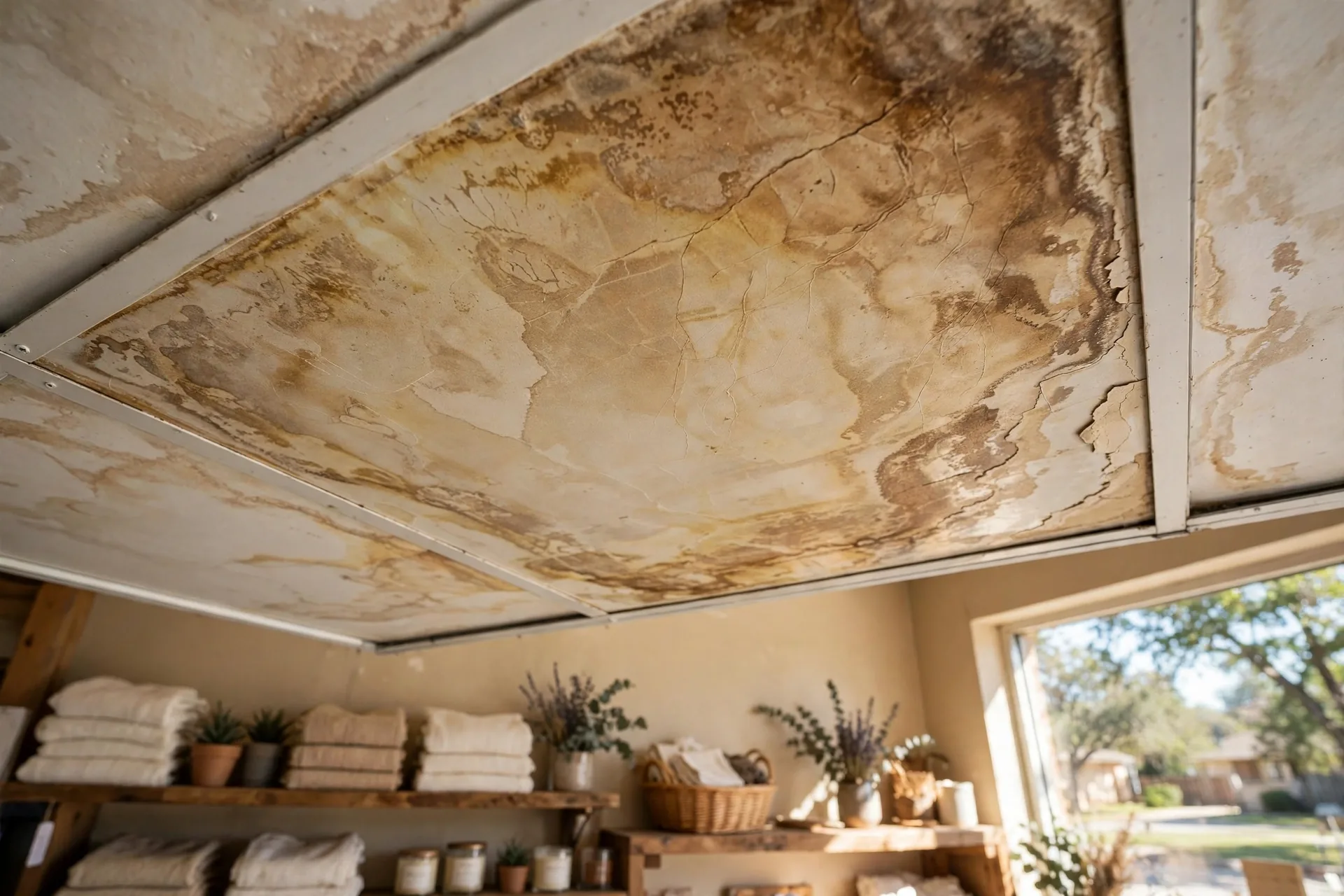
Illustrative leak-detection imagery. Specific equipment and methods vary by property and leak conditions.
Quick answer: Commercial leak signs include unexplained water-use increases, repeated ceiling-tile staining, damp flooring, restroom moisture, mechanical-room leaks, tenant complaints and outdoor wet areas. The key is to correlate the symptom with the building's plumbing and operational schedule rather than assuming the source is in the nearest room.
Quick answer: In offices and retail spaces, watch for unexplained usage spikes on the water bill, damp ceiling tiles, musty odors in storage areas, and water appearing after hours when fixtures are not in use. Log the timing and location of every symptom; maintenance teams' records are often what lets a technician separate a plumbing leak from roof or HVAC drainage.
Written by the DeSoto Leak Detection Editorial Team
Reviewed for clarity, safety, local relevance, and source attribution.
A commercial building has more people and systems interacting with water than a typical home. A restroom fixture may run between cleaning cycles, a condensate issue may look like a plumbing leak, and an underground line can affect a landscaped area far from the mechanical room. Strong documentation helps the provider sort those possibilities.
Commercial clues to put on the maintenance log
Small recurring clues can be more useful than one dramatic event.
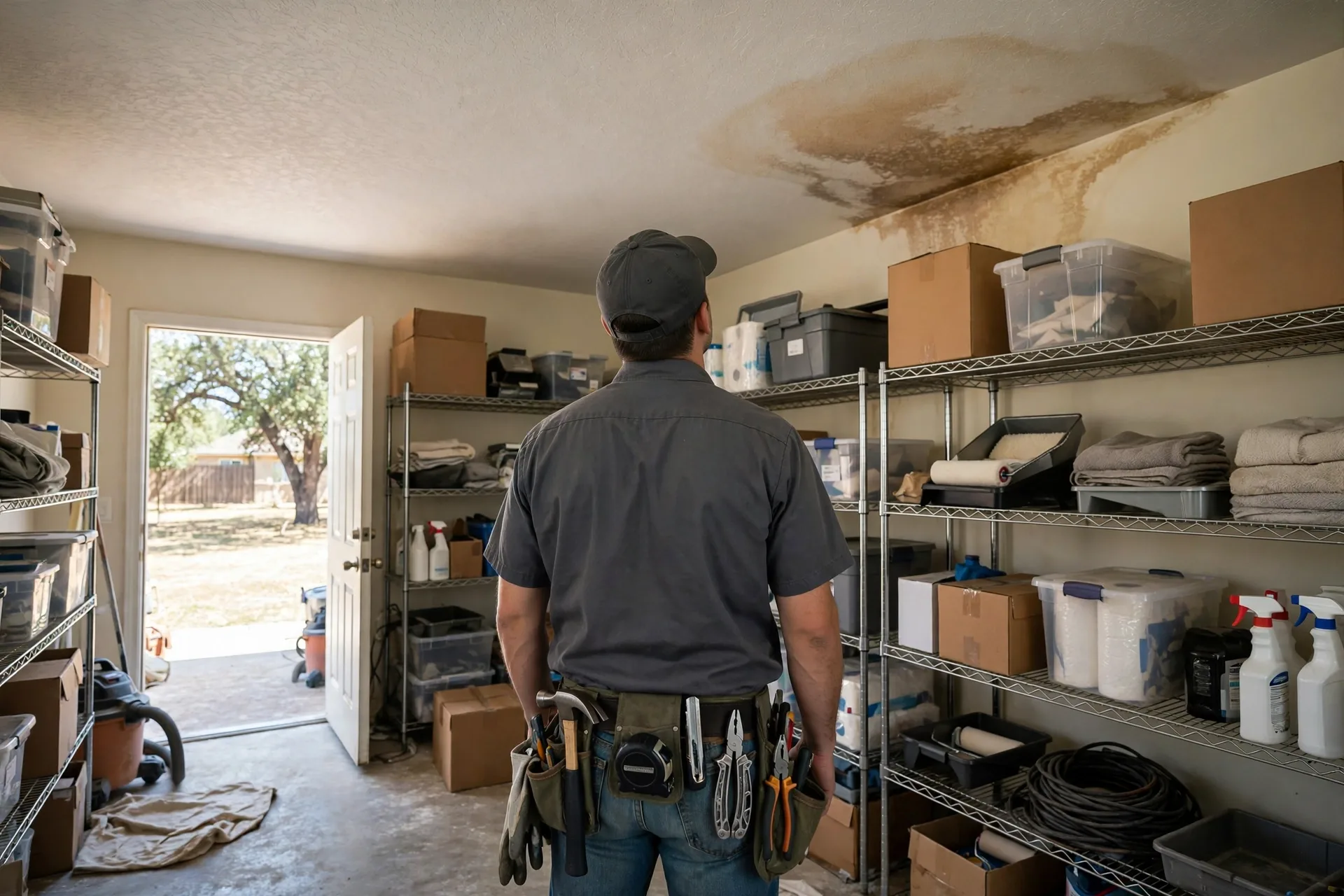
Illustrative leak-detection imagery. Logging commercial clues with dates and photos gives the inspection a running start.
Ceiling tiles or wall finishes show recurring stains after occupancy begins.
A restroom has a fixture that keeps cycling or an area that stays damp.
Water use changes despite stable operating hours or occupancy.
An equipment or mechanical room shows moisture near plumbing connections.
Employees, tenants or customers report musty conditions or unexpected dampness.
An exterior planting area stays wet outside irrigation periods.
How a professional evaluation is typically approached
The source investigation should protect business continuity while narrowing the affected system.
01
Collect reportsCombine tenant, staff and maintenance observations into one timeline.
02
Check obvious fixturesRule out toilets, faucets, appliances and accessible valves.
03
Trace the systemUse the building layout, water-use behavior and diagnostic tools to narrow the source.
04
Coordinate next stepsSchedule repair or further testing around the property's access and operating requirements.
Why maintenance teams should record the timing
Timing can separate several look-alike problems. If the moisture appears only after closing, only when a particular suite is occupied, or only when a mechanical system runs, that detail changes the diagnostic path. Keep records even when the symptom disappears before the inspection.
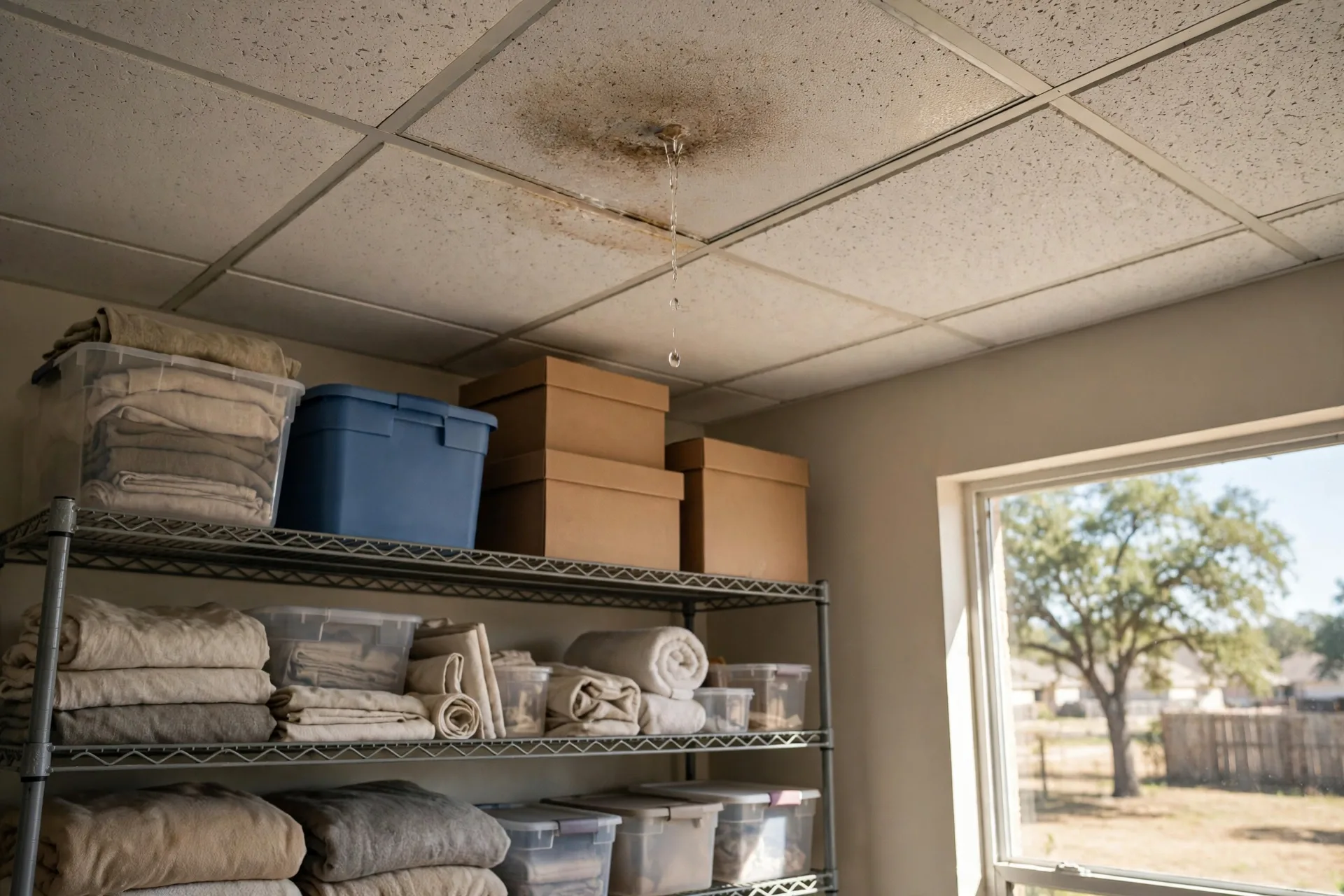
Illustrative leak-detection imagery. Recording when drips and stains appear, and when they stop, helps separate plumbing causes from weather and HVAC causes.
Commercial source-location work is also more useful when facility records are available. Past repairs, leak tickets, meter data and photos can keep the inspection from repeating work that has already been done.
What to have ready before you call
Include:
Affected suite, room or floor
Date/time pattern
Water meter or utility information if available
Recent maintenance or tenant work
Photos and prior work orders
Practical DeSoto context and next-step guidance
For a DeSoto property, the useful starting point is the pattern of the symptom rather than an assumption about the cause. With ceilings, flooring, utility areas, restrooms, cooling equipment, and after-hours symptoms, the same visible clue can have different explanations depending on where water, air, pressure, or moisture is traveling. A careful source investigation therefore starts with observations that can be repeated and compared: when the symptom appears, whether it changes with water use, whether weather or HVAC operation matters, and whether the affected area is close to a known plumbing route.
A practical way to think about commercial water leak signs is to separate three questions: what is happening, where is it happening, and what evidence can narrow the source. That sequence helps avoid premature repair assumptions. For example, a stain, wet patch, pressure change, sound, or water-bill increase is evidence of a symptom, not automatically proof of the exact failed component. A provider may use one method to narrow the area and another to confirm the source before recommending access or repair.
The diagnostic method should match the property and the symptom. Spotting operational clues before water damage interrupts business can involve visual inspection first, followed by targeted use of moisture measurements, thermal imaging, acoustic equipment, pressure observations, or another specialized technique when appropriate. No single instrument produces perfect results in every building. Surfaces, insulation, temperature, pipe material, water pressure, accessibility, and the timing of the leak can all affect what a test can show. Good source location is therefore based on converging clues rather than a single reading.
Before a call, write down the exact room or outdoor area involved, what the symptom looks or sounds like, when it began, and whether it changes after showers, fixture use, irrigation, HVAC operation, or rainfall. Take a few clear photos without moving damaged materials unnecessarily. If the issue is active, note whether water is spreading, pooling, staining a ceiling, or changing the appearance of flooring or walls. Those details give the referring service and the independent provider a more useful starting point.
The most useful next step is not always immediate repair. In many situations the priority is first to establish whether there is an active leak, then identify the source, and only then decide what repair or restoration work is justified. That order can reduce unnecessary demolition and helps the property owner understand what was actually found. For a referral service, the call is the connection point: the customer describes the issue, the request is matched to an appropriate local professional when available, and the provider determines the inspection, testing, pricing, and repair details.
Common questions
Can a ceiling stain in an office be caused by plumbing from another floor?
Yes. Water can travel through building assemblies, so the visible stain may not be immediately above the source.
Should a business shut down an area for a leak investigation?
That depends on the hazard, active water flow and site conditions. The provider and property manager can coordinate access.
Can a commercial leak be found before the damage becomes obvious?
Water-use monitoring and routine inspection can reveal clues earlier, but a hidden leak can still exist without obvious surface signs.
What if a tenant reports moisture but maintenance cannot reproduce it?
Intermittent symptoms should still be documented. Timing and a targeted inspection may be necessary to reproduce or trace the condition.
How this guide was prepared
Practical, sourced and transparent
We separate what can be explained from general guidance, what depends on the property, and what must be confirmed by an independent provider or public authority.
Clear authorship
Prepared by the DeSoto Leak Detection Editorial Team with a reader-first editorial process.
Claim discipline
No fabricated reviews, licenses, awards, pricing promises, response times or field-work claims.
Primary-source links
Safety and utility topics point readers to official sources when a public authority is the right reference.
Content and provider standards: Information is written for customers and does not transfer independent providers’ licenses, reviews, pricing, warranties, or field-work claims to DeSoto Leak Detection. Read our editorial standards →