Commercial Leak Detection: A Practical Guide for DeSoto Businesses
A commercial leak investigation should account for occupancy, multiple water systems, business continuity and documentation needs.
DeSoto Leak Detection GuideUpdated September 26, 2026Reader-focused resource
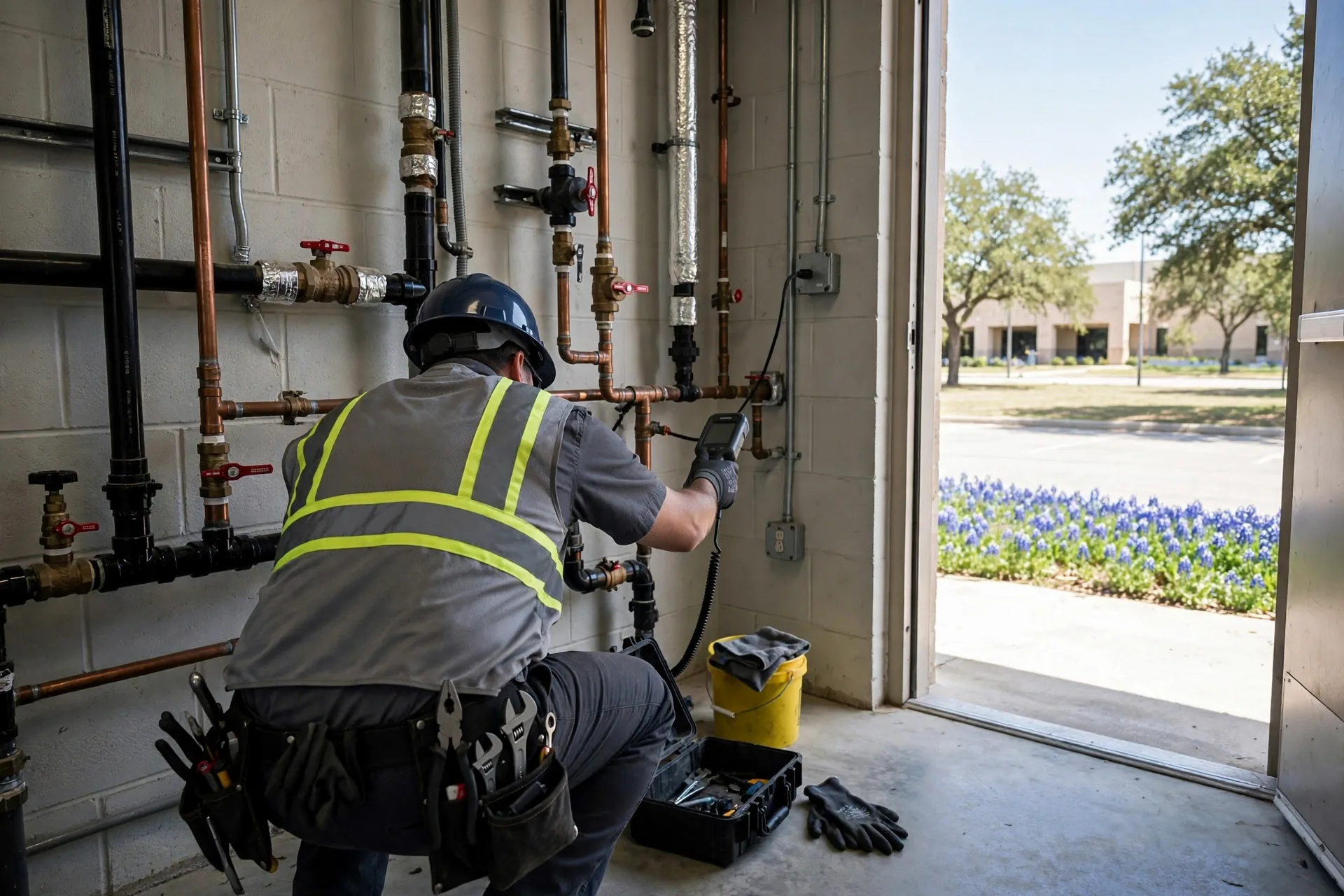
Illustrative leak-detection imagery. Specific equipment and methods vary by property and leak conditions.
Quick answer: Commercial leak detection starts by identifying the affected area and the systems that can produce the symptom. A provider may review water use, accessible fixtures, mechanical spaces and building conditions before using targeted diagnostic tools. The objective is to narrow the source while minimizing unnecessary disruption to operations.
Quick answer: Commercial leak detection follows the same diagnostic principles as residential work but at a larger scale: longer pipe runs, shared systems, irrigation zones, and roof drainage create more possible sources, and business disruption makes accurate first-time location matter more. Document meter readings, usage spikes, and symptom timing before the inspection, since commercial properties generate the paper trail that speeds diagnosis.
Written by the DeSoto Leak Detection Editorial Team
Reviewed for clarity, safety, local relevance, and source attribution.
A leak in an office, retail space, restaurant, multi-unit property or other commercial building can affect more than a single room. There may be multiple meters, water branches, tenant spaces, restrooms, mechanical systems and exterior lines. The diagnostic plan should therefore be organized around the property, not a residential checklist copied onto a business.
Commercial leak signs that deserve attention
Facility teams often see the first clue through operations rather than a visible puddle.
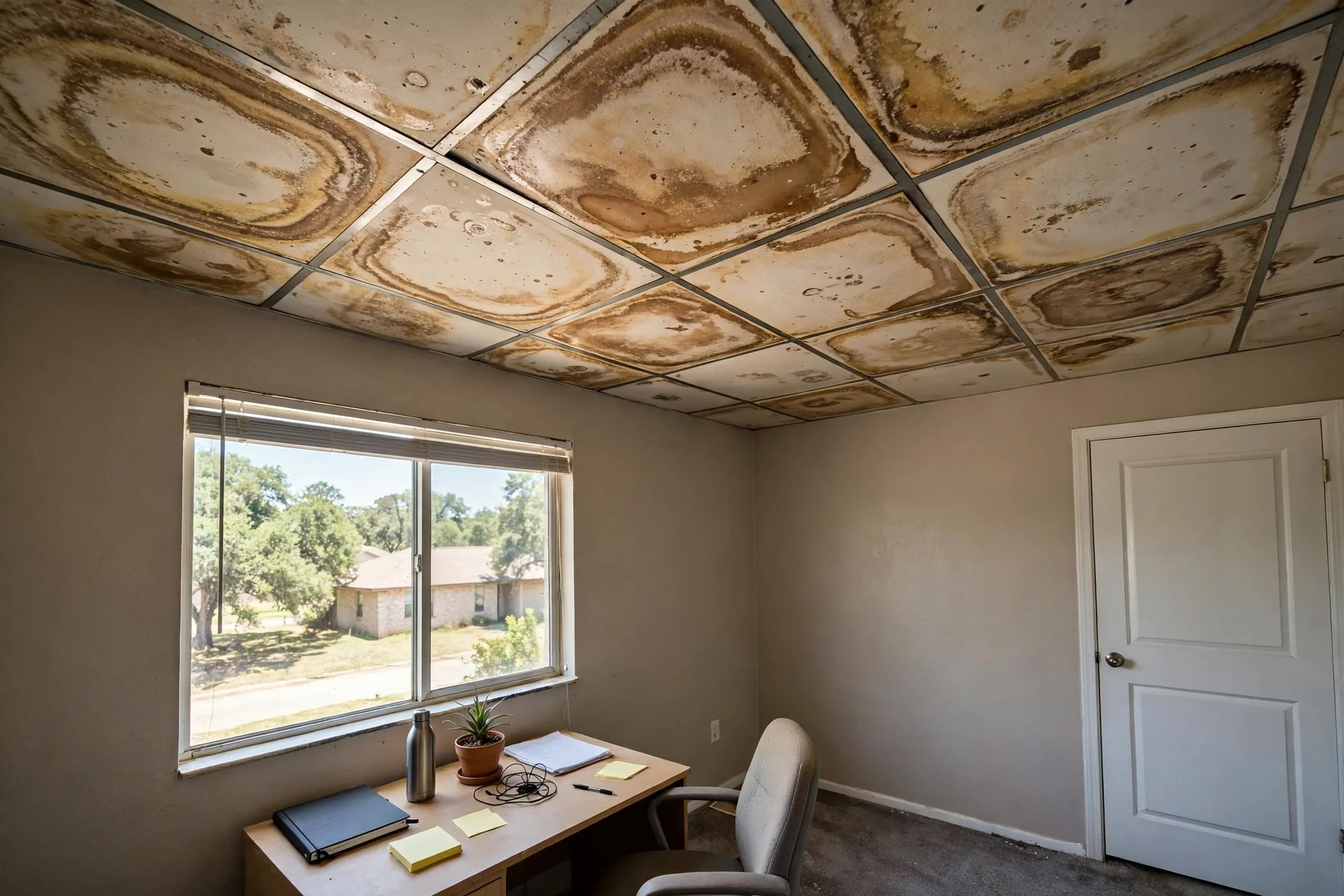
Illustrative leak-detection imagery. Stained ceiling tiles, odors and unexplained usage are the kinds of clues worth logging early in a commercial building.
Water use rises without a clear occupancy or production change.
A restroom, mechanical area or ceiling repeatedly shows unexplained moisture.
One tenant or suite experiences recurring dampness while adjacent areas remain dry.
A landscape area stays wet while irrigation is not scheduled.
A leak or moisture event threatens inventory, equipment, finishes or business access.
How a professional evaluation is typically approached
The provider may organize the inspection in stages to reduce operational disruption.
01
Define the affected zoneIdentify rooms, tenant areas, restrooms, mechanical spaces and exterior symptoms.
02
Review system behaviorCompare water use, shutoff zones and timing with the reported problem.
03
Test selectivelyUse appropriate moisture, acoustic, thermal or pressure information to narrow the source.
04
Document findingsProvide the customer and property stakeholders with practical next-step information.
Why commercial properties need a different diagnostic mindset
A small leak in a commercial building can create a larger operational problem because equipment, inventory, tenants and customers may be nearby. The value of structured source location is partly about making the next access or repair decision more targeted.
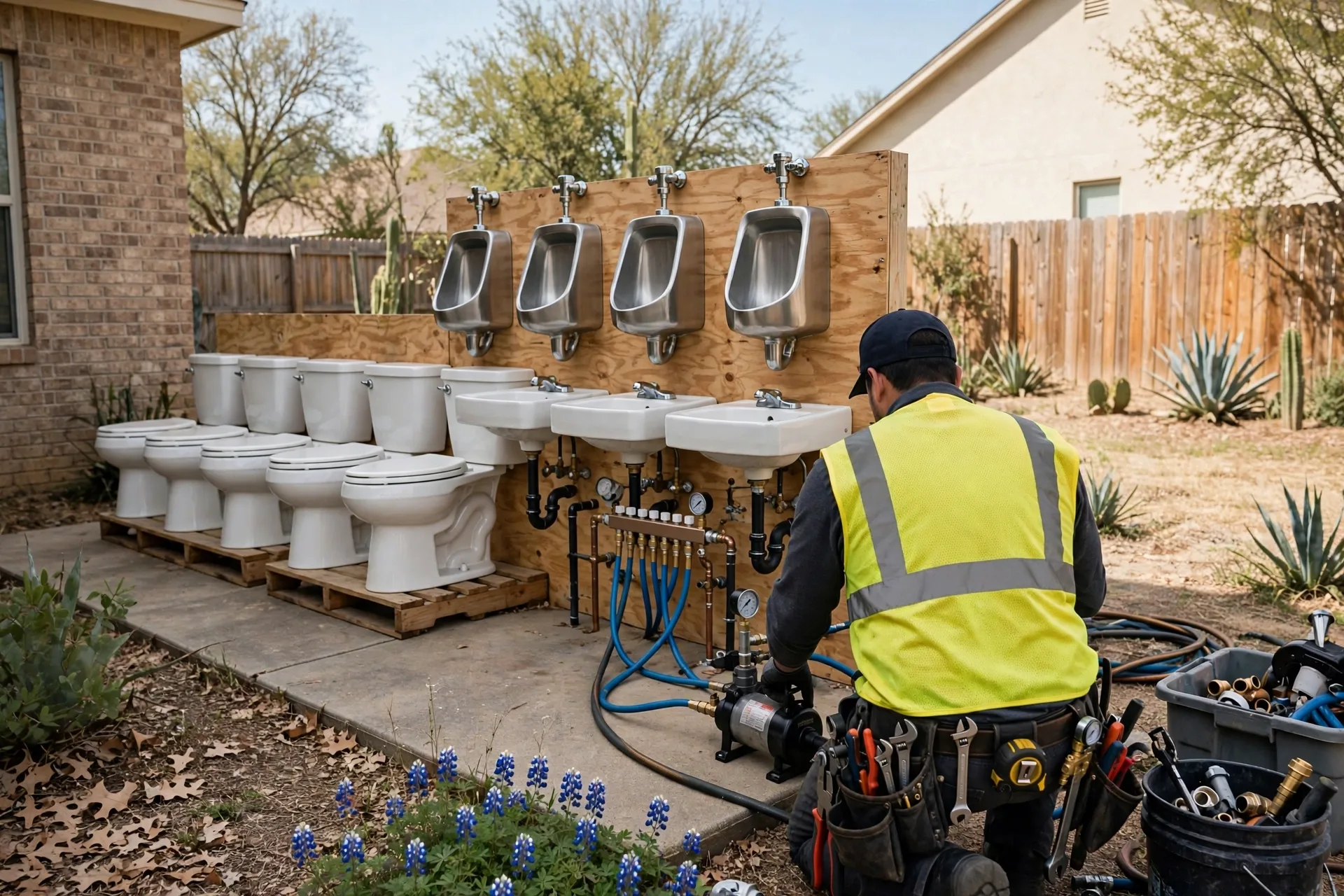
Illustrative leak-detection imagery. Commercial systems serve many fixtures at once, so testing is planned around zones and operating hours.
Commercial investigations can also benefit from a clear handoff: what symptom was observed, what areas were checked, what evidence supports the suspected source and what remains uncertain. The independent provider should define any reporting or documentation included in the scope.
What to have ready before you call
Have ready:
Property type and affected suite/area
Known shutoff zones or meter layout
Approximate date and time of the problem
Any business activities that correlate with the water use
Photos, maintenance tickets or previous inspection records
Practical DeSoto context and next-step guidance
For a DeSoto property, the useful starting point is the pattern of the symptom rather than an assumption about the cause. With offices, retail areas, mechanical rooms, tenant suites, and utility zones, the same visible clue can have different explanations depending on where water, air, pressure, or moisture is traveling. A careful source investigation therefore starts with observations that can be repeated and compared: when the symptom appears, whether it changes with water use, whether weather or HVAC operation matters, and whether the affected area is close to a known plumbing route.
A practical way to think about commercial leak detection is to separate three questions: what is happening, where is it happening, and what evidence can narrow the source. That sequence helps avoid premature repair assumptions. For example, a stain, wet patch, pressure change, sound, or water-bill increase is evidence of a symptom, not automatically proof of the exact failed component. A provider may use one method to narrow the area and another to confirm the source before recommending access or repair.
The diagnostic method should match the property and the symptom. Protecting occupied business space while locating the source can involve visual inspection first, followed by targeted use of moisture measurements, thermal imaging, acoustic equipment, pressure observations, or another specialized technique when appropriate. No single instrument produces perfect results in every building. Surfaces, insulation, temperature, pipe material, water pressure, accessibility, and the timing of the leak can all affect what a test can show. Good source location is therefore based on converging clues rather than a single reading.
Before a call, write down the exact room or outdoor area involved, what the symptom looks or sounds like, when it began, and whether it changes after showers, fixture use, irrigation, HVAC operation, or rainfall. Take a few clear photos without moving damaged materials unnecessarily. If the issue is active, note whether water is spreading, pooling, staining a ceiling, or changing the appearance of flooring or walls. Those details give the referring service and the independent provider a more useful starting point.
The most useful next step is not always immediate repair. In many situations the priority is first to establish whether there is an active leak, then identify the source, and only then decide what repair or restoration work is justified. That order can reduce unnecessary demolition and helps the property owner understand what was actually found. For a referral service, the call is the connection point: the customer describes the issue, the request is matched to an appropriate local professional when available, and the provider determines the inspection, testing, pricing, and repair details.
Common questions
Can commercial leak detection happen while a business is open?
Scheduling depends on the provider and the site. The inspection plan can be coordinated around occupancy and access needs.
Can leak detection help identify a leak in a multi-tenant building?
It can help narrow the affected system or area, but the provider must understand the building's plumbing layout and access rules.
Does commercial leak detection include repair?
Not automatically. Detection identifies or narrows the source; the independent provider determines whether repair is included or handled separately.
What should a facility manager document?
Location, timing, water-use changes, affected spaces, previous work and photos are all useful for the first diagnostic conversation.
How this guide was prepared
Practical, sourced and transparent
We separate what can be explained from general guidance, what depends on the property, and what must be confirmed by an independent provider or public authority.
Clear authorship
Prepared by the DeSoto Leak Detection Editorial Team with a reader-first editorial process.
Claim discipline
No fabricated reviews, licenses, awards, pricing promises, response times or field-work claims.
Primary-source links
Safety and utility topics point readers to official sources when a public authority is the right reference.
Content and provider standards: Information is written for customers and does not transfer independent providers’ licenses, reviews, pricing, warranties, or field-work claims to DeSoto Leak Detection. Read our editorial standards →