Home›Blog›Leak Detection Checklist: What to Note Before You Call
Cost & Decision Guides · Informational Guide
Leak Detection Checklist: What to Note Before You Call
Better observations create a better starting point. You do not need to diagnose the leak yourself; you only need to describe the evidence.
DeSoto Leak Detection GuideUpdated September 26, 2026Reader-focused resource
Illustrative leak-detection imagery. Specific equipment and methods vary by property and leak conditions.
Quick answer: Before calling, note where the symptom appears, when it started, what activities trigger it, whether the water meter changes during no-use periods, what areas have been checked, and whether there has been recent plumbing or construction work. Photos and a short timeline can be especially useful.
Quick answer: Before you call, record five things: when the symptom started and what triggers it, your water meter behavior, any bill changes, dated photos of visible damage, and what you have already ruled out. This record shortens the inspection and helps the technician choose the right test first.
Written by the DeSoto Leak Detection Editorial Team
Reviewed for clarity, safety, local relevance, and source attribution.
Many leak investigations begin with information gathered before any equipment comes out. The difference between “there is water somewhere” and “the ceiling stain returns after a shower and the meter is stable otherwise” can change what the provider checks first.
The five categories to record
Keep your notes simple and specific.
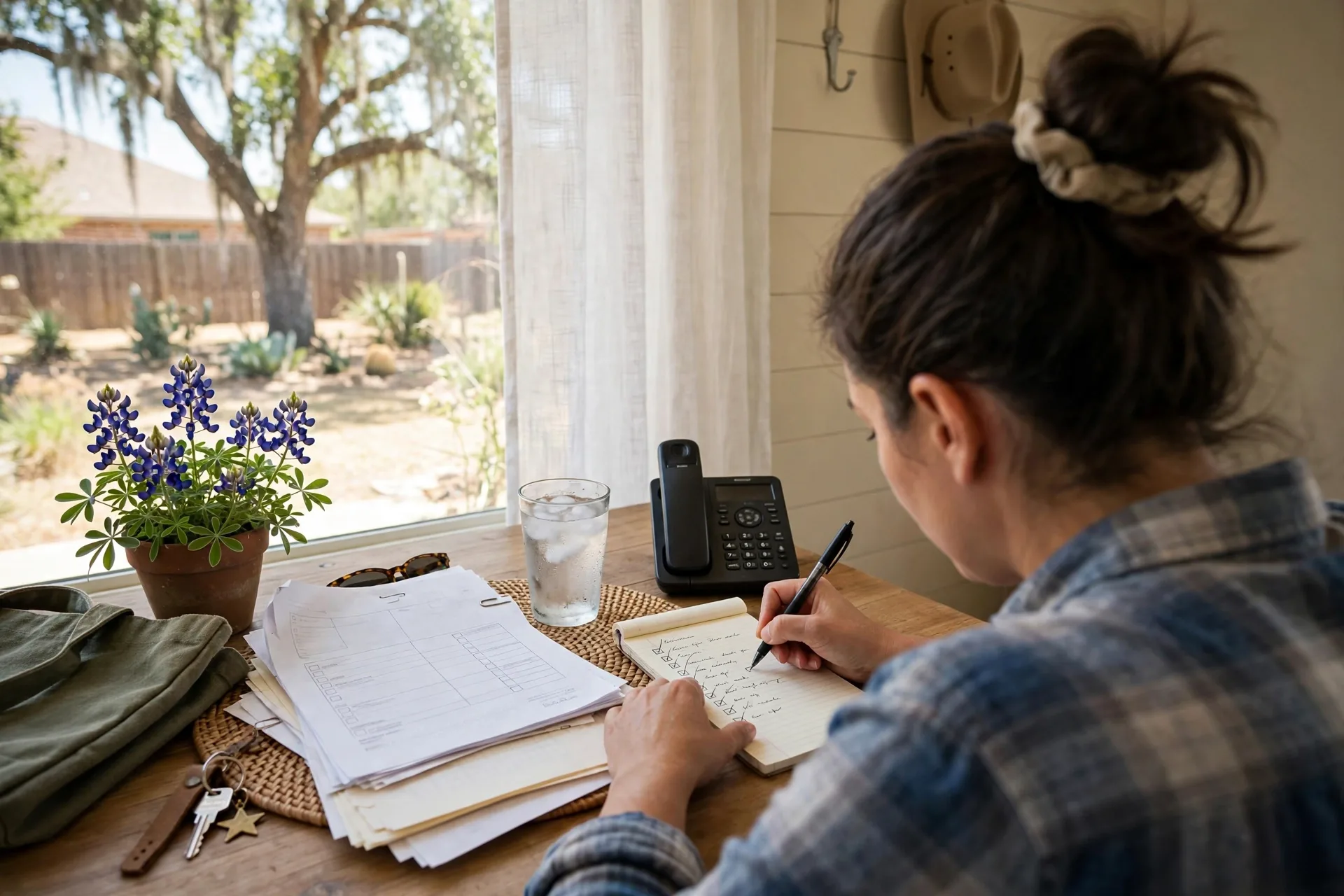
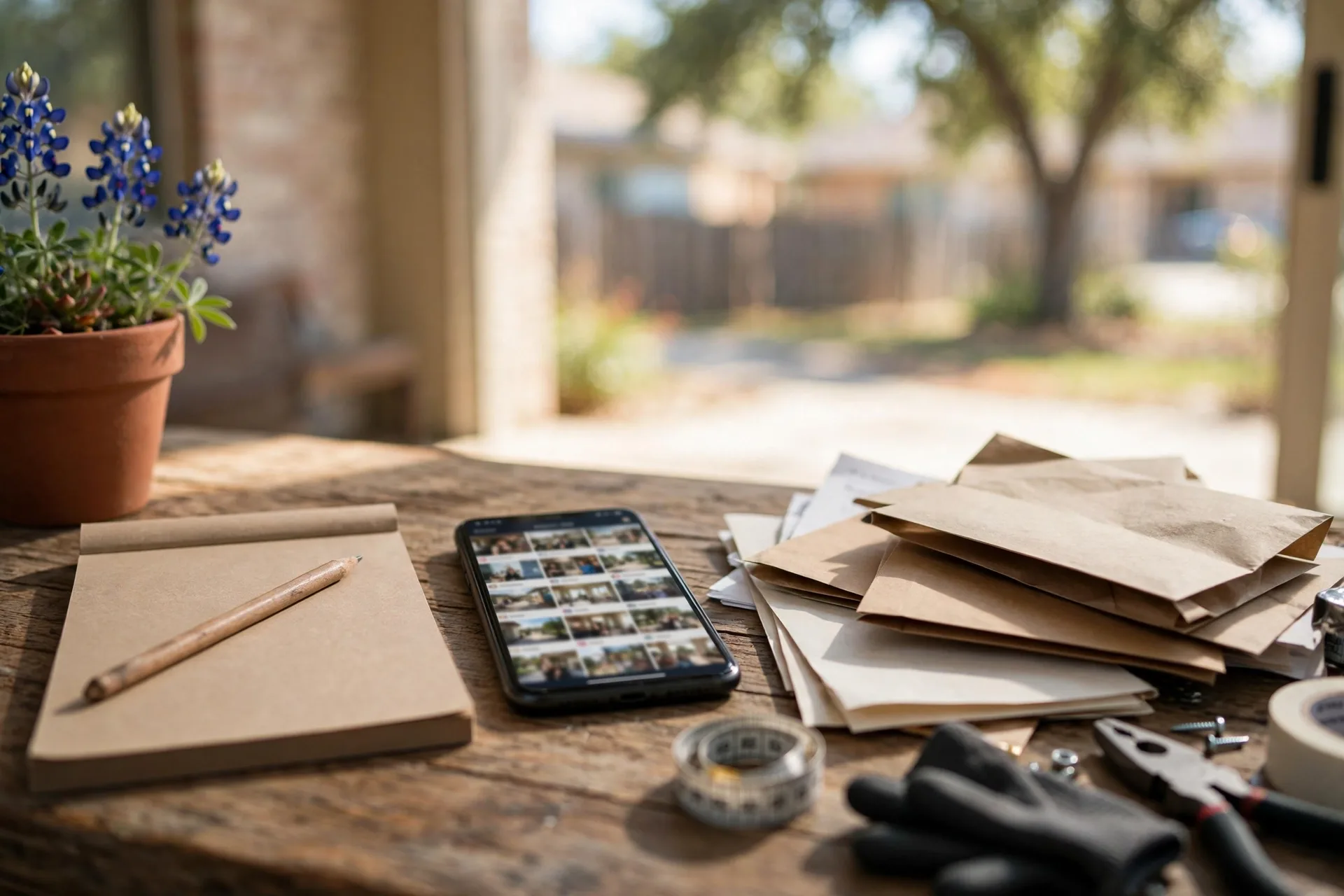
Illustrative leak-detection imagery. Recording symptoms, timing, meter observations and photos in advance makes the inspection faster and more focused.
Location: room, floor, wall, ceiling, yard, pool or equipment area.
Timing: continuous, intermittent, after water use, after weather or only at certain hours.
Water behavior: visible drip, dampness, sound, pressure change or meter movement.
History: previous repairs, remodeling, landscaping or equipment changes.
Impact: active water flow, material damage, access limitations or business disruption.
How a professional evaluation is typically approached
Use the checklist to create a concise case summary.
01
PhotographTake wide and close photos showing the symptom and surrounding context.
02
Write the timelineRecord when it starts, stops and what activity seems to trigger it.
03
Check simple observationsNote visible fixtures, meter behavior and obvious outdoor water sources.
04
Summarize the caseShare the property type, ZIP and previous work so the provider can choose an appropriate diagnostic path.
What not to do before the inspection
Avoid exploratory demolition simply to find a hidden leak unless a qualified professional determines access is necessary. Removing drywall or flooring can destroy useful evidence and create a second repair problem.
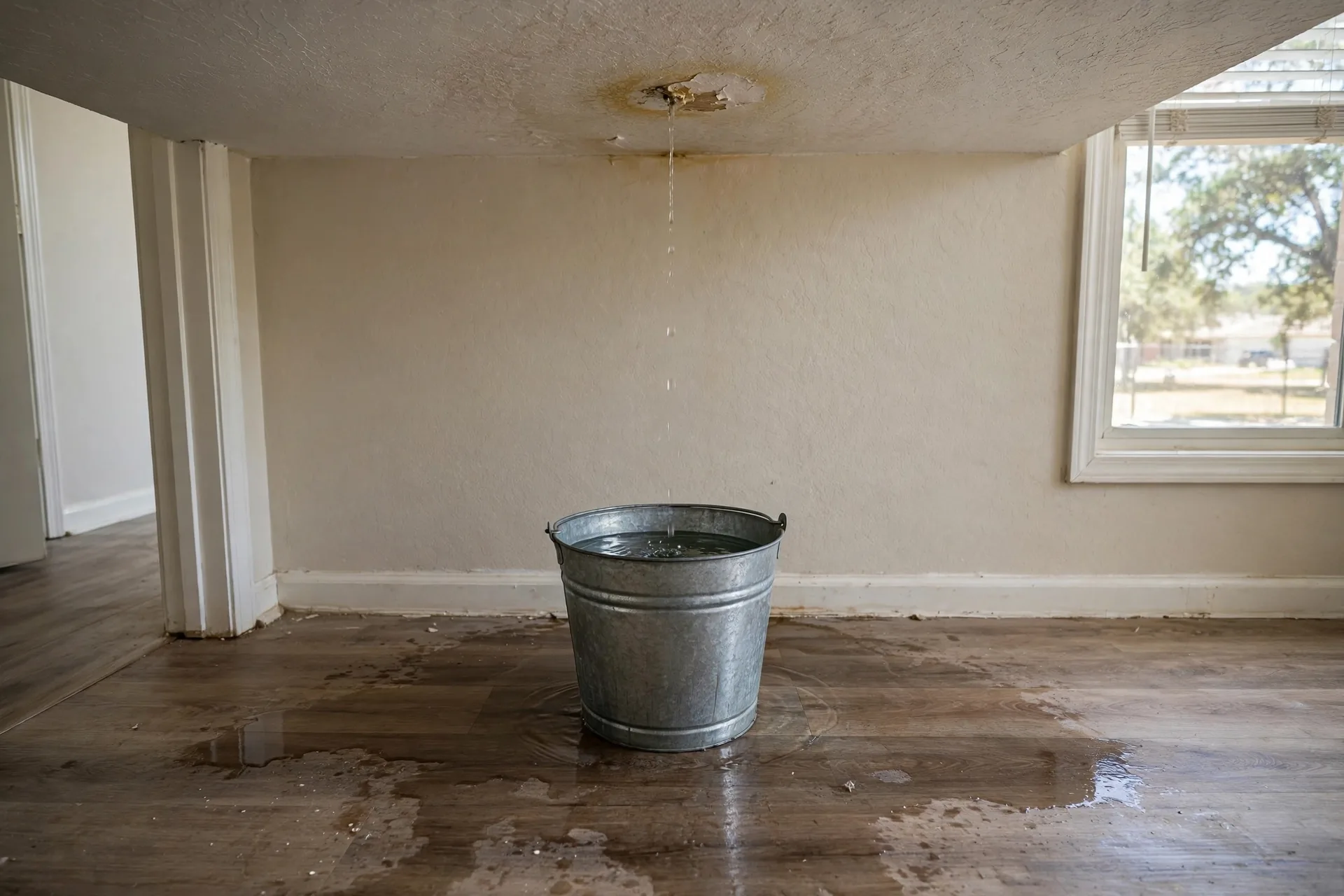
Illustrative leak-detection imagery. Containing a drip is sensible; tearing into walls or floors before the inspection can destroy the evidence.
Also avoid presenting a guessed diagnosis as a fact. Saying “I have a slab leak” is less useful than saying “the hallway floor is warm, the meter moves during no-use periods and there is a water sound near this wall.” The latter gives the provider evidence to evaluate.
What to have ready before you call
Use this mini-script:
Property: residential or commercial
ZIP and service address
Primary symptom and exact location
When the symptom occurs
Any meter/pressure clues and previous repairs
Practical DeSoto context and next-step guidance
For a DeSoto property, the useful starting point is the pattern of the symptom rather than an assumption about the cause. With when the symptom happens, where it appears, what changed, and what systems are nearby, the same visible clue can have different explanations depending on where water, air, pressure, or moisture is traveling. A careful source investigation therefore starts with observations that can be repeated and compared: when the symptom appears, whether it changes with water use, whether weather or HVAC operation matters, and whether the affected area is close to a known plumbing route.
A practical way to think about a leak detection call checklist is to separate three questions: what is happening, where is it happening, and what evidence can narrow the source. That sequence helps avoid premature repair assumptions. For example, a stain, wet patch, pressure change, sound, or water-bill increase is evidence of a symptom, not automatically proof of the exact failed component. A provider may use one method to narrow the area and another to confirm the source before recommending access or repair.
The diagnostic method should match the property and the symptom. Organizing useful observations before a provider arrives can involve visual inspection first, followed by targeted use of moisture measurements, thermal imaging, acoustic equipment, pressure observations, or another specialized technique when appropriate. No single instrument produces perfect results in every building. Surfaces, insulation, temperature, pipe material, water pressure, accessibility, and the timing of the leak can all affect what a test can show. Good source location is therefore based on converging clues rather than a single reading.
Before a call, write down the exact room or outdoor area involved, what the symptom looks or sounds like, when it began, and whether it changes after showers, fixture use, irrigation, HVAC operation, or rainfall. Take a few clear photos without moving damaged materials unnecessarily. If the issue is active, note whether water is spreading, pooling, staining a ceiling, or changing the appearance of flooring or walls. Those details give the referring service and the independent provider a more useful starting point.
The most useful next step is not always immediate repair. In many situations the priority is first to establish whether there is an active leak, then identify the source, and only then decide what repair or restoration work is justified. That order can reduce unnecessary demolition and helps the property owner understand what was actually found. For a referral service, the call is the connection point: the customer describes the issue, the request is matched to an appropriate local professional when available, and the provider determines the inspection, testing, pricing, and repair details.
Useful details to have ready include: location; timing; recent changes; photos or measurements.
For homeowners and property managers, the value of a leak detection call checklist is clarity. A good evaluation should leave the reader with a clearer explanation of the symptom, the likely source area, what was tested, and what the next decision is. That is especially useful when the visible damage is small but the suspected leak may be concealed. The goal is not to guess from a single clue. It is to build enough evidence that the next action, continued monitoring, targeted access, repair, or another diagnostic step, is based on the actual conditions at the property.
Common questions
Do I need to know where the pipe is before calling?
No. Source location is the reason for leak detection. Your job is to describe the symptom and context.
Should I take photos?
Yes. Photos of stains, wet areas, flooring changes or outdoor moisture can preserve the evidence even if the symptom changes before the visit.
Should I record water-meter readings?
When practical and safe, documenting the meter during a controlled no-use period can provide useful context.
What if the leak stops before the appointment?
Keep the timeline and photos. Intermittent symptoms can still be investigated using the conditions that trigger them.
How this guide was prepared
Practical, sourced and transparent
We separate what can be explained from general guidance, what depends on the property, and what must be confirmed by an independent provider or public authority.
Clear authorship
Prepared by the DeSoto Leak Detection Editorial Team with a reader-first editorial process.
Claim discipline
No fabricated reviews, licenses, awards, pricing promises, response times or field-work claims.
Primary-source links
Safety and utility topics point readers to official sources when a public authority is the right reference.
Content and provider standards: Information is written for customers and does not transfer independent providers’ licenses, reviews, pricing, warranties, or field-work claims to DeSoto Leak Detection. Read our editorial standards →