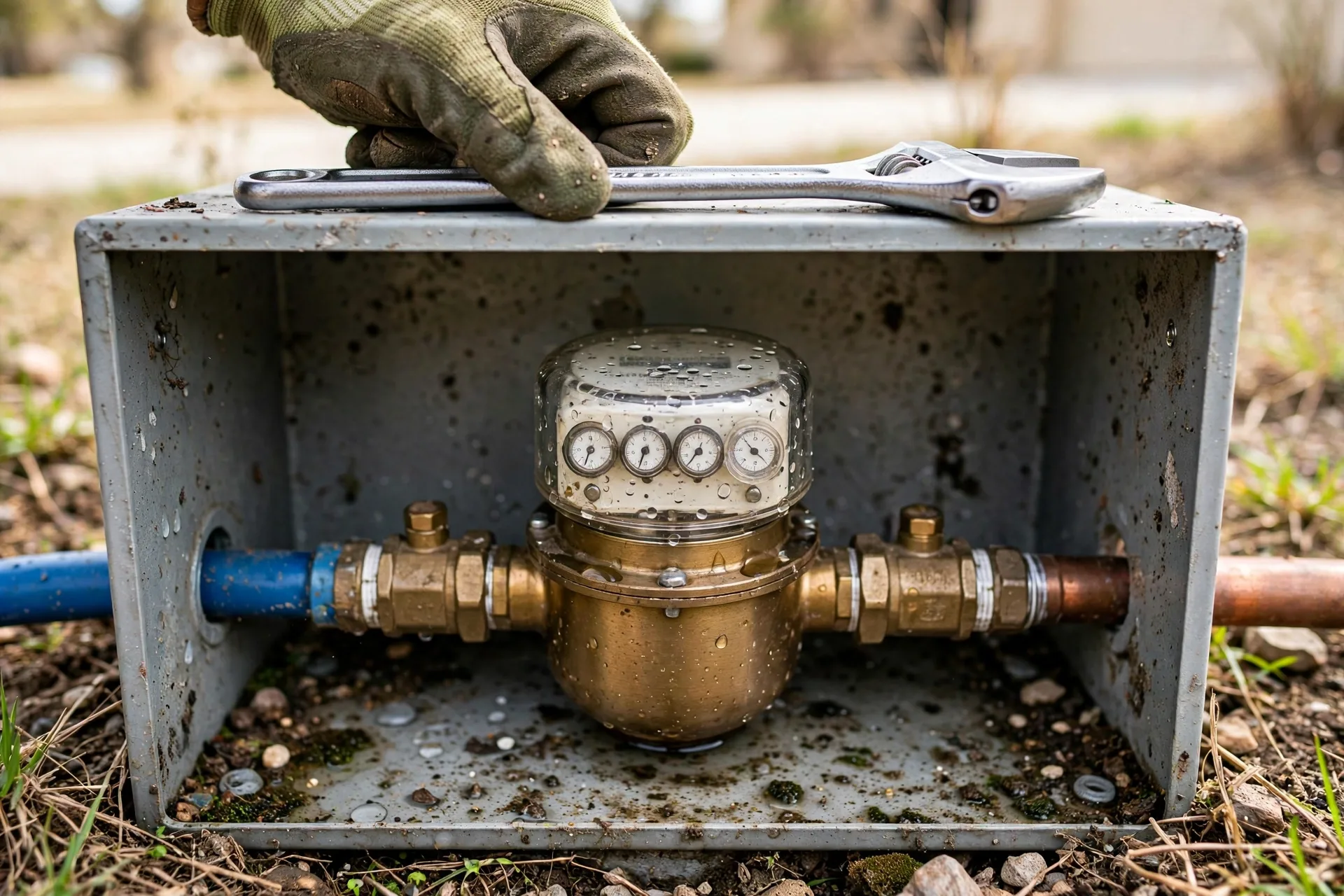
A meter check is useful because it looks at the plumbing system as a whole. It cannot tell you whether the cause is a toilet, irrigation system, fixture, appliance, slab line or underground service line. Its value is in answering the first question: is water still being consumed when nothing should be using it?
Homeowners often use the phrase water leak meter for the meter combination of a total register and a low-flow indicator. The register shows volume over time, while the indicator can respond to a very small continuous flow that is easy to miss in the main reading.
What the meter result can tell you
Think of the result as a branching point rather than a final diagnosis.
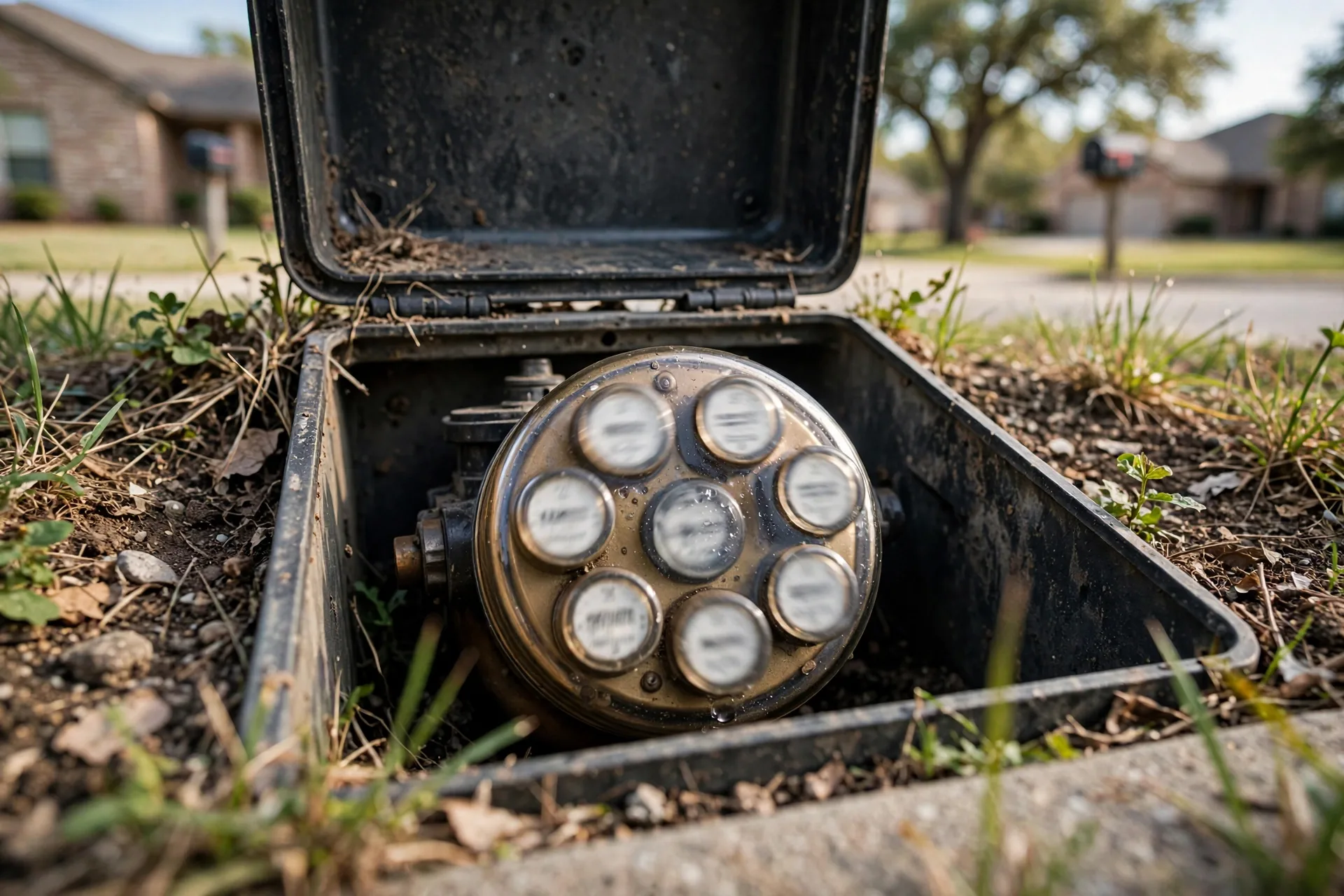
- No meter change during a controlled no-use period makes an active continuous leak less likely, although intermittent leaks can still occur.
- Any meter movement suggests water is flowing somewhere during the test window.
- A built-in leak indicator may move even when the main numbers are hard to read, depending on the meter design.
- A meter test should account for toilets, ice makers, water softeners, irrigation controls and other systems that can use water automatically.
- If the meter changes but no visible source is found, professional leak detection can help narrow the location.
How a professional evaluation is typically approached
The cleanest test eliminates as many hidden water uses as practical.
Why a meter test cannot pinpoint the leak
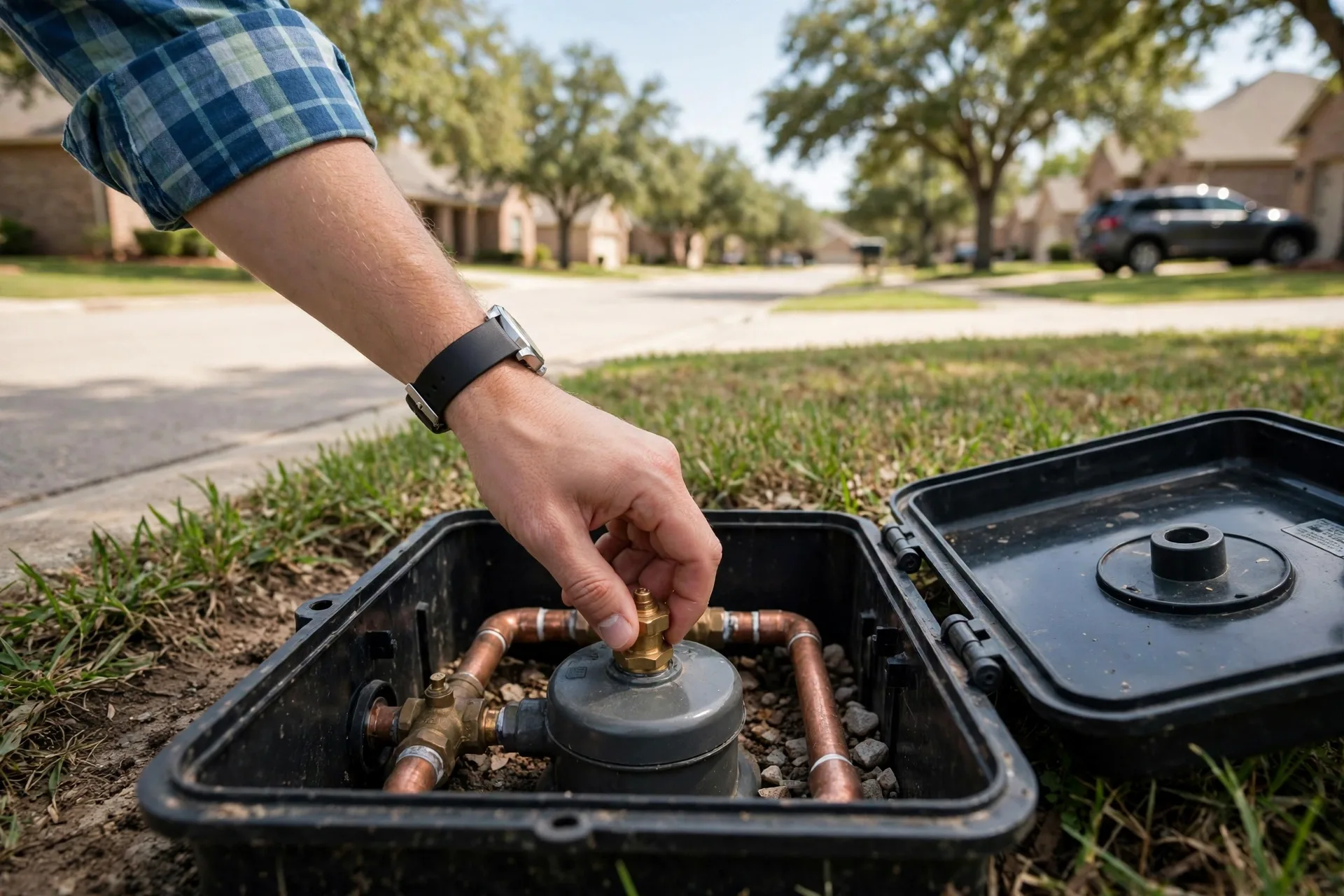
The meter sits upstream of many parts of the property, so it measures flow without identifying where it goes. A changing reading tells you that water is moving; it does not tell you which branch, fixture or buried section is responsible. That distinction matters when deciding what to do next.
For properties in DeSoto, documenting the meter result alongside the location and timing of visible symptoms can make a professional inspection more efficient. If the meter moves only at certain times, note what systems are active during those periods.
Reading the Low-Flow Leak Indicator
Many analog meters use a small triangle, star or diamond shaped dial that turns when water moves through the meter. Many digital meters instead display a leak icon, flashing symbol or continuous-flow message. Meter models vary, and some older meters do not provide a separate indicator, so follow the face design and instructions for your utility meter rather than assuming every display works the same way.

With all known water use off, watch whether the low-flow indicator keeps moving and record the main reading before and after a no-use period. Movement is evidence that water is flowing somewhere; it does not identify the fixture or pipe. Dallas readers can compare the meter and adjustment context in the Dallas leak detection and Dallas Water Utilities guide. For a DeSoto address, the DeSoto ZIP code guide for 75115 and 75123 explains the local service-area context.
What to have ready before you call
Have these observations available:
- Starting and ending meter readings
- Length of the no-use test
- Whether irrigation was disabled or inactive
- Any recurring toilet, faucet or appliance issues
- Where you see moisture or hear water
Common questions
Does a changing water meter always mean a pipe is broken?
No. It means water is being used or flowing somewhere. A toilet, irrigation system, appliance or other fixture can account for the movement.
Can an intermittent leak pass a meter check?
Yes. A short test can miss a leak that only occurs during certain conditions or uses. Record when the symptom appears and repeat testing only as appropriate.
Is a water meter check safe?
It is generally a simple observation, but follow the meter design and your utility's instructions. Do not open sealed equipment or manipulate utility hardware.
What should I do if the meter changes and I cannot find the source?
Check obvious fixtures and irrigation first. If the use remains unexplained, professional leak detection can help determine whether the source is concealed.
Practical, sourced and transparent
We separate what can be explained from general guidance, what depends on the property, and what must be confirmed by an independent provider or public authority.
Clear authorship
Prepared by the DeSoto Leak Detection Editorial Team with a reader-first editorial process.
Claim discipline
No fabricated reviews, licenses, awards, pricing promises, response times or field-work claims.
Primary-source links
Safety and utility topics point readers to official sources when a public authority is the right reference.
Sources and further reading
Sources & further reading
Need help with a suspected leak?
Call and explain the symptom, property type and ZIP. This referral service can help connect you with an appropriate local professional.