Home›Blog›Thermal Imaging Moisture Scans: What Infrared Leak Detection Can and Cannot Show
Detection Methods · Informational Guide
Thermal Imaging Moisture Scans: What Infrared Leak Detection Can and Cannot Show
Thermal imaging detects temperature patterns. Those patterns can correlate with moisture in the right conditions, but the camera does not simply “see water” in every wall or floor.
DeSoto Leak Detection GuideUpdated September 26, 2026Reader-focused resource
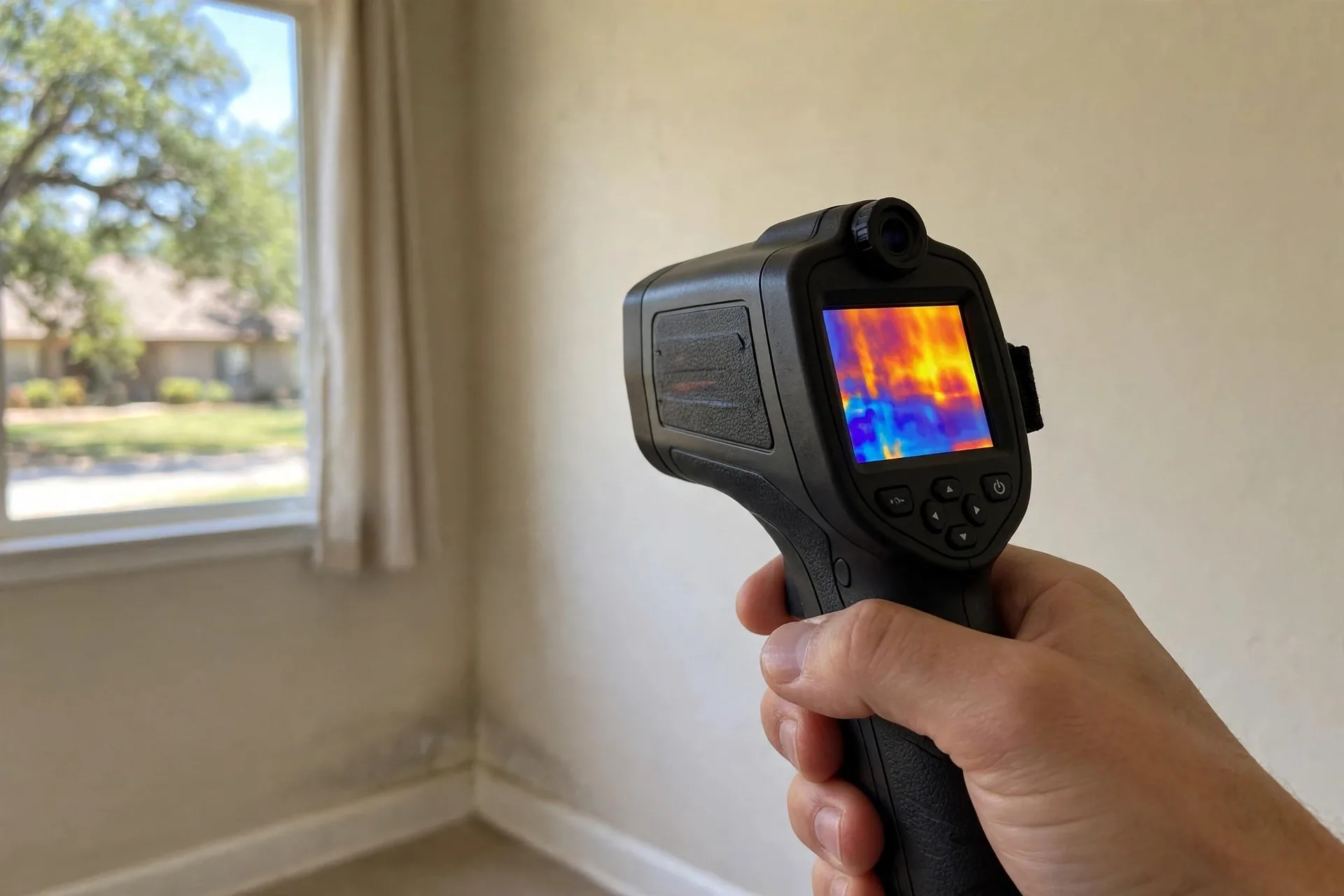
Illustrative leak-detection imagery. Specific equipment and methods vary by property and leak conditions.
Quick answer: Thermal imaging cameras detect infrared energy and display temperature differences. During a leak investigation, a temperature pattern may help identify an area affected by moisture or a water path. Results depend on the moisture level, material, temperature contrast, airflow, camera settings and site conditions, so thermal imaging is often paired with other measurements.
Quick answer: Infrared cameras detect surface temperature differences that can reveal moisture behind walls, floors, and ceilings, but they show temperature, not water itself: insulation gaps, air leaks, and sun-warmed surfaces can mimic a leak pattern. A scan is a screening tool; moisture meters confirm what it finds.
Written by the DeSoto Leak Detection Editorial Team
Reviewed for clarity, safety, local relevance, and source attribution.
Infrared cameras are powerful pattern-recognition tools, but their value is often misunderstood. A thermal image is a map of surface temperature, not a direct picture of the plumbing behind a wall. Professionals interpret those patterns in the context of the building and the suspected leak mechanism.
What a thermal scan may help reveal
The strongest use cases involve a useful temperature difference between adjacent areas.
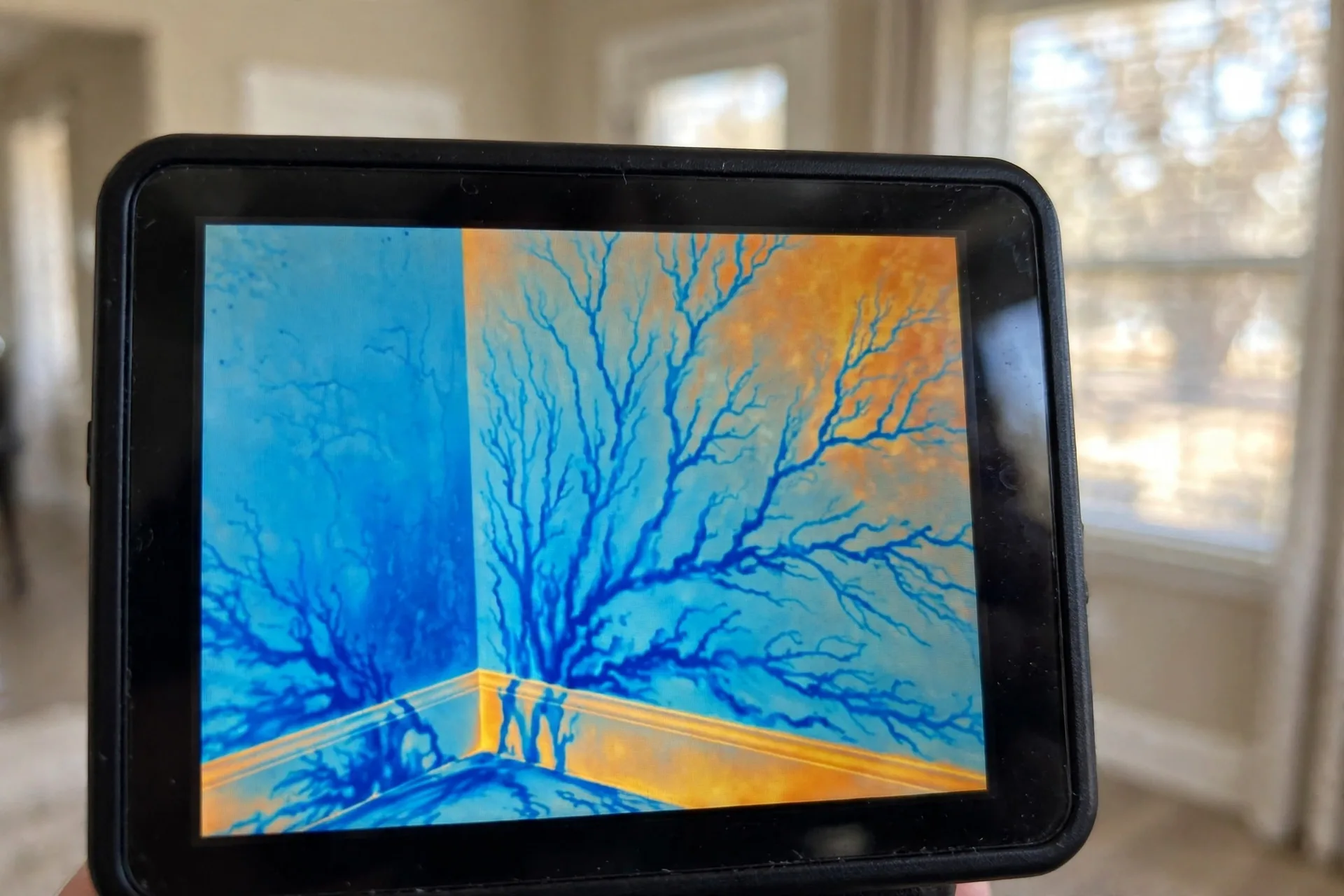
Illustrative leak-detection imagery. A scan can reveal the shape and extent of a cool, damp area that the eye cannot see.
A cooler or warmer patch that follows a plausible moisture path.
A temperature boundary around a suspected wet material area.
Differences that persist or change in a way consistent with a water-use event.
An area that deserves confirmation with a moisture meter or another diagnostic method.
A concealed pattern that would be difficult to understand from visual inspection alone.
How a professional evaluation is typically approached
Thermal imaging is usually more useful as part of a diagnostic sequence than as a standalone verdict.
01
Prepare the surfaceThe provider considers room temperature, airflow and other conditions that can affect surface temperature.
02
Scan systematicallyThe camera is moved across likely areas to compare temperature patterns.
03
Correlate the patternThe thermal result is compared with visible moisture, plumbing layout and other evidence.
04
Confirm when neededA moisture meter or another method may be used to verify whether the thermal anomaly is meaningful.
Why thermal imaging has limits
A thermal camera cannot see through every material or identify a leak simply because a pipe is present. Insulation, surface finish, ambient temperature, HVAC airflow and recent water use can all change the thermal pattern. A strong-looking image still needs interpretation.
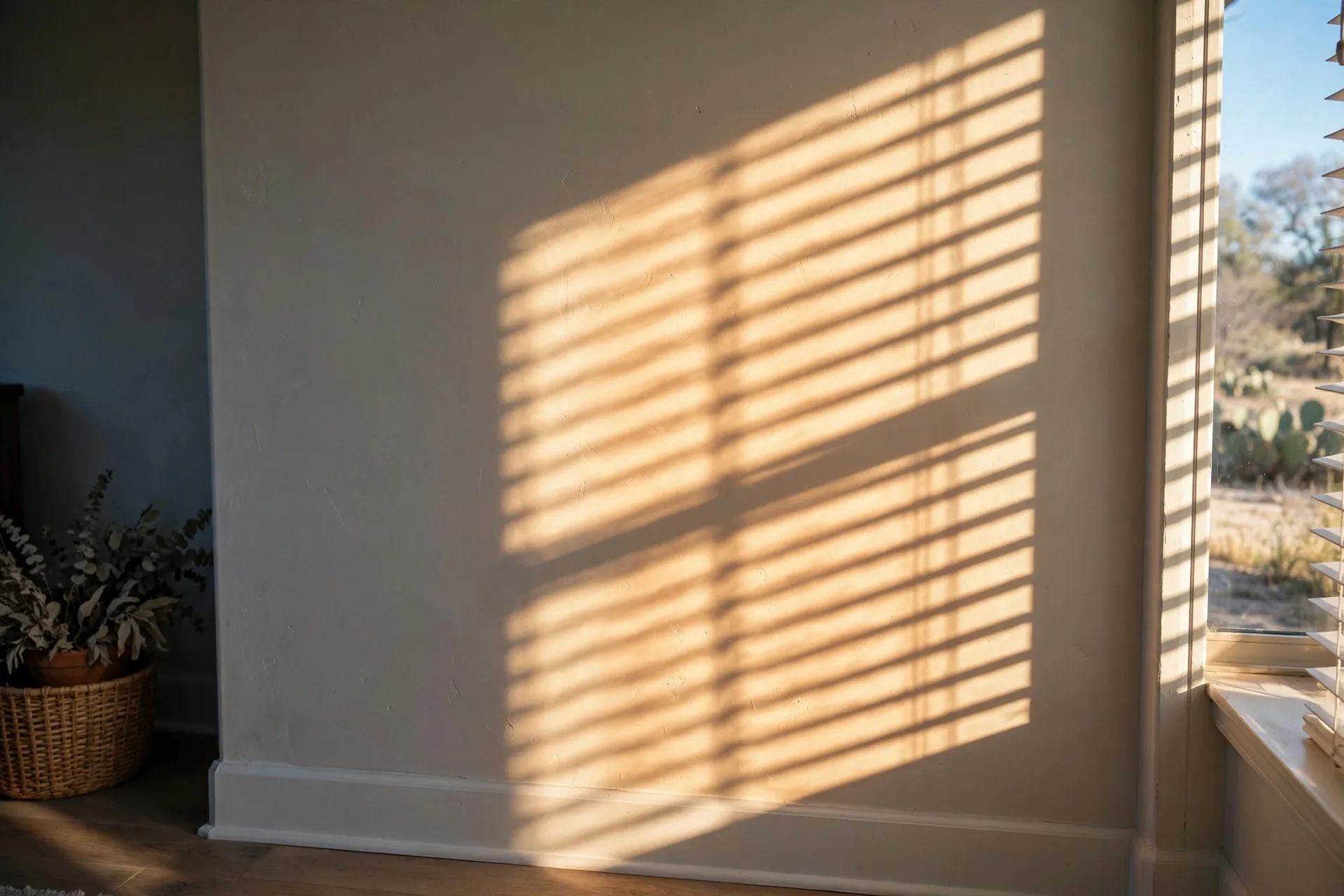
Illustrative leak-detection imagery. Sunlight, drafts and appliances also change surface temperatures, which is why thermal patterns need confirmation.
That is why the best content around thermal imaging explains both the benefit and the limitation. The technique can help prioritize where to investigate, but the final source determination comes from the complete evidence set.
What to have ready before you call
Useful details include:
Room temperature and whether HVAC was recently running
Whether water was recently used in the area
Visible stains or dampness
Material type such as drywall, flooring or tile
Previous moisture testing or inspection notes
Practical DeSoto context and next-step guidance
For a DeSoto property, the useful starting point is the pattern of the symptom rather than an assumption about the cause. With temperature differentials, moisture conditions, building materials, and verification, the same visible clue can have different explanations depending on where water, air, pressure, or moisture is traveling. A careful source investigation therefore starts with observations that can be repeated and compared: when the symptom appears, whether it changes with water use, whether weather or HVAC operation matters, and whether the affected area is close to a known plumbing route.
A practical way to think about thermal imaging moisture scans is to separate three questions: what is happening, where is it happening, and what evidence can narrow the source. That sequence helps avoid premature repair assumptions. For example, a stain, wet patch, pressure change, sound, or water-bill increase is evidence of a symptom, not automatically proof of the exact failed component. A provider may use one method to narrow the area and another to confirm the source before recommending access or repair.
The diagnostic method should match the property and the symptom. Using infrared patterns as one part of a larger diagnostic process can involve visual inspection first, followed by targeted use of moisture measurements, thermal imaging, acoustic equipment, pressure observations, or another specialized technique when appropriate. No single instrument produces perfect results in every building. Surfaces, insulation, temperature, pipe material, water pressure, accessibility, and the timing of the leak can all affect what a test can show. Good source location is therefore based on converging clues rather than a single reading.
Before a call, write down the exact room or outdoor area involved, what the symptom looks or sounds like, when it began, and whether it changes after showers, fixture use, irrigation, HVAC operation, or rainfall. Take a few clear photos without moving damaged materials unnecessarily. If the issue is active, note whether water is spreading, pooling, staining a ceiling, or changing the appearance of flooring or walls. Those details give the referring service and the independent provider a more useful starting point.
The most useful next step is not always immediate repair. In many situations the priority is first to establish whether there is an active leak, then identify the source, and only then decide what repair or restoration work is justified. That order can reduce unnecessary demolition and helps the property owner understand what was actually found. For a referral service, the call is the connection point: the customer describes the issue, the request is matched to an appropriate local professional when available, and the provider determines the inspection, testing, pricing, and repair details.
Common questions
Can a thermal camera see water behind a wall?
It can sometimes reveal a temperature pattern associated with moisture, but it does not directly image water through the wall.
Is a moisture meter better than thermal imaging?
They answer different questions. A moisture meter measures moisture at selected points, while thermal imaging shows temperature patterns across a larger surface.
Can thermal imaging find a slab leak?
It can sometimes help, especially with hot-water leaks that create useful temperature differences. Other detection methods may still be needed.
Why did the thermal image look normal when there is a leak?
The timing, temperature difference, construction and moisture level may not produce a detectable surface pattern at that moment.
How this guide was prepared
Practical, sourced and transparent
We separate what can be explained from general guidance, what depends on the property, and what must be confirmed by an independent provider or public authority.
Clear authorship
Prepared by the DeSoto Leak Detection Editorial Team with a reader-first editorial process.
Claim discipline
No fabricated reviews, licenses, awards, pricing promises, response times or field-work claims.
Primary-source links
Safety and utility topics point readers to official sources when a public authority is the right reference.
Content and provider standards: Information is written for customers and does not transfer independent providers’ licenses, reviews, pricing, warranties, or field-work claims to DeSoto Leak Detection. Read our editorial standards →