Home›Blog›What to Do If You Suspect a Gas Leak: Safety First
Gas & HVAC Safety · Informational Guide
What to Do If You Suspect a Gas Leak: Safety First
A suspected gas leak is a safety emergency. Evacuate first; source testing comes only after the area is safe and the appropriate utility or emergency authority is involved.
DeSoto Leak Detection GuideUpdated September 26, 2026Reader-focused resource
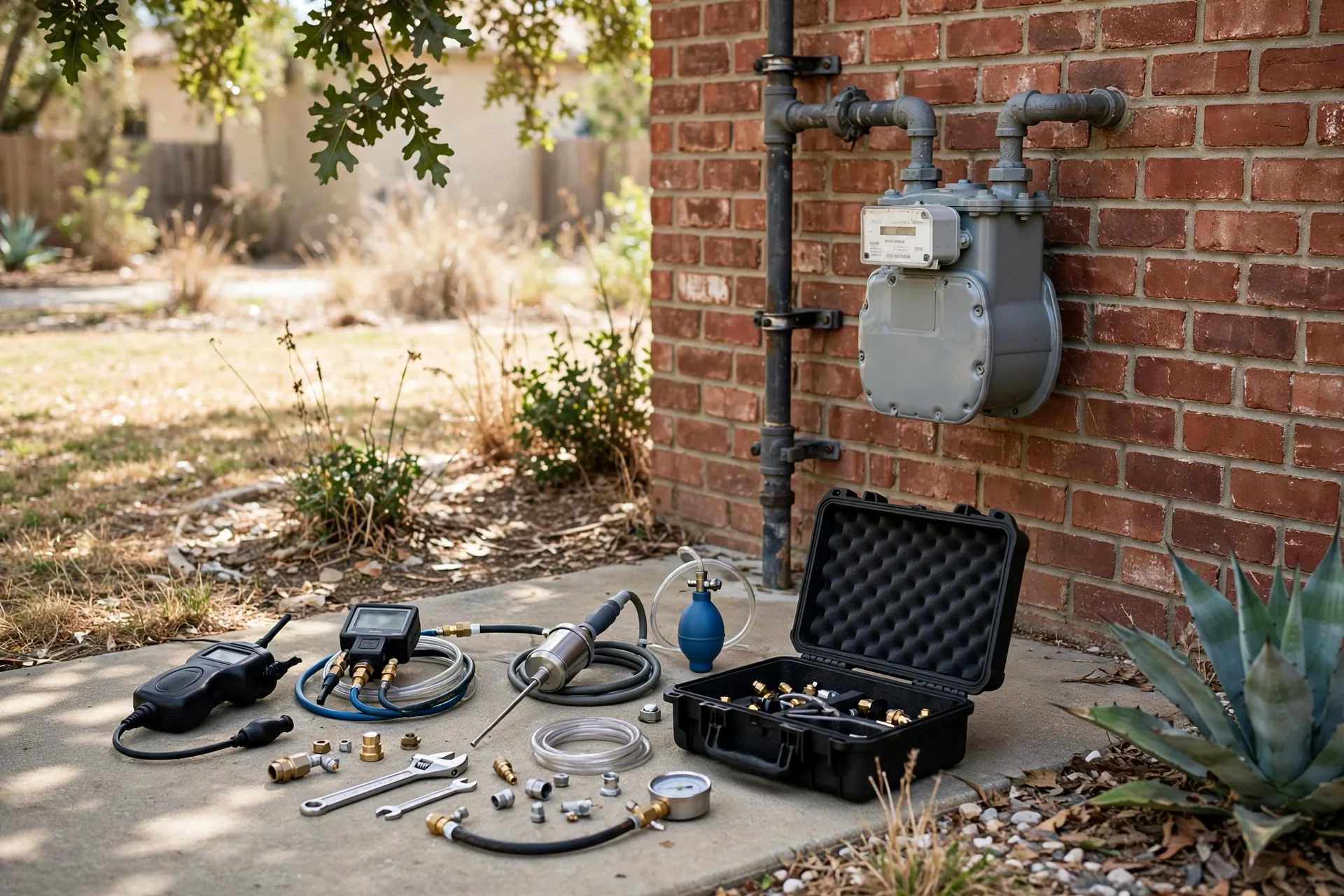
Illustrative leak-detection imagery. Specific equipment and methods vary by property and leak conditions.
Quick answer: If you smell gas or hear a gas leak, leave the building immediately and contact the local gas authority or emergency services from outside. Do not operate lights, phones or other electronics before leaving. The CPSC specifically advises leaving immediately and contacting local gas authorities from outside the home.
Quick answer: If you suspect a natural gas leak, treat it as an emergency: leave the area immediately, avoid switches, phones, and anything that could spark, and call your gas utility or 911 from a safe distance. Do not try to locate the leak yourself. This page is safety guidance only; gas emergencies are never routed into a leak-detection referral.
Written by the DeSoto Leak Detection Editorial Team
Reviewed for clarity, safety, local relevance, and source attribution.
Gas-leak safety must not be treated like a normal water-leak troubleshooting task. Do not stay inside to locate the odor yourself, flip switches, use a phone in the suspected area or create an ignition source. The first job is to get people to safety and alert the appropriate emergency or utility authority.
Possible gas-leak warning signs
Do not use these clues as a reason to investigate the source yourself.
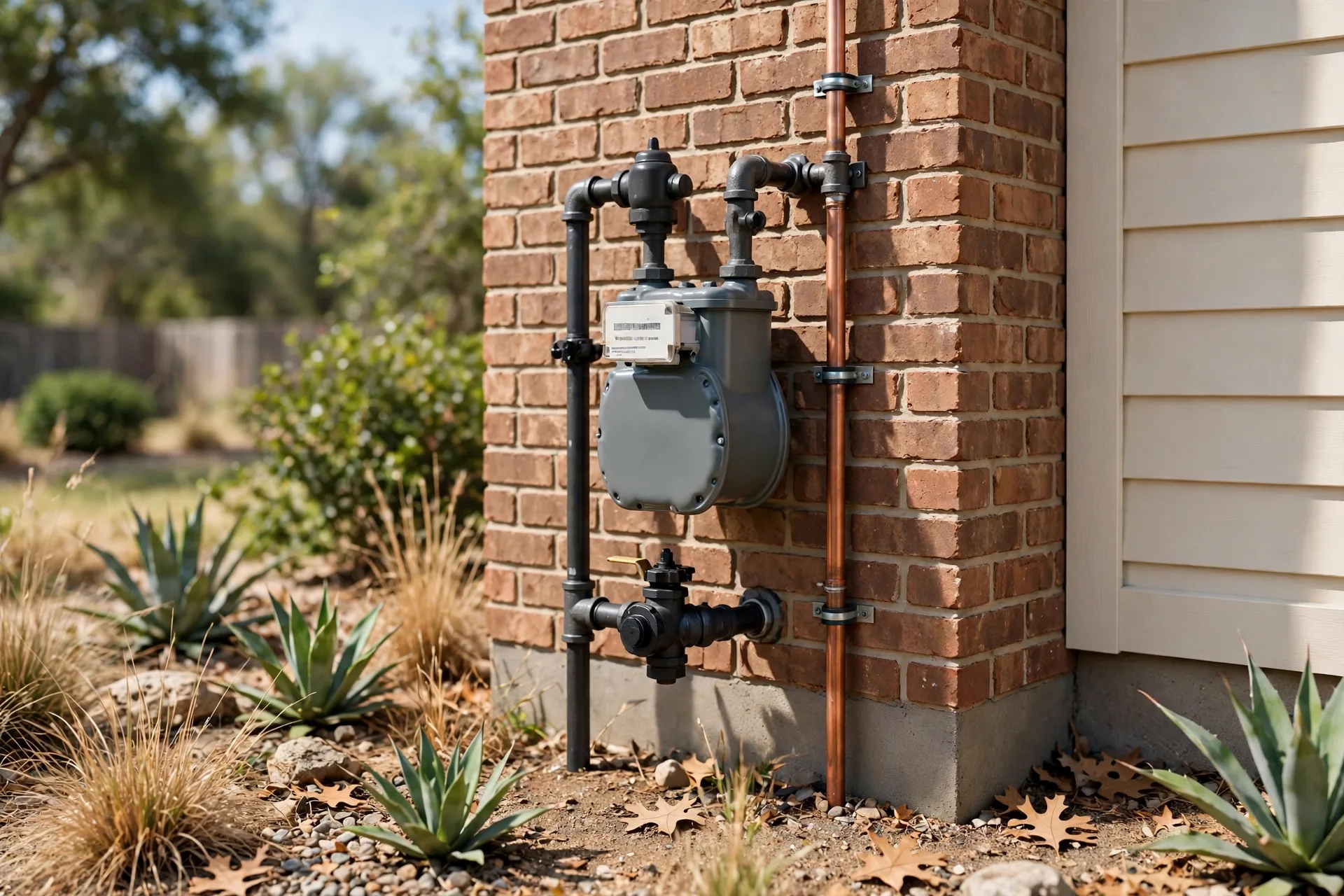
Illustrative leak-detection imagery. Odors, hissing sounds and dying vegetation near gas piping are warning signs to act on from a safe distance.
A sulfur or rotten-egg-like odor associated with natural gas odorization.
A hissing sound near a gas appliance or line.
A suspected gas appliance or connection that appears to be leaking.
An unexplained change in gas appliance behavior together with an odor or sound.
Any situation where a gas leak is suspected should be treated as a safety issue rather than a DIY diagnostic project.
How a professional evaluation is typically approached
The safe process begins with evacuation, not equipment testing.
01
Leave immediatelyMove everyone outside without creating ignition sources.
02
Call from outsideContact the local gas utility/emergency authority from a safe location.
03
Follow official instructionsDo not re-enter or operate equipment unless the responsible authority says it is safe.
04
Arrange qualified diagnosisAfter the immediate emergency is addressed, the appropriate qualified professional can investigate and repair the system.
Why gas leaks belong in a separate safety pathway
Natural gas can create a fire or explosion hazard when it accumulates and encounters an ignition source. That risk changes the appropriate response compared with a water leak. The U.S. Consumer Product Safety Commission advises people who smell or hear gas leaking to leave immediately, contact local gas authorities from outside, and avoid operating electronics before leaving.
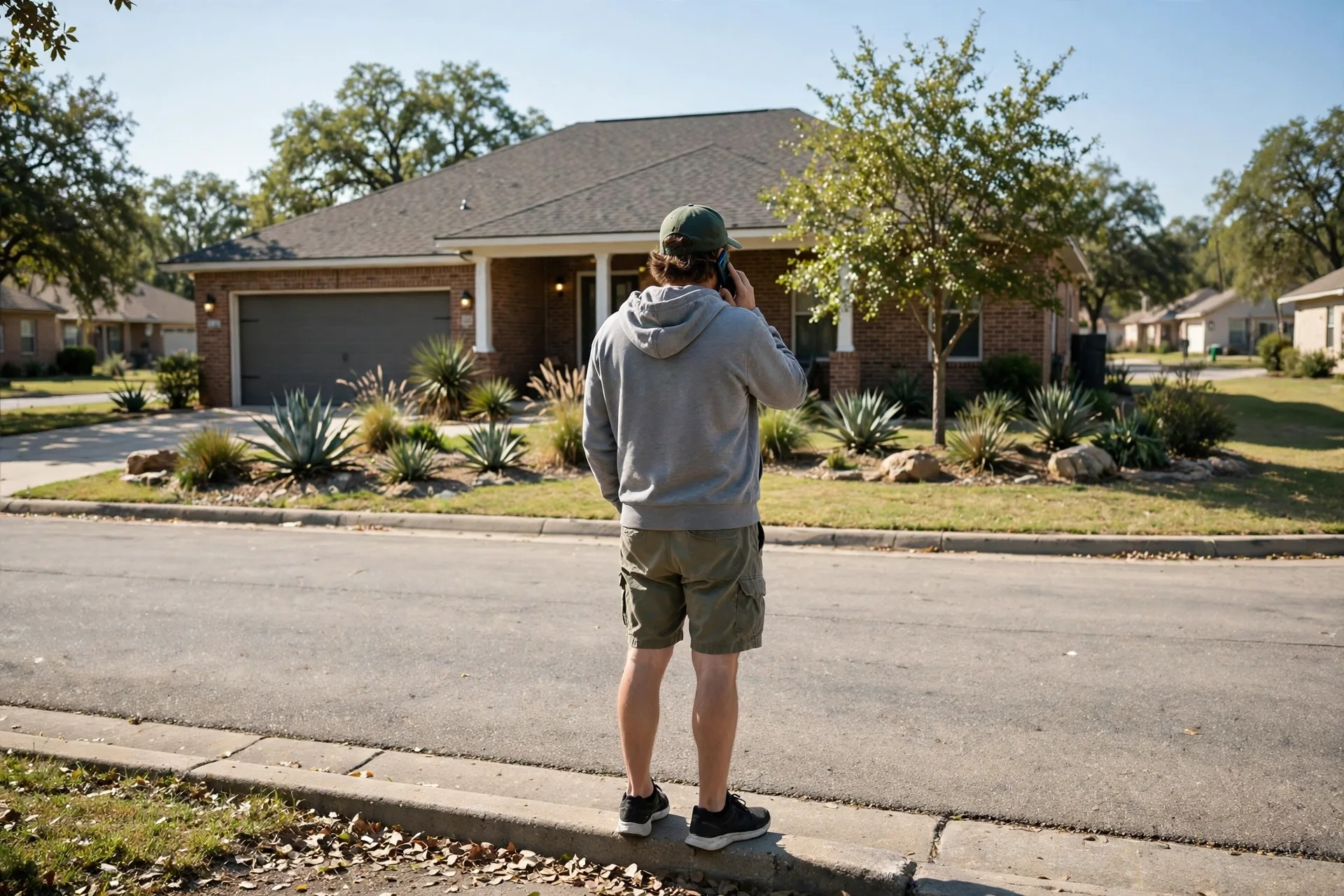
Illustrative leak-detection imagery. If a gas leak is suspected, leave the area first and make the call from outside and away from the building.
This website can explain the distinction and connect customers with appropriate local professionals for non-emergency service requests, but the first response to an active suspected gas leak is always safety and the relevant utility/emergency authority.
What to have ready before you call
For non-emergency follow-up, document only from a safe location:
Which appliance or area is suspected
When the odor or sound was noticed
Whether the utility or emergency authority has been contacted
Any previous service information
Whether the system has been declared safe for further work
Practical DeSoto context and next-step guidance
For a DeSoto property, the useful starting point is the pattern of the symptom rather than an assumption about the cause. With gas appliances, supply piping, odor concerns, and emergency isolation, the same visible clue can have different explanations depending on where water, air, pressure, or moisture is traveling. A careful source investigation therefore starts with observations that can be repeated and compared: when the symptom appears, whether it changes with water use, whether weather or HVAC operation matters, and whether the affected area is close to a known plumbing route.
A practical way to think about suspected gas leaks is to separate three questions: what is happening, where is it happening, and what evidence can narrow the source. That sequence helps avoid premature repair assumptions. For example, a stain, wet patch, pressure change, sound, or water-bill increase is evidence of a symptom, not automatically proof of the exact failed component. A provider may use one method to narrow the area and another to confirm the source before recommending access or repair.
The diagnostic method should match the property and the symptom. Immediate life-safety decisions before leak testing can involve visual inspection first, followed by targeted use of moisture measurements, thermal imaging, acoustic equipment, pressure observations, or another specialized technique when appropriate. No single instrument produces perfect results in every building. Surfaces, insulation, temperature, pipe material, water pressure, accessibility, and the timing of the leak can all affect what a test can show. Good source location is therefore based on converging clues rather than a single reading.
Before a call, write down the exact room or outdoor area involved, what the symptom looks or sounds like, when it began, and whether it changes after showers, fixture use, irrigation, HVAC operation, or rainfall. Take a few clear photos without moving damaged materials unnecessarily. If the issue is active, note whether water is spreading, pooling, staining a ceiling, or changing the appearance of flooring or walls. Those details give the referring service and the independent provider a more useful starting point.
Useful details to have ready include: leave the area when a gas leak is suspected; avoid flames and ignition sources; contact the appropriate emergency utility or service; use professional testing rather than DIY detection.
For homeowners and property managers, the value of suspected gas leaks is clarity. A good evaluation should leave the reader with a clearer explanation of the symptom, the likely source area, what was tested, and what the next decision is. That is especially useful when the visible damage is small but the suspected leak may be concealed. The goal is not to guess from a single clue. It is to build enough evidence that the next action, continued monitoring, targeted access, repair, or another diagnostic step, is based on the actual conditions at the property.
Common questions
Should I turn the gas off myself?
Do not take actions that require you to remain in a hazardous area. Follow your utility or emergency authority's instructions.
Can I use my phone to call from inside?
The CPSC advises not operating electronics before leaving when a gas leak is suspected. Call from outside.
Can a plumber test a gas leak?
A qualified professional may perform gas-system work as allowed by local requirements, but an active suspected leak should first be reported to the appropriate gas/emergency authority.
Is a gas leak the same as an HVAC refrigerant leak?
No. They involve different substances, hazards and service requirements. Refrigerant servicing for stationary HVAC equipment is regulated under EPA Section 608.
How this guide was prepared
Practical, sourced and transparent
We separate what can be explained from general guidance, what depends on the property, and what must be confirmed by an independent provider or public authority.
Clear authorship
Prepared by the DeSoto Leak Detection Editorial Team with a reader-first editorial process.
Claim discipline
No fabricated reviews, licenses, awards, pricing promises, response times or field-work claims.
Primary-source links
Safety and utility topics point readers to official sources when a public authority is the right reference.
Content and provider standards: Information is written for customers and does not transfer independent providers’ licenses, reviews, pricing, warranties, or field-work claims to DeSoto Leak Detection. Read our editorial standards →