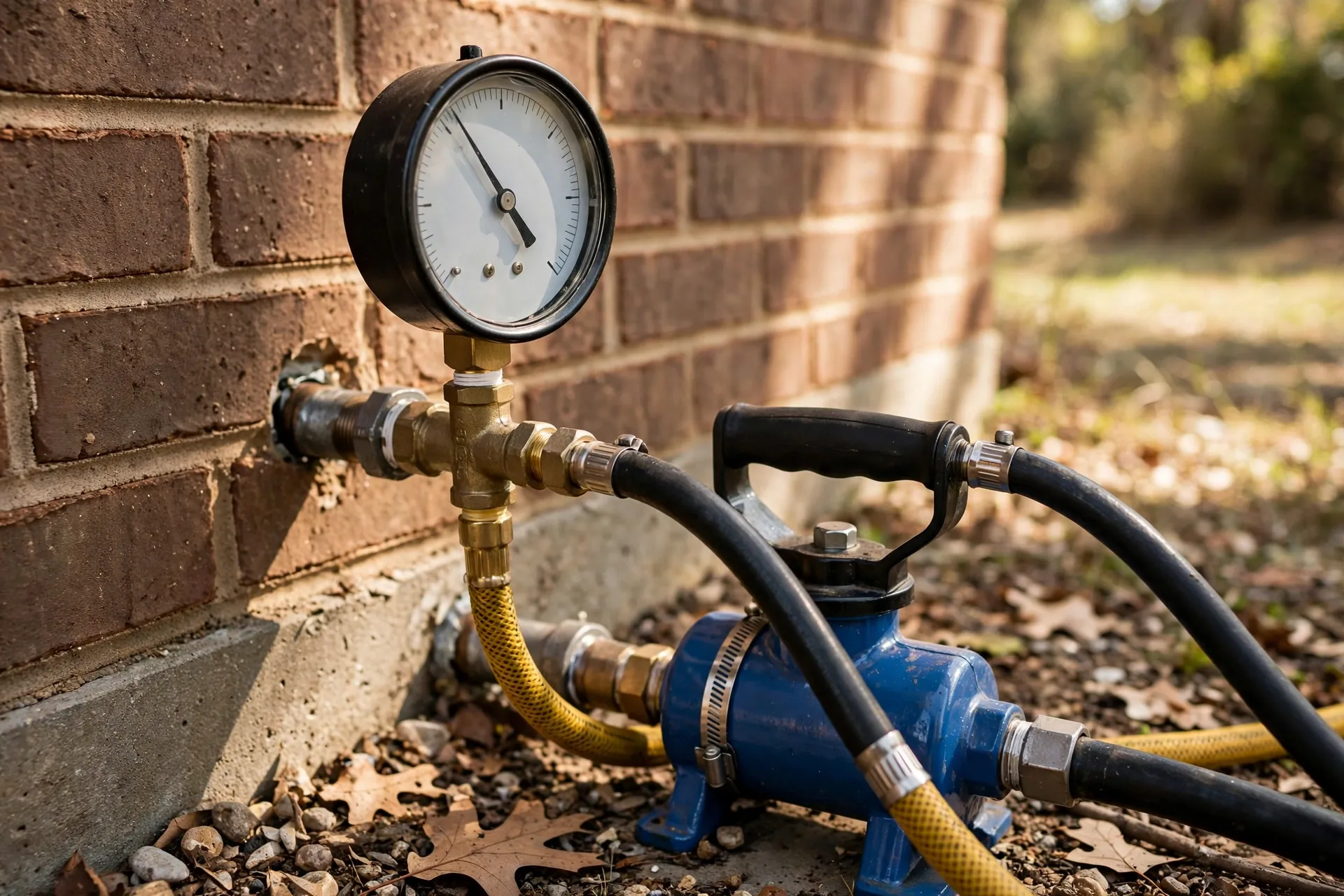
What a hydrostatic test actually is
The tester first isolates the system or section to be tested, closing it off from fixtures and from parts of the plumbing that are not part of the test. The section is then filled with water and brought up to a test pressure, and a gauge is watched over a defined period. If the pressure holds, the section kept its water under those conditions. If it falls, water is leaving the section somewhere, and the size and speed of the drop are part of the evidence.
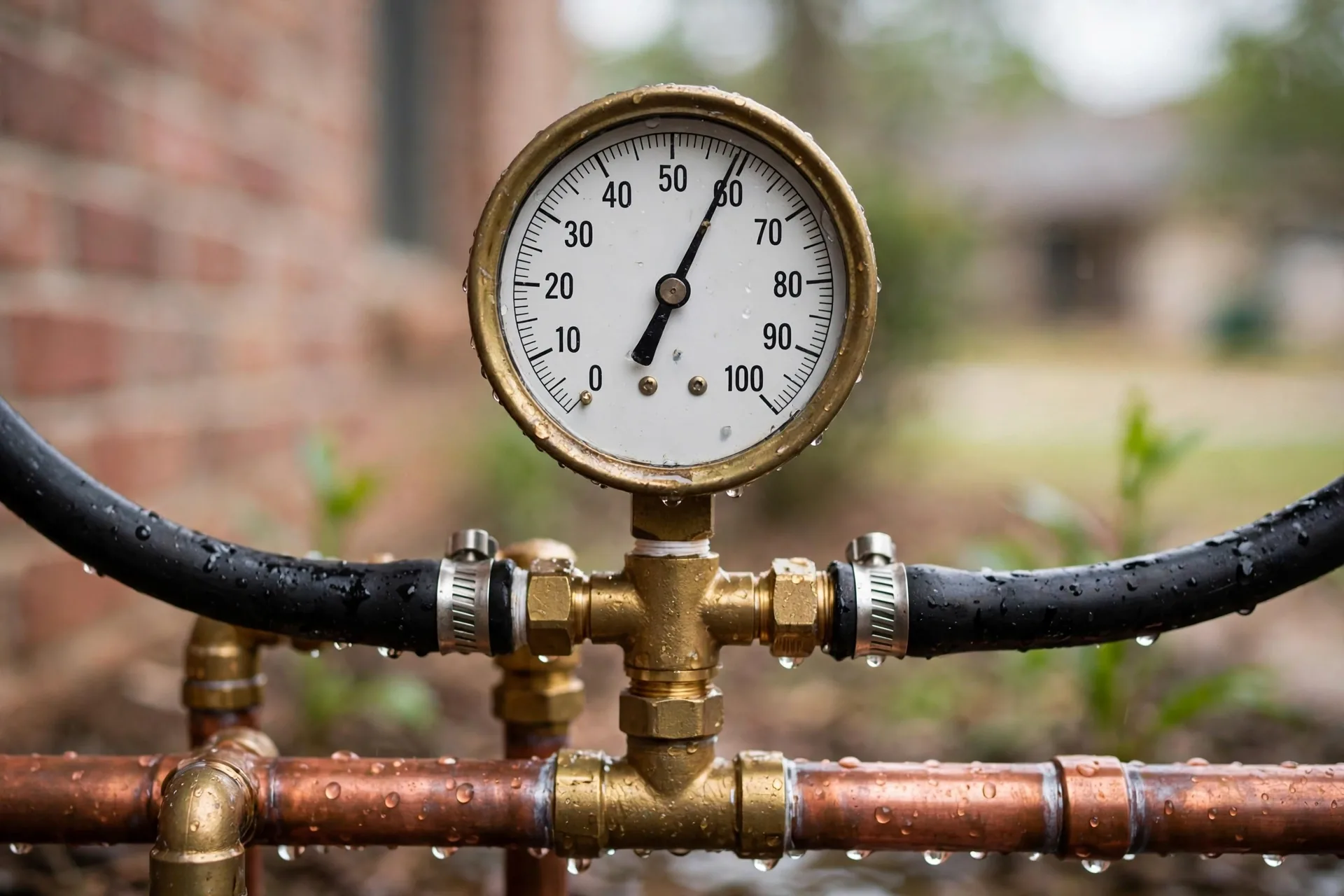
In Texas real estate, hydrostatic testing is discussed for two related uses. On the supply side, it checks pressurized water lines. On the drain side, which is very common for slab homes, the under-slab sewer system is filled and watched for loss, because a leaking drain line can quietly erode soil beneath a foundation. The setup differs by system, and the tester should state plainly which system was tested, at what pressure or fill level, and for how long. Interpretation matters: trapped air, temperature change, test setup, valves and connected fixtures can all influence a result, which is why a licensed plumber should run and read the test.
What the test can show, and what it cannot
- It can show whether the tested system or section held or lost pressure under the stated conditions on that day.
- It can narrow the search when sections are isolated and tested one at a time, turning a whole-house question into a one-section question.
- It cannot locate a leak by itself. A falling gauge says water is escaping somewhere in the section, not where.
- It cannot certify the whole plumbing system. Untested sections, fixture-level problems and future failures are outside what a single test establishes.
- It cannot explain the cause. Corrosion, a failed joint, a cracked drain and a leaking fitting can all produce the same falling gauge.
Treating the test as a screening tool, rather than a verdict, keeps it in proportion. A hold is genuinely useful information. A loss is also useful information, because it tells everyone that a locating step is worth paying for before the slab, the soil and the sale absorb the uncertainty.
How the test fits into a Texas option period
Texas purchase contracts commonly include an option period: a negotiated window at the start of the contract when the buyer can complete inspections and decide how to proceed. Plumbing testing, when it happens, usually happens inside that window, because the results can feed repair requests, price or credit discussions, or the decision to move forward as-is. The deadlines in a contract are real, so a buyer who wants testing should schedule it early and coordinate with their agent rather than treating it as a last-day errand. This page is general information about the testing itself, not legal or contract advice.
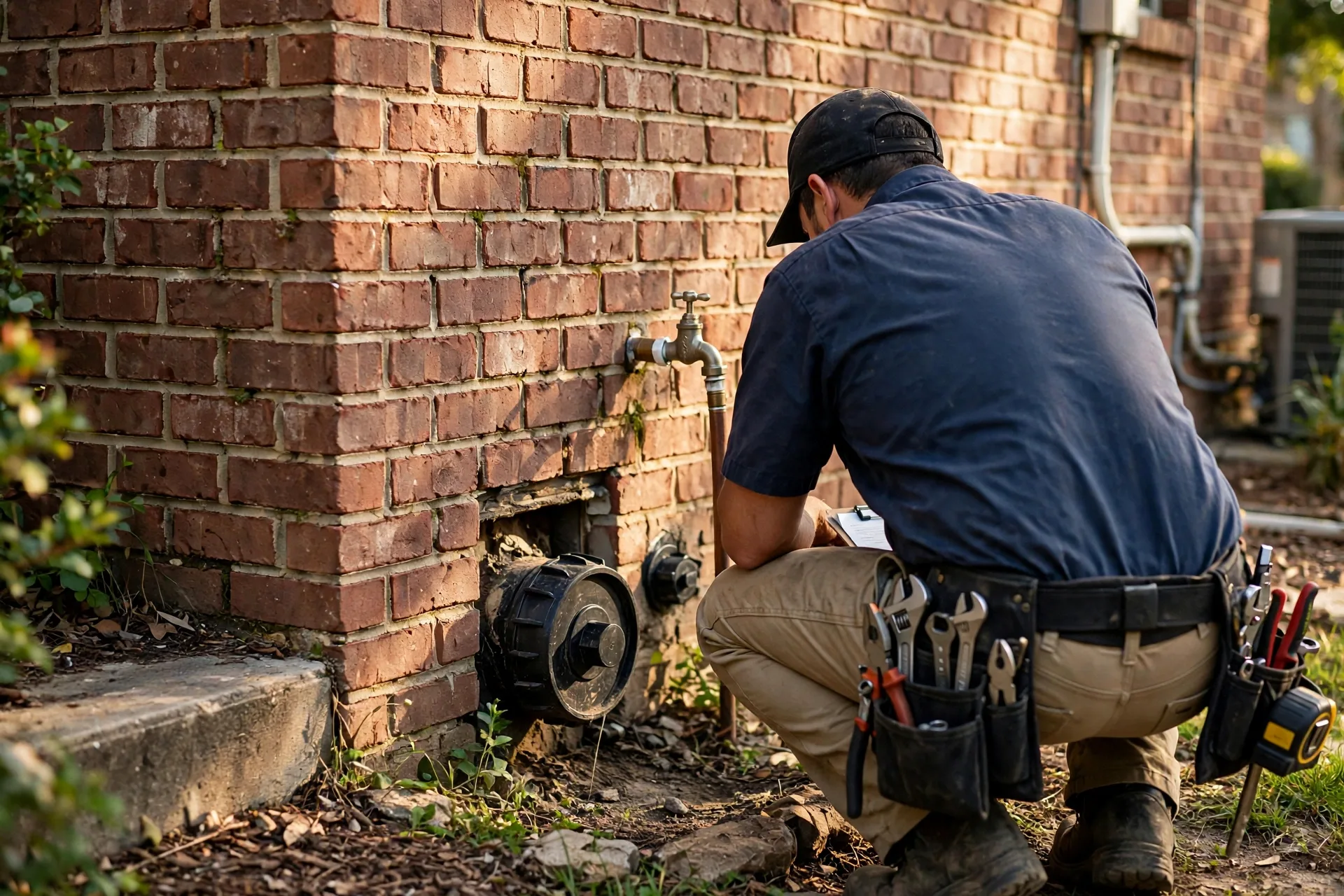
Buyers tend to consider hydrostatic testing when the home sits on a slab, when the plumbing is older, when there is a history of leak repairs, when water use or bills at the property look unexplained, or when a general inspection raises a question it cannot answer. None of those signs proves a leak. They are simply the situations where a hold-or-lose answer is worth the most.
What sellers should know
Sellers sometimes test before listing, or agree to testing during the option period, for the same reason buyers ask for it: a documented result is easier to negotiate around than a suspicion. A passed test, recorded with the system tested and the conditions used, is straightforward evidence. A failed test discovered early gives the seller the same options a buyer would want: locate the problem, price a repair, or disclose and negotiate with the facts visible.
What neither side should do is over-read a single gauge. A failed test is the start of a locating conversation, not proof of a catastrophic repair, and a passed test covers only the tested system under the stated conditions. Both sides are better served by a written result that says exactly what was tested and what was found.
If the test fails: the usual next steps
A lost-pressure result normally leads to isolation testing first: sections of the system are separated and retested so the loss can be assigned to one line or area. From there, the locating method depends on the system. Pressurized supply leaks are usually narrowed with acoustic listening and related methods, as described on our new construction leak detection page, where the same testing supports commissioning. Drain and sewer problems are usually examined with a camera, which is covered in our sewer camera inspection guide.
Only after the location and cause are understood does a repair quote mean much. Sellers and buyers can then negotiate around a defined scope instead of an unknown one. Keep the test record, the locating findings and any quotes together; that packet is what agents, insurers and future owners will ask to see.
Hydrostatic testing and new construction
The same hold-pressure logic is used when a home is built. New systems are pressure-tested before walls and floors are closed, and again if a symptom appears after completion, because finding a fitting or connection problem is far easier while access is open. If you are buying a newly built home in DeSoto or Dallas, asking whether pressure testing was performed and documented is a reasonable question, and a pre-purchase test uses the same principles on a finished system.
Common questions
What does it mean when a home fails a hydrostatic test?
It means the tested system or section lost pressure under the test conditions, which indicates water is escaping somewhere in that section. It does not, by itself, say where the leak is, what caused it or how large the repair will be. The normal next step is isolation testing to narrow the section, followed by a locating method suited to that system.
Can a hydrostatic test find the exact location of a leak?
No. A hydrostatic test works at the level of a system or an isolated section: it can show that water is being lost and, with isolation, which section is losing it. Pinpointing the leak takes a different tool, such as acoustic listening for a pressurized line or a camera inspection for a drain line, interpreted by the provider.
Who performs and interprets a hydrostatic test?
A licensed plumber should perform and interpret the test. The result depends on setup details, isolation, air in the system, temperature and the fixtures and valves connected to the section, so the reading is a professional judgment rather than a simple gauge glance. Ask for the result in writing, including which system was tested and under what conditions.
Should every home buyer order a hydrostatic test?
Not necessarily. The test is most valuable when the risk signs are present: a slab foundation, older plumbing, prior leak repairs, unexplained water use, or questions raised by a general inspection. For a newer home with no symptoms and documented commissioning tests, the value is lower. Your agent and inspector can help weigh it against the option period timeline.
Can a seller refuse a hydrostatic test?
Testing during a purchase is a matter of the contract between buyer and seller, including what inspections and access the parties agree to and when. Some sellers agree readily, others limit scope or timing, and pre-listing testing is another route to the same information. This is general information, not legal advice; your agent or attorney can explain the options in your contract.
Does a passed hydrostatic test guarantee the plumbing has no leaks?
No. A pass means the tested system held pressure under the stated conditions at that time. It does not cover sections that were not tested, every fixture-level issue, or failures that develop later. It is best read as one solid piece of evidence about the tested system, alongside the inspection report and the home’s history.
Sources and further reading
Need help with a suspected leak?
Call and explain the symptom, property type and ZIP. This referral service can help connect you with an appropriate local professional.