Home›Blog›Slab Leak Warning Signs: What DeSoto Homeowners Should Watch For
Slab & Foundation · Informational Guide
Slab Leak Warning Signs: What DeSoto Homeowners Should Watch For
Slab-related symptoms can be subtle because the plumbing is concealed below or within the foundation system.
DeSoto Leak Detection GuideUpdated September 26, 2026Reader-focused resource
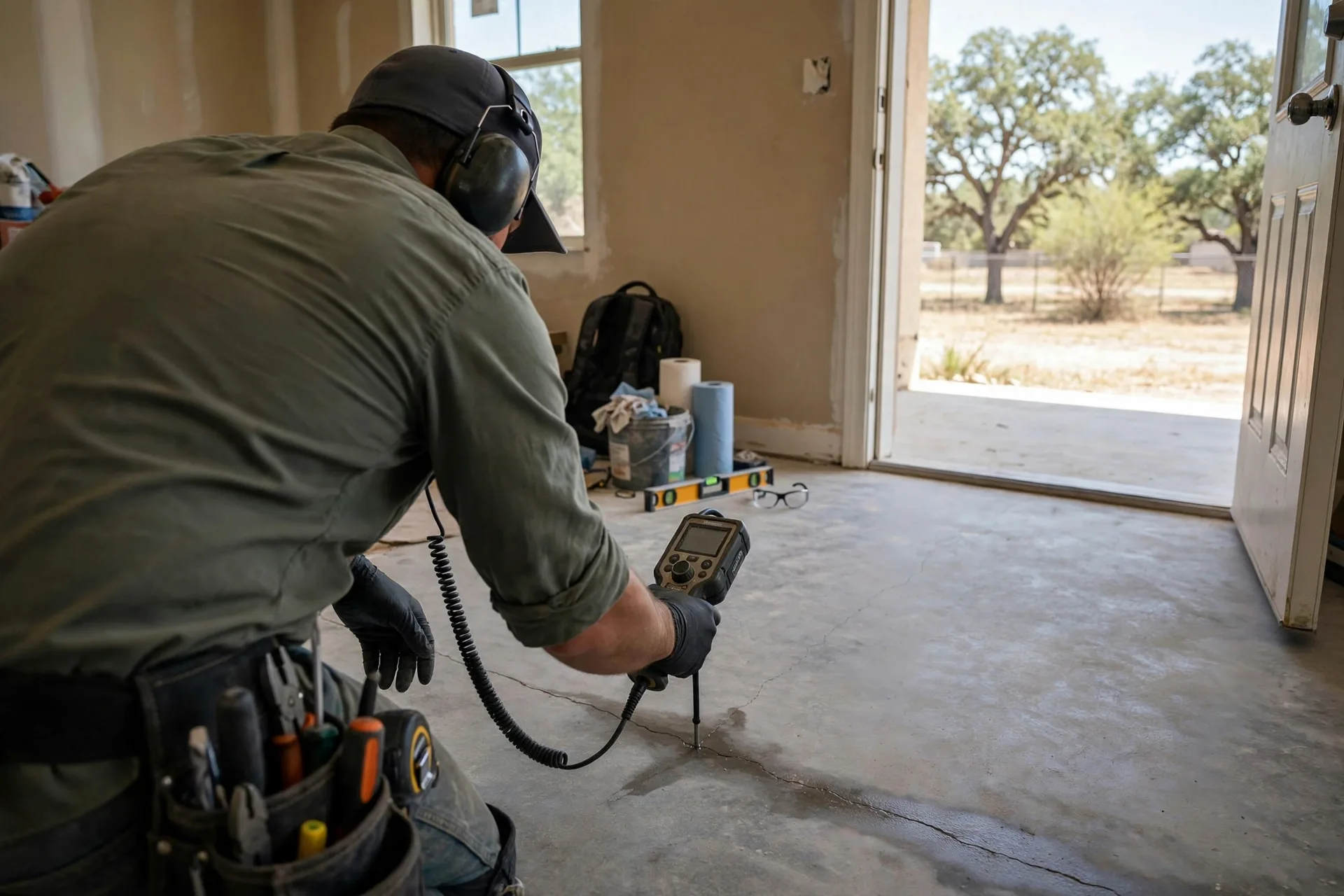
Illustrative leak-detection imagery. Specific equipment and methods vary by property and leak conditions.
Quick answer: Possible slab leak clues include unexplained warm or cool floor areas, the sound of running water, damp flooring, recurring moisture, unusual water use, pressure changes, or water appearing near the foundation. These signs can have other causes, so they are reasons to investigate rather than proof of a slab leak.
Quick answer: Watch for the classic cluster: an unexplained jump in the water bill, the sound of running water when nothing is on, warm spots on the floor, damp carpet edges, and cracks with moisture. One sign is a clue; two or more together justify a professional slab-leak inspection.
Written by the DeSoto Leak Detection Editorial Team
Reviewed for clarity, safety, local relevance, and source attribution.
A slab leak is challenging because the plumbing path is hidden. The visible symptom may be a floor change, a damp area or an unexplained increase in water use rather than an obvious spray. The key is to separate a possible under-slab supply leak from other plumbing or building issues before deciding on repair access.
Common slab leak clues
Watch for combinations of symptoms rather than one isolated signal.
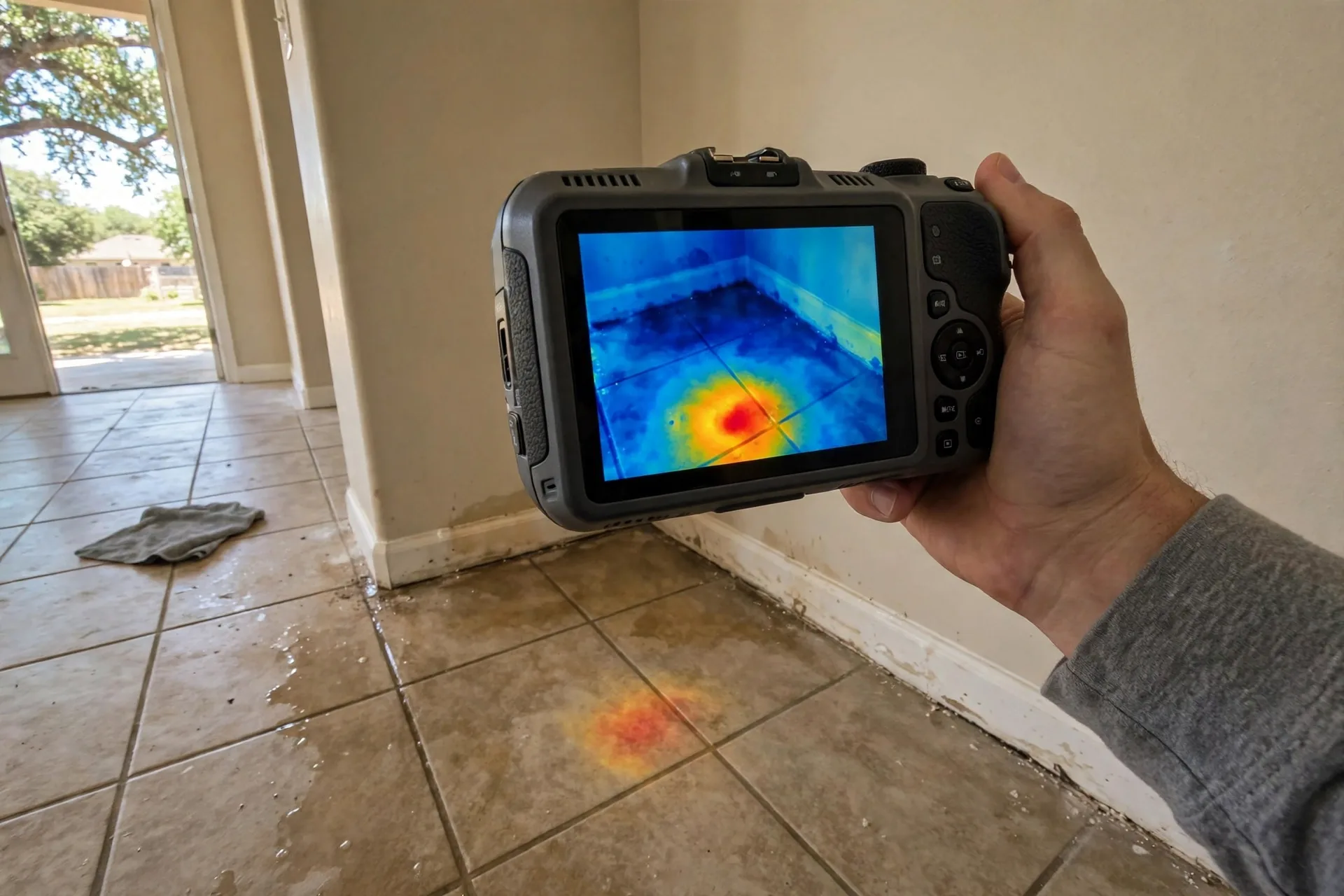
Illustrative leak-detection imagery. Warm floor spots, damp areas and running-water sounds are the slab leak clues homeowners notice first.
A portion of the floor feels noticeably warmer or cooler than adjacent areas without an obvious reason.
You hear water moving when fixtures are off and the sound seems to come from below the floor.
Flooring, baseboards or adjacent materials show recurring dampness.
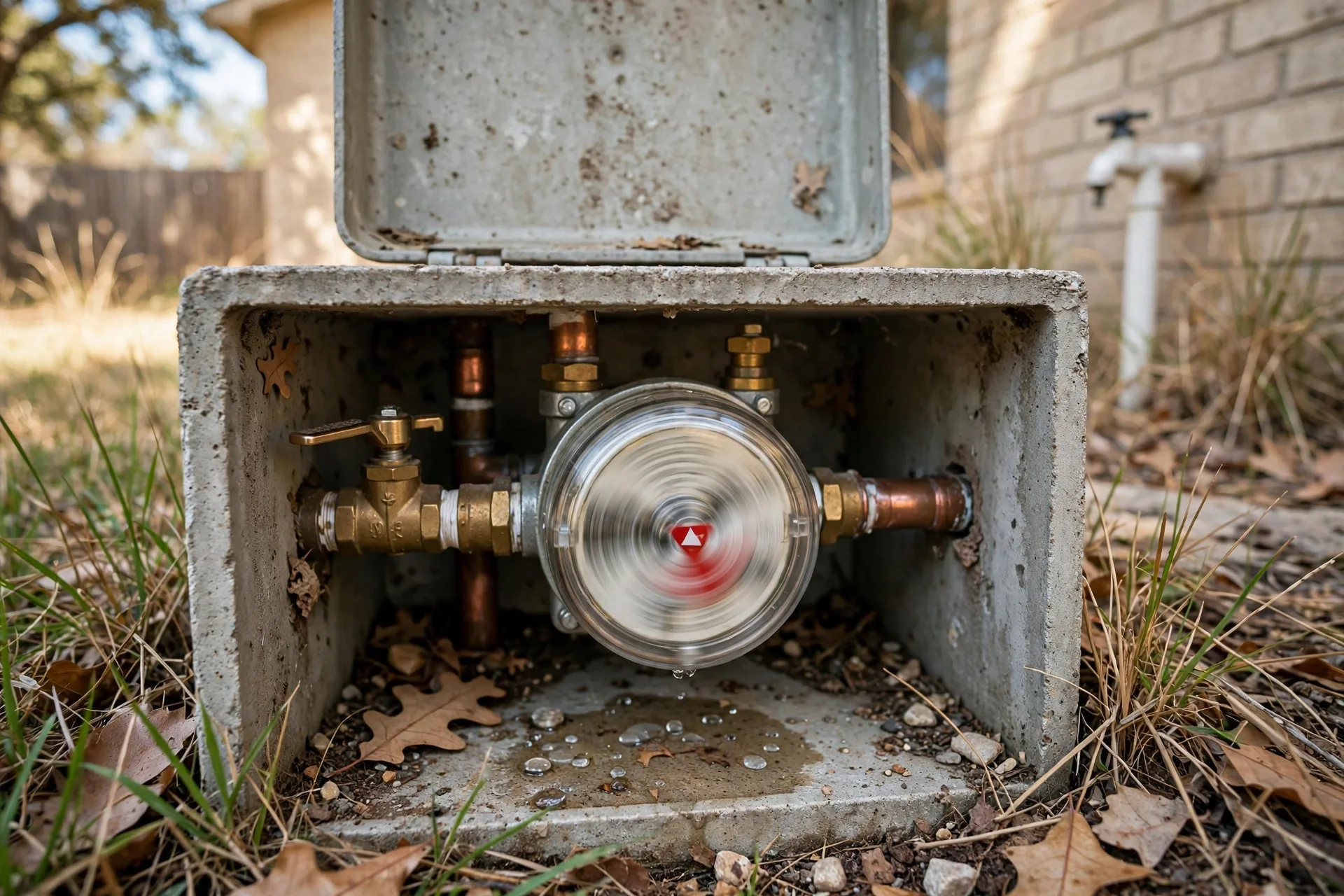
The water meter suggests ongoing use that visible fixtures do not explain.
A localized area develops moisture, staining or a musty condition near the floor.
A previous repair or cosmetic fix was followed by recurring moisture in the same region.
How a professional evaluation is typically approached
Slab leak detection is about narrowing the source before choosing how much access is necessary.
01
Map the symptomIdentify the floor area, timing and whether water use changes the symptom.
02
Check the plumbing contextConsider fixtures, hot-water lines, supply lines and other sources before assuming the slab is the problem.
03
Use targeted detectionAcoustic, thermal, moisture and pressure clues may be combined depending on the system.
04
Plan accessThe provider can explain whether localized access or another next step is appropriate.
Slab leak vs. foundation symptom
A crack or floor change does not automatically mean there is a slab leak. Conversely, a slab leak does not always create a dramatic crack. Plumbing and structural symptoms can overlap, so the most useful approach is to investigate the water source and the physical symptom separately.
Illustrative leak-detection imagery. A meter that moves with everything off points to plumbing loss, which helps separate a slab leak from a foundation symptom.
For a DeSoto home, a provider may consider whether the suspected line carries hot or cold water, where the symptom occurs relative to fixtures, and whether meter behavior supports active water loss. The final conclusion depends on the inspection, not the keyword used to find the service.
What to have ready before you call
Tell the provider about:
Exact room or floor area with the unusual temperature or moisture
Whether hot-water use changes the symptom
Any water-meter or utility-use change
Recent flooring or plumbing work
Whether the issue is constant or intermittent
Practical DeSoto context and next-step guidance
For a DeSoto property, the useful starting point is the pattern of the symptom rather than an assumption about the cause. With warm floors, running water sounds, meter movement, damp areas, and unexplained water loss, the same visible clue can have different explanations depending on where water, air, pressure, or moisture is traveling. A careful source investigation therefore starts with observations that can be repeated and compared: when the symptom appears, whether it changes with water use, whether weather or HVAC operation matters, and whether the affected area is close to a known plumbing route.
A practical way to think about slab leak warning signs is to separate three questions: what is happening, where is it happening, and what evidence can narrow the source. That sequence helps avoid premature repair assumptions. For example, a stain, wet patch, pressure change, sound, or water-bill increase is evidence of a symptom, not automatically proof of the exact failed component. A provider may use one method to narrow the area and another to confirm the source before recommending access or repair.
The diagnostic method should match the property and the symptom. Connecting several small clues into a reason to investigate can involve visual inspection first, followed by targeted use of moisture measurements, thermal imaging, acoustic equipment, pressure observations, or another specialized technique when appropriate. No single instrument produces perfect results in every building. Surfaces, insulation, temperature, pipe material, water pressure, accessibility, and the timing of the leak can all affect what a test can show. Good source location is therefore based on converging clues rather than a single reading.
Before a call, write down the exact room or outdoor area involved, what the symptom looks or sounds like, when it began, and whether it changes after showers, fixture use, irrigation, HVAC operation, or rainfall. Take a few clear photos without moving damaged materials unnecessarily. If the issue is active, note whether water is spreading, pooling, staining a ceiling, or changing the appearance of flooring or walls. Those details give the referring service and the independent provider a more useful starting point.
Common questions
Can a slab leak cause a hot floor?
A hot-water line leak can sometimes create a warmer area on the floor, but other causes can also change floor temperature. It is a clue, not a diagnosis.
Can a slab leak be heard?
Sometimes. Pressurized leaks can create sounds that travel through the structure, but audibility varies with pipe, soil, construction and background noise.
Does a slab leak always mean the foundation is damaged?
No. A plumbing leak under a slab and a structural foundation problem are different issues, although they can coexist or create overlapping symptoms.
Should I avoid using water until the leak is found?
For an active or unexplained water leak, reducing unnecessary water use can limit ongoing loss, but follow professional guidance if the situation is uncertain or urgent.
How this guide was prepared
Practical, sourced and transparent
We separate what can be explained from general guidance, what depends on the property, and what must be confirmed by an independent provider or public authority.
Clear authorship
Prepared by the DeSoto Leak Detection Editorial Team with a reader-first editorial process.
Claim discipline
No fabricated reviews, licenses, awards, pricing promises, response times or field-work claims.
Primary-source links
Safety and utility topics point readers to official sources when a public authority is the right reference.
Content and provider standards: Information is written for customers and does not transfer independent providers’ licenses, reviews, pricing, warranties, or field-work claims to DeSoto Leak Detection. Read our editorial standards →