Why detection comes before the repair decision
A repair method can only be chosen sensibly after the leak has been located and the affected line identified. Opening a slab on a guess can mean breaking concrete in the wrong place, while a confirmed location lets the plumber discuss access, flooring and restoration in concrete terms. Detection also separates the supply side from the drain side, which are repaired in different ways.
Keep the two scopes separate. Detection is the diagnostic work: it identifies the problem area and produces findings. Repair is the corrective work that follows, with its own scope, price and agreement. The detecting provider may or may not do the repair, and each step should be explained and priced on its own terms. Our guide to how slab leaks are located walks through the diagnostic side in detail.
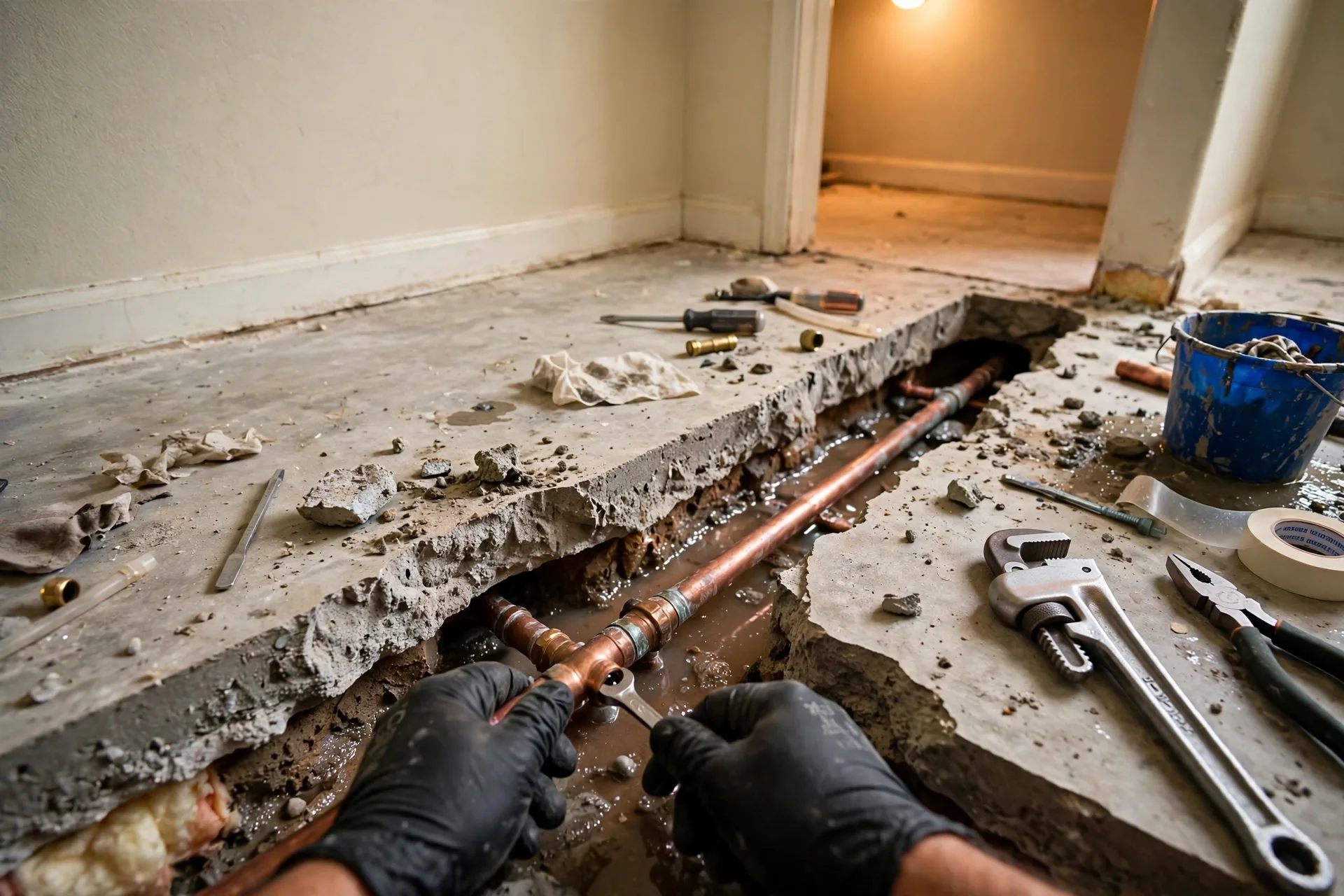
Spot repair: open the slab at the leak point
A spot repair is the most direct route. The slab is opened at the marked location, the failed section is cut out and replaced, the line is pressure-checked, and the concrete and floor finish are restored. It is often the first route discussed for a single, well-defined failure.
When it tends to fit: one confirmed leak, surrounding pipe that testing suggests is still sound, and a location where opening the floor is practical. Disruption: concentrated in one area, but it means breaking concrete, dust, noise and a floor patch that may not match older finishes. When it is a poor fit: pipe that has failed in several places, widespread corrosion, or a leak point under fixed cabinetry or a finished feature that cannot be disturbed.
Reroute: abandon the buried section and run a new line
In a reroute, the leaking under-slab section is capped off and abandoned, and a replacement line is run through an accessible route instead, typically inside walls or across an attic. The new line stays reachable afterward, which is a large part of the appeal.
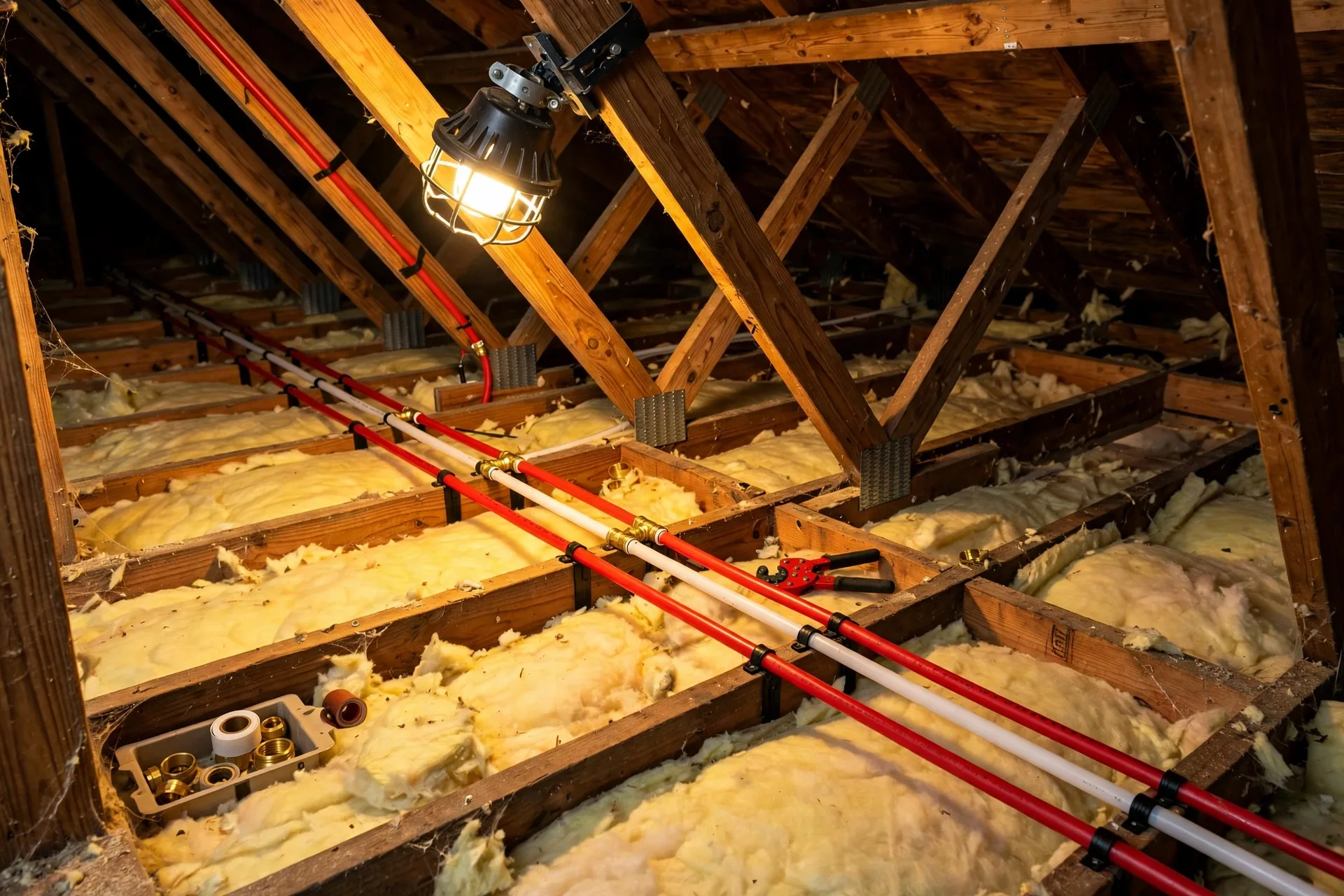
When it tends to fit: buried pipe deteriorated beyond one section, a line that has leaked before, or a location where opening the slab would destroy valuable flooring. Disruption: shifts from the floor to walls or ceilings, with drywall openings and patching rather than concrete work, plus shutoff periods while lines are tied in. When it is a poor fit: homes with no workable alternate path, or a single isolated failure in pipe that is otherwise sound, where a reroute solves a bigger problem than the one that exists.
Tunneling: reach the pipe from outside the house
Tunneling means excavating soil from the exterior, underneath the slab edge, to reach the pipe from below while leaving interior floors intact. It is sometimes combined with a spot repair once the pipe is reached, and the tunnel has to be dug, worked in and backfilled safely.
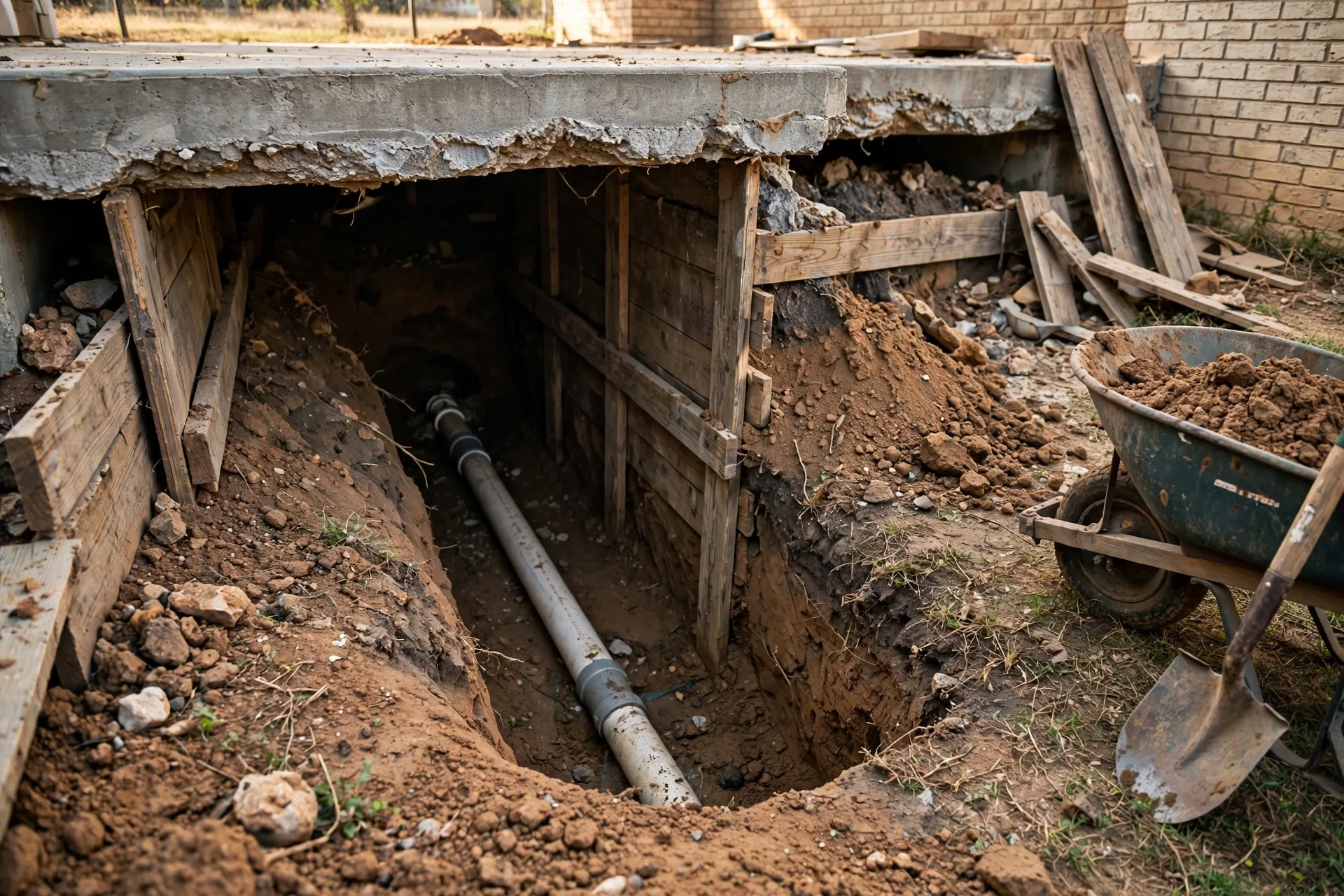
When it tends to fit: leaks close enough to an exterior wall to be reached, and interiors where the floor finish matters more than the yard, such as hardwood or tile worth preserving. Disruption: heavy outside digging, spoil soil to manage, and drainage and landscaping restoration afterward. When it is a poor fit: leaks deep in the interior of a large slab, soil conditions that make tunneling impractical, or a repair scope so large that a reroute or repipe is the more sensible conversation.
Pipe lining: a new surface inside the existing pipe
Pipe lining installs a lining inside an eligible existing pipe, creating a new inner surface without opening the slab along the whole run. Eligibility is the catch: diameter, layout, bends, junctions and the structural condition of the host pipe all decide whether lining can be considered, and not every provider offers it.
When it tends to fit: a line of suitable diameter and layout whose host pipe is intact enough to support a liner. Disruption: usually the lowest of the five routes, because access is needed mainly at the ends of the run. When it is a poor fit: collapsed, crushed or badly offset pipe, very small lines, or layouts with junctions the liner cannot pass.
Full or partial repipe: replace the system, not the symptom
A repipe replaces a broad section of pipe, or the entire supply system, with new lines routed through accessible spaces rather than back under the slab. It has the largest scope of the five options and is priced as a system project rather than a single repair.
When it tends to fit: recurring leaks in different places, pipe material at the end of its service life, or a home where the next failure is a matter of time rather than possibility. Disruption: the highest of the group, spread across several rooms, though the slab itself is usually left alone. When it is a poor fit: a first leak in a newer or otherwise sound system, where replacing everything spends a system budget on a one-section problem.
Repair or repipe: a decision framework
No universal rule converts a leak count into a repair choice, but providers tend to weigh the same factors. Reviewing them in advance makes the plumber conversation more productive:
- Pipe age and material. Older copper under DeSoto slabs can thin and develop pinhole leaks as it ages; one pinhole in old pipe reads differently from one defect in newer pipe.
- Number and history of leaks. A first failure points one way; a pattern of failures in different rooms points another.
- What testing showed. Pressure behavior and acoustic or isolation results describe the system, not just the one leak.
- Flooring and access. The value of the floor above the leak, and what each route would disturb, is part of the decision.
- Plans for the home. A repair meant to last two years is judged differently from one meant to last twenty.
- The comparison itself. Ask for each realistic option to be explained and priced separately, so scopes can be compared honestly; our leak detection cost factors guide covers the diagnostic side.
Permits, documentation and insurance notes
Slab and plumbing work in DeSoto and Dallas is generally subject to local permitting and inspection requirements; the licensed provider should explain what applies to the chosen method. Keep the detection report, the repair quote and the final invoice together; a clear written report is also what insurers are most likely to ask for. Our guide to what a leak detection report should include explains good documentation.
On insurance, only general information is possible here. Policies commonly treat sudden, accidental water damage differently from gradual wear or deterioration, and coverage decisions belong to the insurer. What a homeowner controls is documentation: dated findings, photographs taken before floors are opened, and invoices that separate detection from repair.
Questions to ask before you approve a repair
- Which line failed, how was that confirmed, and what condition is the rest of the pipe in?
- Which of the repair options did you consider, and why is this one recommended?
- What access and restoration are included, and what is priced separately?
- Does the work need a permit, and who arranges it?
- Will the repaired or new line be pressure-tested before everything is closed up?
The goal is a repair that matches the actual condition of the system under your slab, chosen with the evidence on the table. The slab leak detection page explains how the diagnostic side works in DeSoto homes.
Common questions
Is it better to reroute or repair a slab leak?
Neither route is automatically better. A spot repair tends to fit a single failure in pipe that is otherwise sound, while a reroute tends to fit deteriorated buried pipe or a line that has failed before, because the new line stays accessible. The deciding evidence is the condition of the rest of the pipe, the flooring access would disturb, and how each option is priced.
How many slab leaks before a repipe makes sense?
There is no fixed number that applies to every home. Providers look at the pattern instead: leaks recurring in different places, pipe material near the end of its service life, and testing suggesting wider deterioration all point toward a repipe, while an isolated first failure usually does not. Ask what your leak pattern suggests about the rest of the system.
Does tunneling under a slab damage the foundation?
Tunneling is excavation, so it should be planned carefully, with attention to how the soil supports the slab and how the tunnel is backfilled. It is chosen specifically to avoid opening interior floors. Ask the provider how they support and refill the tunnel and restore drainage afterward.
Can every slab leak be lined instead of dug up?
No. Lining needs a host pipe of the right diameter and layout that is still structurally able to accept a liner. Collapsed, crushed or badly offset pipe, very small lines and some junction layouts are not candidates. Eligibility is judged only after the line is located and assessed.
Is slab leak repair covered by homeowners insurance?
Coverage depends on the policy and the cause. Policies often distinguish sudden, accidental events from gradual deterioration, and may treat the resulting water damage differently from the pipe repair itself. Insurers generally want documentation, so keep the detection report, dated photographs and invoices. This is general information only; your insurer makes the coverage decision.
How long does a slab leak repair take?
The timeline follows the method and the access involved, so any single estimate would be misleading. A localized spot repair is a much smaller scope than tunneling or a repipe, and drying, restoration and inspections can extend the calendar beyond the plumbing work itself. Ask for a written scope and sequence for the option you choose.
Sources and further reading
Need help with a suspected leak?
Call and explain the symptom, property type and ZIP. This referral service can help connect you with an appropriate local professional.