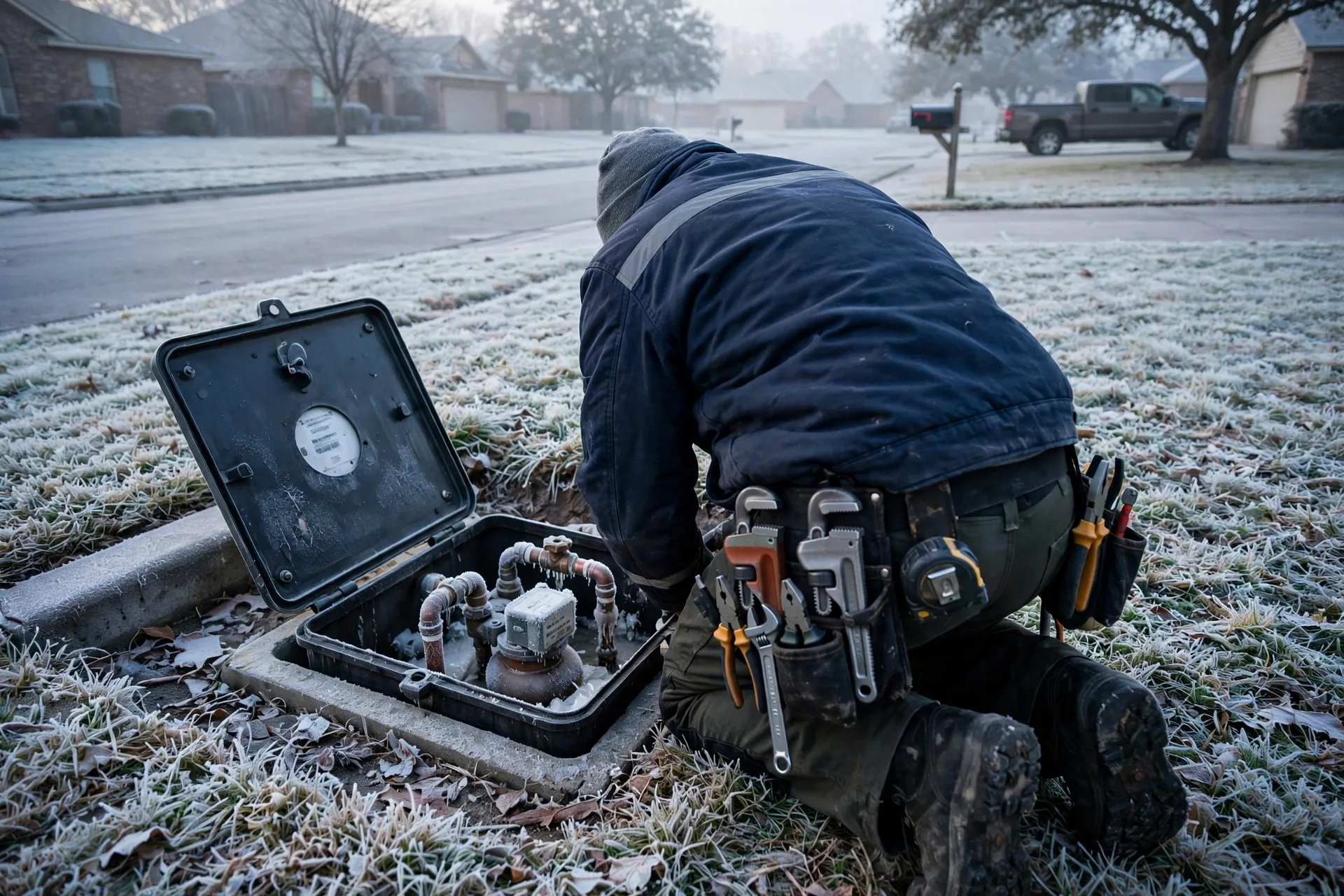
How a freeze cracks a pipe
Water expands as it freezes, and inside a sealed pipe that expansion has nowhere to go. Pressure builds between the ice blockage and the closed fixtures downstream until something gives, usually a weakened section, a joint or a fitting. The visible split is often not where the ice formed; it is where the pressure found the weakest point.
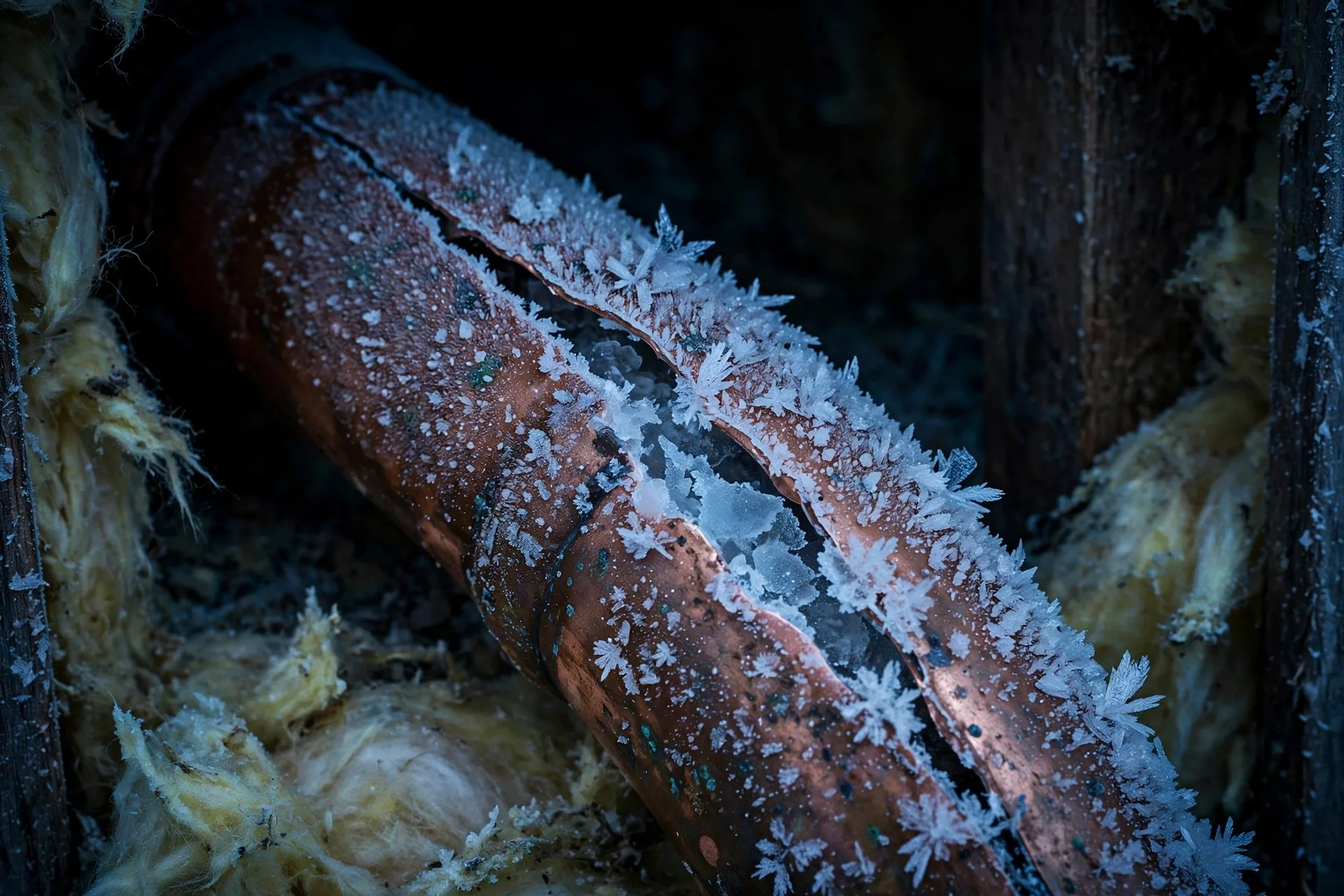
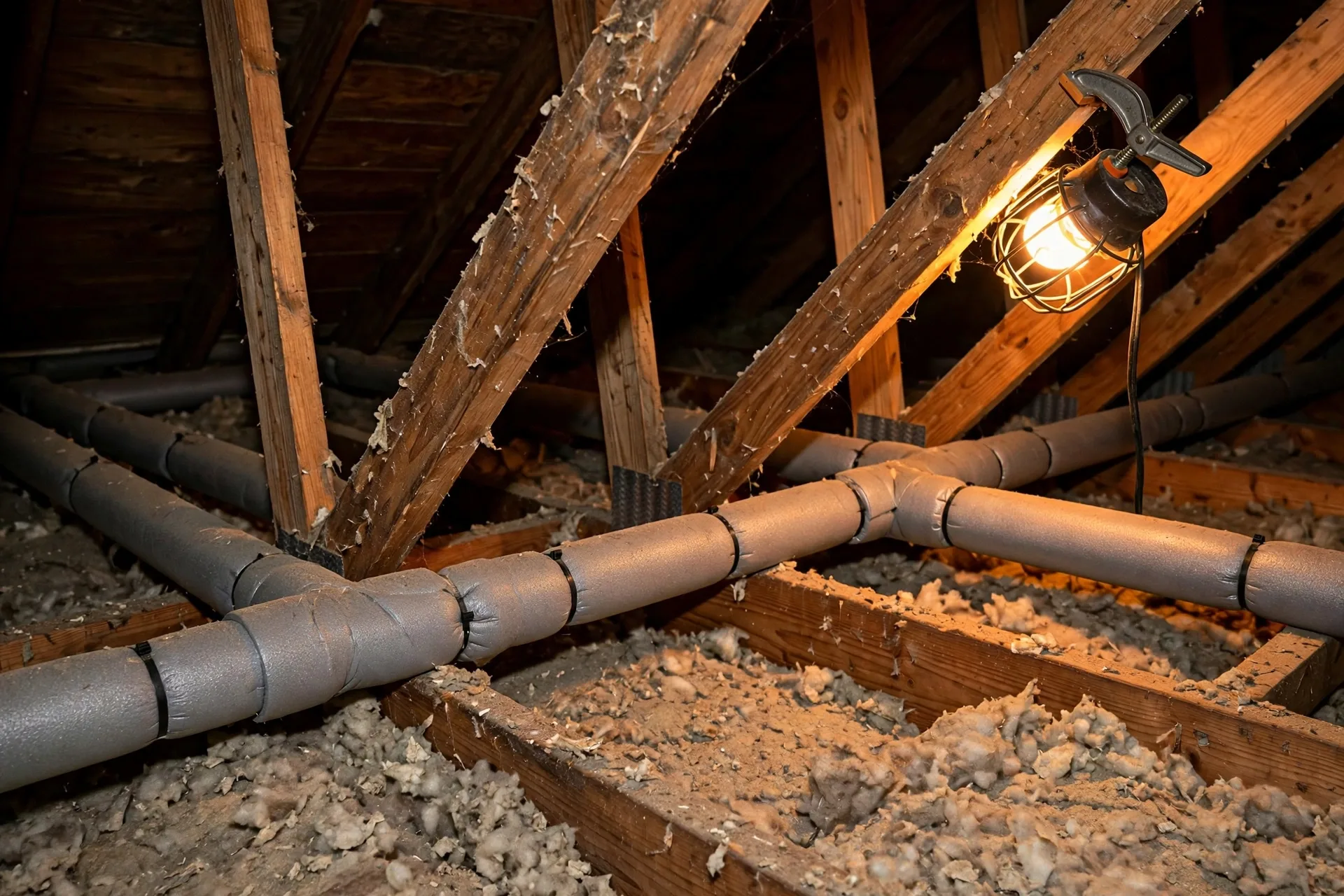
The runs most at risk in a North Texas home are the ones exposed to cold air: pipes in attics, pipes in exterior walls, lines in garages and crawl spaces, outdoor faucets and hose bibs, and irrigation supply lines. Most DeSoto homes are built on slabs with plumbing routed through the attic or walls rather than a basement, so the vulnerable pipes are usually overhead or in outside walls, not under the floor. No common pipe material is immune; fittings and elbows tend to be the failure points even in systems whose straight runs tolerate some expansion.
Why the leak can appear days or weeks later
The delay confuses many homeowners, because the freeze ends and nothing looks wrong. Three effects create the lag. First, remaining ice can plug the split and hold back the water until the pipe fully thaws. Second, a small split may only seep while water is actually flowing or while the line sits at full pressure, so the loss is slow and intermittent. Third, the water that does escape has to travel: it soaks insulation, drywall, soil or flooring before a stain, a soft spot or an odor reaches a surface anyone can see.
Temperature swings after the freeze add to the pattern. A pipe that survived the coldest night under low use can start leaking when normal routines return and the line is pressurized around the clock. By the time a symptom appears, the freeze may be two or three weeks in the past, which is exactly why the connection gets missed.
Delayed signs worth watching for
- Meter movement with everything off. The single most reliable early sign, and the easiest to check yourself.
- A higher bill or usage alert for a period when your habits did not change.
- New damp spots, bubbling paint or staining on ceilings and exterior walls, especially below attic runs.
- A musty odor that was not there before the freeze, suggesting material that has been wet for a while.
- Pressure changes: weaker flow at some fixtures, or pressure that varies through the day.
- Running-water sounds when no fixture is in use, or a water heater that seems to cycle more often.
- Pooling or unusually green, soft ground near the foundation or along the buried service line route.
Any one sign can have another explanation, which is why the meter check below matters: it separates "something is using water" from "something only looks damp." Our guide to the signs of a hidden water leak covers the same symptom list in more depth.
A post-freeze meter-check checklist
You do not need tools for the basic check, only a quiet period when nobody will use water. Our step-by-step guide to how to check a water meter for leaks covers reading the meter and its leak indicator in full; the short version after a freeze is:
- Turn off every fixture, the ice maker, irrigation and any appliance that draws water automatically.
- Find the meter (usually in a box near the street) and note the reading and whether the small leak-indicator dial is moving.
- Leave the water unused for a fixed period, an hour or overnight, then read the meter again.
- If the reading changed or the indicator moved with everything off, water is escaping somewhere on the property side.
- Walk the attic access, exterior walls and garage with a flashlight and look for new staining, dripping or wet insulation.
- Note dates and take photographs of anything you find; that record is useful for a provider and for insurance documentation.
A changed reading does not say where the leak is, only that one exists. Location is the diagnostic step that follows, using the symptom pattern and, where needed, acoustic or pressure methods.
If you find a burst pipe or active leaking
If water is actively flowing where it should not be, shut the water off first and investigate second. Most homes can be shut off at the meter box by the street or at an interior main shutoff, often near where the service line enters or by the water heater; knowing which one your home has, before an emergency, is worth five minutes in calm weather. Opening a low faucet after shutoff drains the lines and reduces continued dripping.
Treat electricity cautiously around water. Do not stand in standing water to reach switches or outlets, and if water is near electrical fittings, keep clear and let a professional judge what is safe. Photograph the damage and any visible split once the water is off, keep receipts for emergency work, and then have the rest of the system checked: a freeze that cracked one exposed run may have stressed others, and a pressure or meter check after the obvious repair confirms whether the system is tight again.
Insurance documentation, in general terms
Homeowners policies commonly treat sudden events such as a burst pipe differently from slow leaks that develop over time, and the coverage decision always belongs to the insurer. What strengthens any claim is a clean timeline: the freeze dates, when symptoms were first noticed, meter readings, photographs before cleanup, and invoices that separate emergency repair from detection work. This is general information only, not coverage advice, but the documentation habits are the same ones that help a provider diagnose the problem, so nothing is wasted.
Common questions
Can a frozen pipe start leaking weeks after the thaw?
Yes. Ice can hold a split closed like a plug, and a fine crack may only seep under full pressure or during use, so the leak can begin days or weeks after the freeze itself. Water also takes time to travel through insulation, drywall or soil before it becomes visible. A late symptom after a freeze deserves the same meter check as an immediate one.
How can I check for a leak after a freeze if I cannot see any water?
Use the water meter. Turn off every fixture and appliance that draws water, note the meter reading and the leak-indicator dial, then recheck after an hour or overnight with no water used. If the reading changed, water is escaping somewhere even though nothing is visible, and a professional location visit is the logical next step.
Which pipes are most likely to freeze in a North Texas home?
The exposed ones: pipes in attics, pipes inside exterior walls, lines in garages and crawl spaces, outdoor faucets and hose bibs, and irrigation supplies. In slab homes around DeSoto, plumbing is commonly routed through the attic and walls, so those overhead and outside-wall runs are usually the weak points rather than the lines under the slab.
Should I shut my water off if I suspect a freeze crack?
If water is actively leaking, yes: close the main shutoff at the meter or the interior valve, drain a low faucet, and keep clear of water near electrical fittings. If you only suspect a problem, a meter check first will tell you whether water is actually being lost. When in doubt, shutting off and calling a provider beats watching a stain grow.
Does homeowners insurance cover leaks from frozen pipes?
Policies often treat a sudden burst differently from a slow, long-running leak, and the specifics depend on your policy, the cause and how quickly the damage was addressed. Document the freeze dates, your meter readings, photographs and invoices, and contact your insurer promptly. This is general information only; the insurer makes the coverage decision.
Can a freeze crack a pipe under the slab?
It is less common, because the ground insulates buried and under-slab lines from the sharpest cold, and under-slab failures in this area are more often tied to age, corrosion or soil movement. A post-freeze meter loss is more likely to trace to an attic, wall or exterior run. Testing sorts out which system is losing water before anyone assumes the slab is involved.
Sources and further reading
Need help with a suspected leak?
Call and explain the symptom, property type and ZIP. This referral service can help connect you with an appropriate local professional.