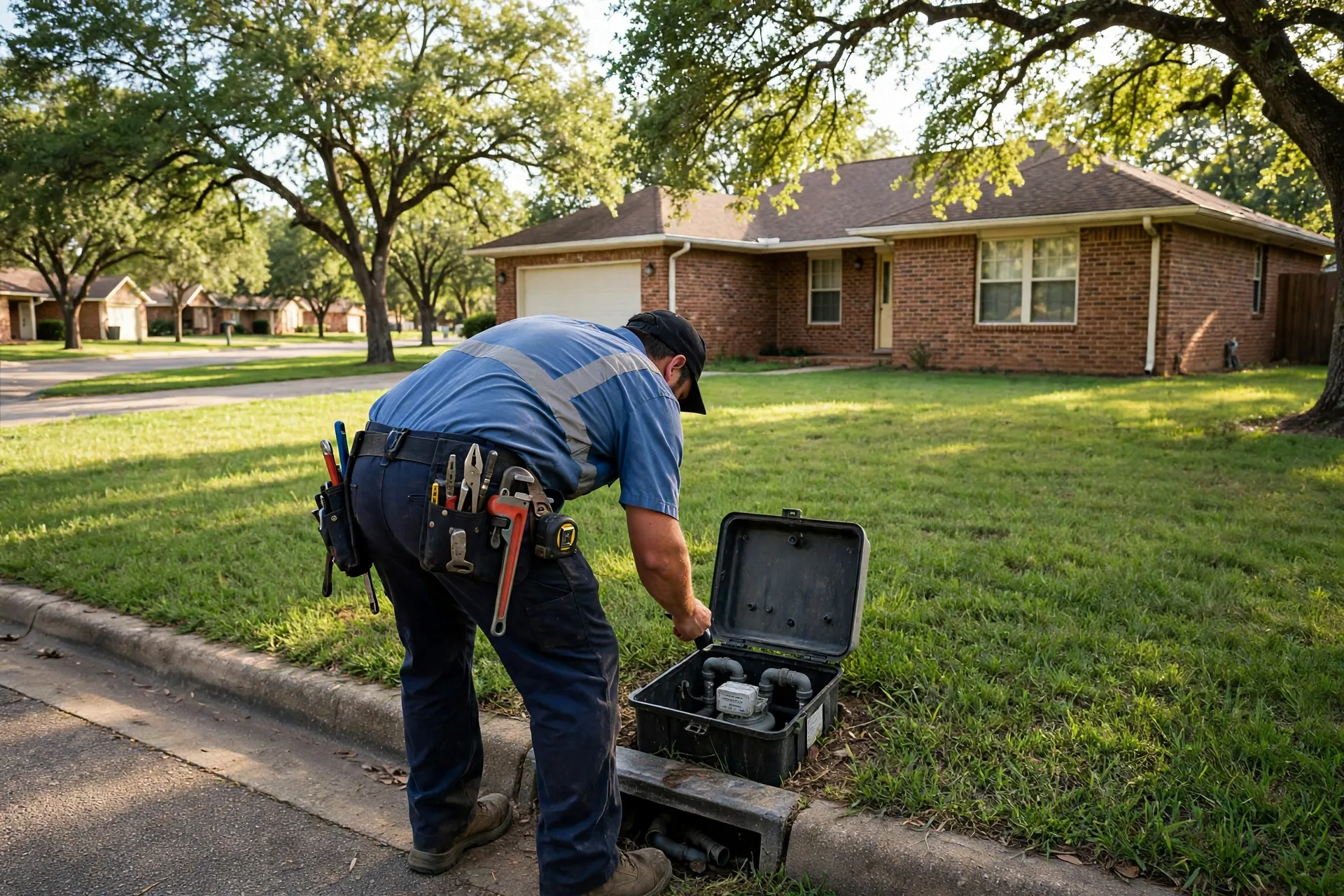
Slab Leak Repair Midlothian TX
Repair comes after evidence, not before it. Until testing confirms the leak's location and the pipe's condition, choosing a repair route is guesswork. Once the findings are in, a licensed plumber chosen by you weighs these routes. This website does not perform repairs, and the detection visit is separate from any repair quote.
Spot repair
The slab is opened only at the located leak and the failed section replaced. It fits when the surrounding pipe tests sound and the failure looks like a one-off.
Reroute
The leaking segment is capped and a new line runs through walls or the attic. It makes sense when the buried line has failed before, or is near the end of its working life.
Tunneling
Soil is dug from outside so the pipe is reached from beneath the slab, leaving floors untouched. It suits leaks near the middle of the house, where opening from above tears up the most flooring.
Pipe lining
A liner seals the pipe from inside. Diameter, shape and condition decide suitability, and the repair provider confirms it after inspection.
Full repipe
Every supply line is replaced and the old under-slab lines abandoned. It is weighed when leaks recur across an aging system, not after one isolated failure.
The right route depends on pipe condition, failure history, access and flooring, so ask for the reasoning in writing first.
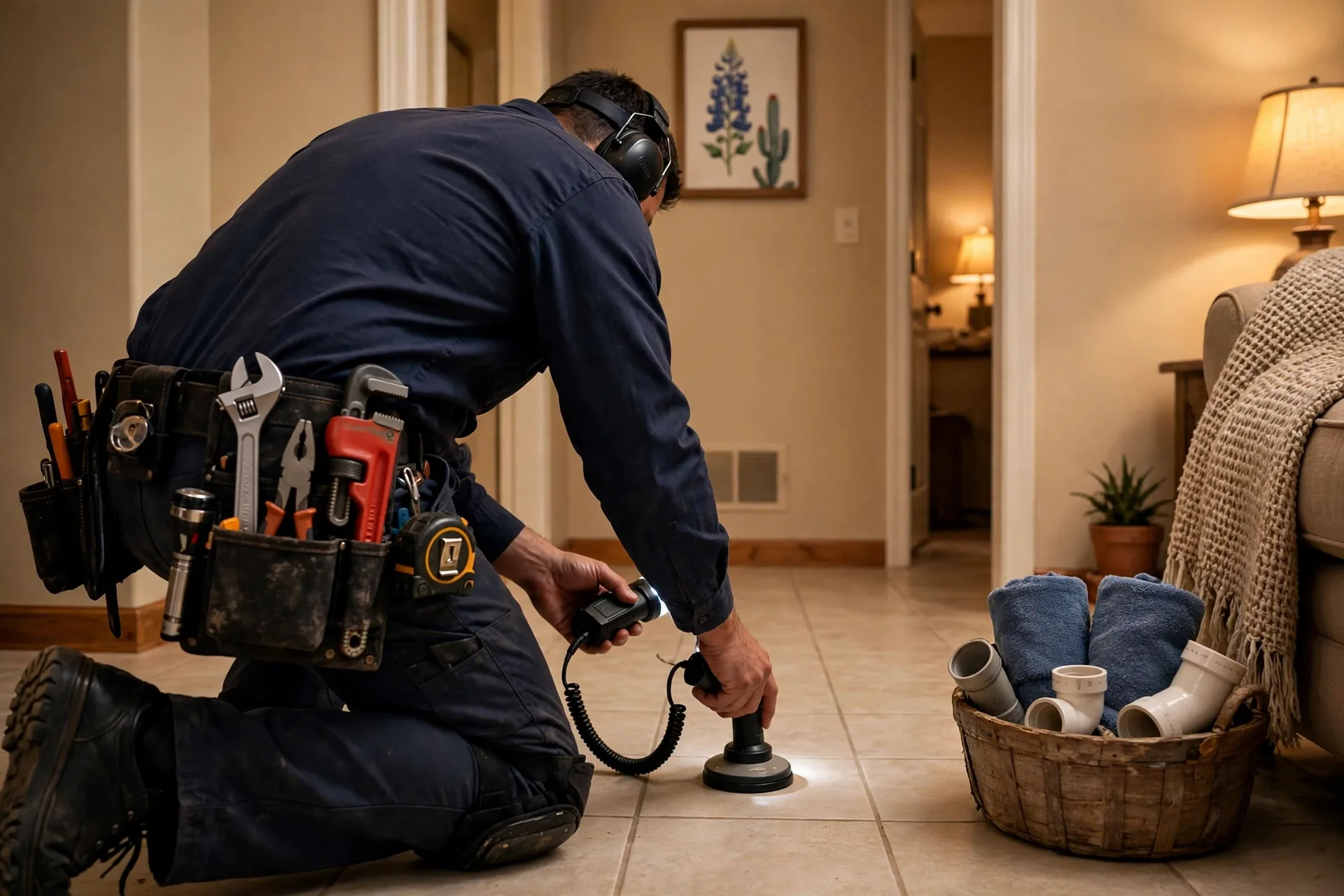
Slab Leak Detection Midlothian TX
In Midlothian the signs usually surface as a warm patch on the floor, a damp spot that never quite dries, the faint sound of running water when the house is quiet, or a bill that climbs for no visible reason. A provider typically confirms the loss first with a pressure test, then uses acoustic listening equipment to follow the sound of pressurized water escaping under concrete, narrowing the location before anything is opened. Age shifts the suspicion: young lines point to fittings and construction damage, older ranch copper to decades of clay movement. For the full method, see slab leak detection.
Pool Leak Detection Midlothian TX
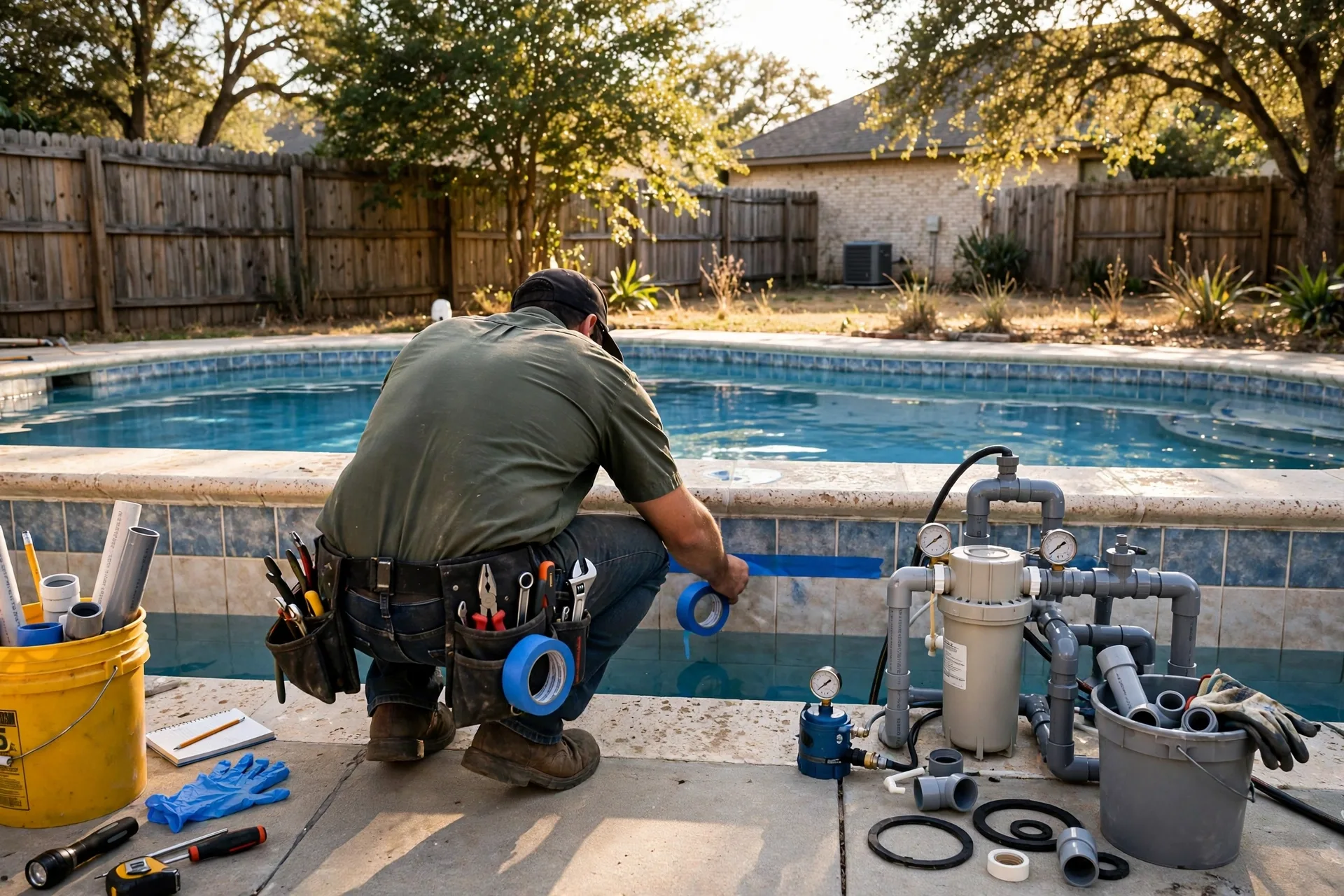
Large lots mean plenty of Midlothian backyards hold a pool, and August heat makes evaporation an easy excuse for falling water. A bucket test separates normal loss from a real leak by comparing the pool's drop against a bucket set on the steps over the same period. Dye testing then checks seams, lights and fittings for currents pulling dye outward, and a complete test pressure-checks the whole system: shell, skimmer, main drain, return lines and equipment together, because a pool can leak at more than one point. See pool and spa leak detection for the full process.
Gas Leak Detection Midlothian TX
Once the gas utility or emergency responders have cleared a property, or where the concern is an HVAC refrigerant circuit rather than a gas line, electronic detectors and pressure testing can locate where gas or refrigerant is escaping. Refrigerant trouble usually announces itself as weak cooling, ice forming on the lines, or a hissing sound near the coil. Read more on gas and HVAC refrigerant leak detection.
What Leak Detection Costs in Midlothian Depend On
There is no honest flat figure for detection in Midlothian, because the work changes with the leak. What you are paying for is the testing time and equipment needed to turn a suspicion into a located, documented source.
| Method | What drives the cost |
|---|---|
| Meter and pressure testing | Time on site, and whether sections of the system must be isolated one by one |
| Acoustic pinpointing | Size of the slab, depth of the pipe, floor coverings and background noise |
| Pool pressure testing | Number of lines and features tested, and access to the equipment pad |
| Main line checks | Lot size and the length of the run between the meter and the house |
Number of bathrooms, slab thickness, and how much documentation you need for a repair quote or insurance file also matter.
What a written quote should include
- The tests to be performed, and what each one is meant to confirm or rule out
- Whether the price covers locating only, or also opening and restoring surfaces
- A written findings report you keep, whatever you decide next
- The provider's license details, and who is responsible for any repair work
- Any permit the work requires, and who pulls it
Checking Your Meter and Asking About a Bill Adjustment
Your first test is free and takes about ten minutes. Find the meter box, usually near the street, turn off every fixture and appliance that uses water, then watch the meter's leak indicator or dial. Movement with everything off means water is going somewhere it should not. Note the reading and repeat the check later to confirm it. If a found and repaired leak drove a bill up, ask the City of Midlothian utility billing office whether a leak adjustment is available for your account, and what proof of repair they ask for. Requirements differ by city and can change, so confirm the current details directly. Our guide to how a utility leak adjustment works explains the documentation side.
Why Leaks Show Up in Midlothian Homes
Ellis County clay behaves like the rest of the North Texas belt: it takes on water and expands, then dries out and pulls back, and rigid pipes buried in it flex with every cycle. Midlothian's housing mix makes the pattern uneven. A ranch home from the 1980s may have original copper that has moved with the soil for forty years, while a two-year-old subdivision home can still develop a leak where shifting soil stresses a fitting, or where a line was nicked during construction and took time to fail. Freeze events add cases too: pipes in exterior walls and attics can crack in a hard freeze and announce themselves weeks later.
Areas of Midlothian We Serve
Housing age and lot size change what a leak looks like, so local context matters:
- Older ranch homes near the center of town: original plumbing that has aged along with the house.
- Newer subdivisions off US-287 and FM 663: young lines where fittings, soil movement and construction defects are the first suspects.
- Large-lot properties on the rural edges: longer service lines between the meter and the house, with more pipe buried out of sight.
- Homes along FM 1387 and the eastern growth corridor: a mix of recent builds and converted rural properties.
What a Leak Detection Visit Includes
A visit usually starts with your account of the symptoms and a meter check, then moves to the tests that fit the evidence: pressure testing, acoustic listening, moisture or thermal checks, or line isolation. The provider documents the findings in a written report describing what was tested, what was found and where, a document you can hand to the repair plumber you choose or to your insurer. For the step-by-step version, see how leak detection works.
Frequently Asked Questions
Why do slab leaks happen in newer Midlothian subdivisions?
Soil settlement is the main reason. Freshly graded lots consolidate for years, and the movement stresses fittings and the points where lines pass through the slab. A line nicked during construction can also fail slowly. New pipe rules out corrosion, not movement, so a young home with a moving meter needs testing just the same.
How can I check whether my Midlothian home has a hidden leak?
Use the meter. Shut off every tap and appliance, find the meter box near the street, and watch the leak indicator. Any movement while the house uses nothing means water is escaping somewhere. Write the reading down, check again an hour later, and give both numbers to the provider when you call.
Does the City of Midlothian adjust water bills after a leak?
Ask the City of Midlothian utility billing office directly. Adjustments, where they exist, are the city's decision, and the office sets what proof it needs, typically evidence that the leak was found and repaired. Rules change, so get the current requirements from the utility rather than relying on a neighbor's experience.
How does electronic leak detection work?
The equipment listens instead of digging. A pressure test proves the system is losing water, acoustic sensors then pick up the sound of the escape under the slab, and moisture or thermal tools show where water has traveled. Together they shrink the search to a small area before anyone opens a floor.
What happens after the leak is found?
The findings come to you in a written report, and what happens next is your call. Homeowners usually take the report to licensed plumbers for repair quotes matched to the evidence. Nothing in the process obliges you to hire the detecting provider or any other company for the repair itself.
How much does leak detection cost in Midlothian, TX?
Scope sets the figure: which tests your home needs, how deep and reachable the lines are, the size of the house and lot, and how much documentation you want. A pressure check alone is a smaller job than a full slab scan plus pool testing. Expect a written quote before work starts.
Can a hidden leak damage my foundation?
Yes. Escaping water soaks the clay under the slab, and wet clay weakens, shifts and can wash out, leaving the foundation unevenly supported. The wet zone grows for as long as the leak runs. Finding the leak early is what limits the damage, which is why a moving meter should not be ignored.