
Slab Leak Repair Lancaster TX
Repair decisions wait for detection, because Lancaster's mix of foundations and pipe materials makes guessing expensive. Some homes are pier-and-beam, some are slab, and older lines may be galvanized rather than copper. Once testing shows where the failure is and what the line is made of, a licensed plumber chosen by you weighs the routes below. This service does not repair leaks, and the detection visit stands apart from any repair quote.
Spot repair
The failed section is opened at the pinpointed location and replaced. It fits when the rest of the line tests sound and the failure is isolated, whatever the foundation type.
Reroute
The leaking segment is abandoned and a new line runs through walls or the attic. On older Lancaster homes with tired galvanized runs, a reroute often retires the worst section instead of patching it.
Tunneling
On slab homes, digging from outside reaches the pipe from beneath, so interior floors stay intact. It suits leaks deep under the house where opening from above is most disruptive.
Pipe lining
A liner seals the pipe from within. Whether it fits depends on diameter, bends and condition, and the repair provider confirms suitability after inspection.
Full repipe
All supply lines are replaced and the old runs abandoned. It is usually weighed when galvanized or copper lines fail in more than one place, rather than after a single leak.
Ask for the reasoning in writing, including the pipe material and its condition, before you approve any route.
Slab Leak Detection Lancaster TX
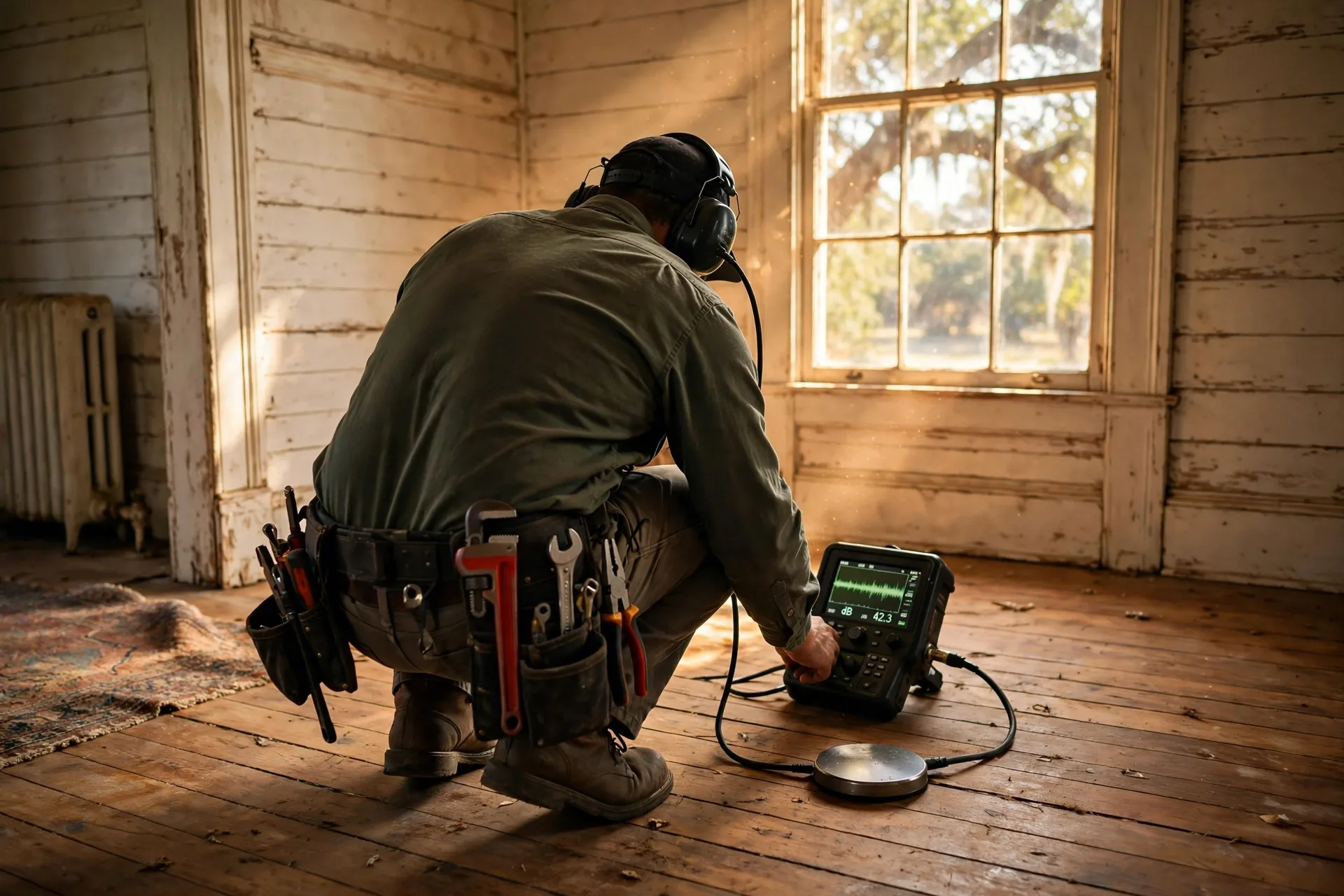
In Lancaster, detection starts by separating two questions: is the system losing water, and which part of it? A pressure test answers the first. Acoustic listening equipment then tracks the sound of pressurized water escaping, whether the line runs under a slab or beneath a pier-and-beam floor, and narrows the spot before anything is opened. Foundation type changes the access, not the principle. Older galvanized lines complicate the picture because internal corrosion can weep at several thinned points, so the findings should describe the run's overall condition. For the full method, see slab leak detection.
Pool Leak Detection Lancaster TX
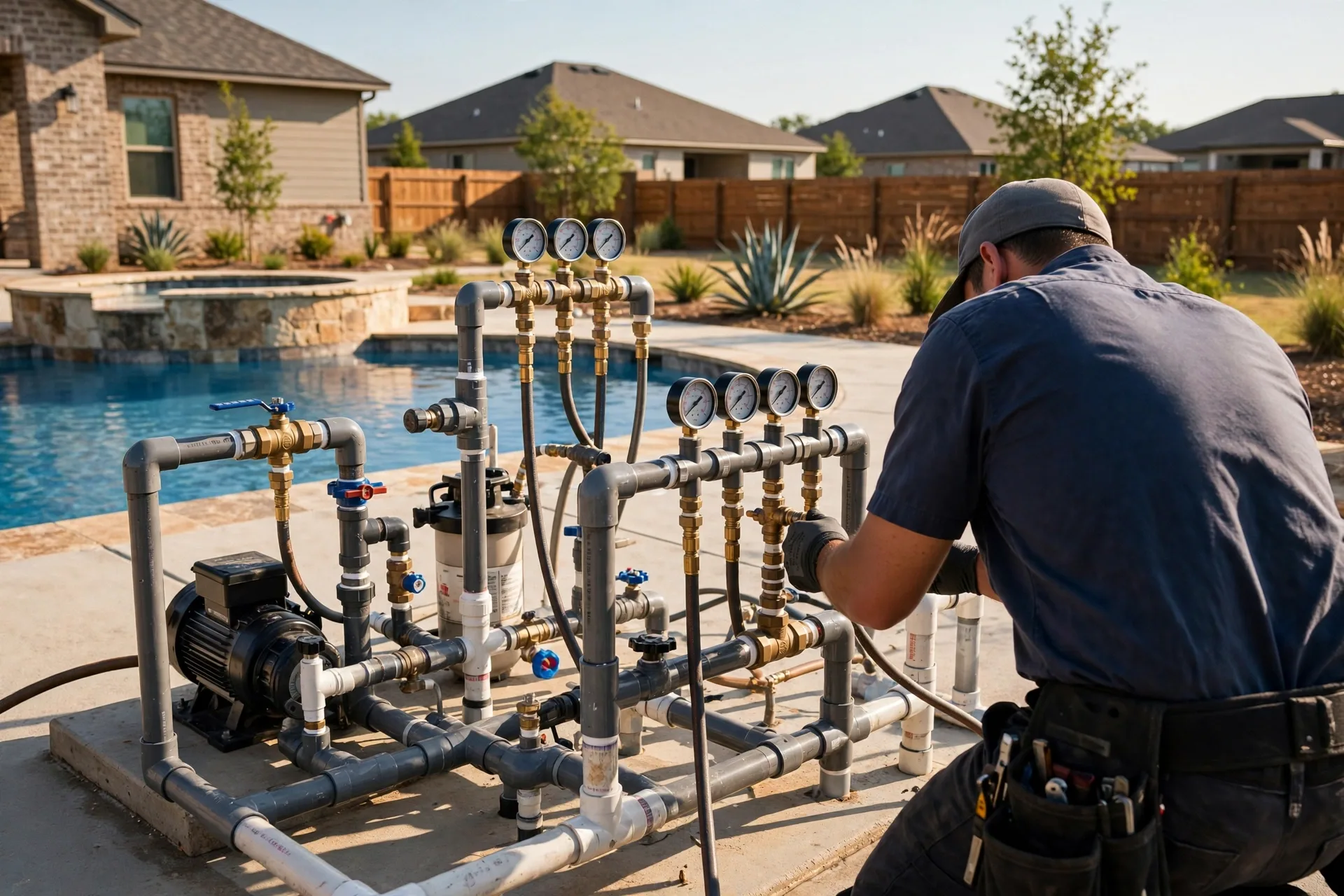
Pools belong mostly to Lancaster's newer subdivisions and larger lots, and they lose water in the same North Texas ways: evaporation that mimics a leak, and real leaks at fittings, lights, skimmers and buried return lines. A bucket test compares the pool's drop with a bucket on the steps to separate the two. Dye testing checks seams and fittings, and a complete pressure test covers the shell, skimmer, main drain, returns and equipment together, because a pool can leak at more than one point. See pool and spa leak detection for the full process.
Gas Leak Detection Lancaster TX
After the gas utility or emergency responders have cleared a property, or when the concern is an HVAC refrigerant circuit rather than a gas line, electronic detectors and pressure testing can locate where gas or refrigerant is escaping. Refrigerant leaks usually present as weak cooling, ice on the lines or a hissing sound near the coil. Read more on gas and HVAC refrigerant leak detection.
What Leak Detection Costs in Lancaster Depend On
Pricing follows the work involved, not a flat figure. What you are paying for is the testing time and equipment needed to turn a suspicion into a located, documented source.
| Method | What drives the cost |
|---|---|
| Meter and pressure testing | Time on site, and whether supply and drain suspicions must be separated |
| Acoustic pinpointing | Foundation type, depth of the line, floor coverings and background noise |
| Pool pressure testing | Number of lines and features tested, and access at the equipment pad |
| Older line assessment | How much galvanized or cast iron run needs checking to judge its condition |
Home size, number of bathrooms, pipe material and the documentation you need all shape the scope.
What a written quote should include
- The tests to be performed, and what each one is meant to confirm or rule out
- Whether the price covers locating only, or also opening and restoring surfaces
- A written findings report you keep, whatever you decide next
- The provider's license details, and who is responsible for any repair work
- Any permit the work requires, and who pulls it
Meter Checks and Asking Lancaster About a Bill Adjustment
Your first test is free and takes about ten minutes. Find the meter box, usually near the street, turn off every fixture and appliance that uses water, and watch the leak indicator or dial. Movement with everything off means water is going somewhere it should not. Write the reading down and confirm it with a second check later. If a found and repaired leak drove a bill up, ask the City of Lancaster utility billing office whether a leak adjustment is available for your account and what proof of repair they require. The city sets the requirements and can change them, so confirm directly. Our guide to how a utility leak adjustment works explains the documentation side.
Galvanized, Cast Iron and Clay in Lancaster
Lancaster's leak pattern is written in its pipe materials. Galvanized steel, common in the city's older homes, rusts from the inside: the bore narrows, the wall thins, and eventually a pinhole opens or a threaded joint lets go. Cast iron drain lines corrode along the bottom of the pipe until the channel wears through, which shows up as slow drainage and moisture rather than a moving meter. Layered over both is the county clay, swelling and shrinking under slabs and stressing every rigid joint. Many older Lancaster homes also carry several eras of plumbing at once, repairs from different decades joined together, and the joints between eras are frequent suspects.
Areas of Lancaster We Serve
The city's housing spans more than a century, and the plumbing spans it too:
- Historic homes near the Town Square: pre-war and post-war construction with original-era pipe materials still in service.
- Established neighborhoods along Pleasant Run Road and Belt Line Road: 1970s to 1990s slab homes with aging copper.
- Newer subdivisions off I-35E and Houston School Road: recent builds on worked clay lots.
- Properties on the rural edges south and east: longer service lines running from the street across open ground.
What a Leak Detection Visit Includes
A visit usually opens with your symptoms and a meter check, then follows the evidence: pressure testing, acoustic listening, moisture or thermal checks, or isolating one section of line at a time. Everything tested and found goes into a written report, yours to hand to the repair plumber you choose or to your insurer. For the step-by-step version, see how leak detection works.
Frequently Asked Questions
Are galvanized pipes a leak risk in older Lancaster homes?
Galvanized steel rusts from the inside. Over decades the bore narrows and the wall thins until pinholes open or a joint starts weeping, often with falling pressure as an early hint. The outside can look fine while the inside fails, which is why pressure testing, not appearance, judges these lines.
How can I tell a drain line problem from a supply line leak?
Watch the meter. A supply leak is under pressure, so the meter moves even with the house shut off, and the bill jumps. Drain trouble behaves differently: slow drains, gurgling, odors or damp near fixtures, with the meter still. Testing confirms which system is guilty before money goes to repairs.
What is the first sign of a hidden leak in a Lancaster home?
Usually the bill, rising with no change in how the home uses water. After that, look for the meter's leak indicator moving in a quiet house, pressure fading as galvanized lines narrow, damp patches that never dry, and musty smells at floors and baseboards. Any one of them earns a meter check.
Does the City of Lancaster adjust water bills after a leak?
Ask the City of Lancaster utility billing office whether an adjustment is available on your account. Where offered, the city sets eligibility and generally wants proof the leak was found and repaired, such as a detection report or invoice. Rules change, so confirm the current process with the utility office itself.
What happens after the leak is found?
You receive the findings in a written report, and the repair decision is yours alone. Most homeowners take it to licensed plumbers for quotes that match the evidence, a spot repair, a reroute or a larger renewal. DeSoto Leak Detection does not repair, and no particular provider is required.
How much does leak detection cost in Lancaster, TX?
The tests required set it: foundation type, pipe material and access all change the work, as does the documentation you want. A meter and pressure check is modest; assessing a whole mixed-era galvanized system or testing every pool line is not. Expect the scope explained and quoted in writing before testing.
Can a hidden leak damage my foundation?
Yes. Under a slab, escaping water saturates the supporting clay, which weakens, shifts and can wash away, leaving the slab unevenly held. Pier-and-beam homes trade that risk for another: constant moisture rots wood members. Either way, a suspected leak located early costs the foundation less than one left running.