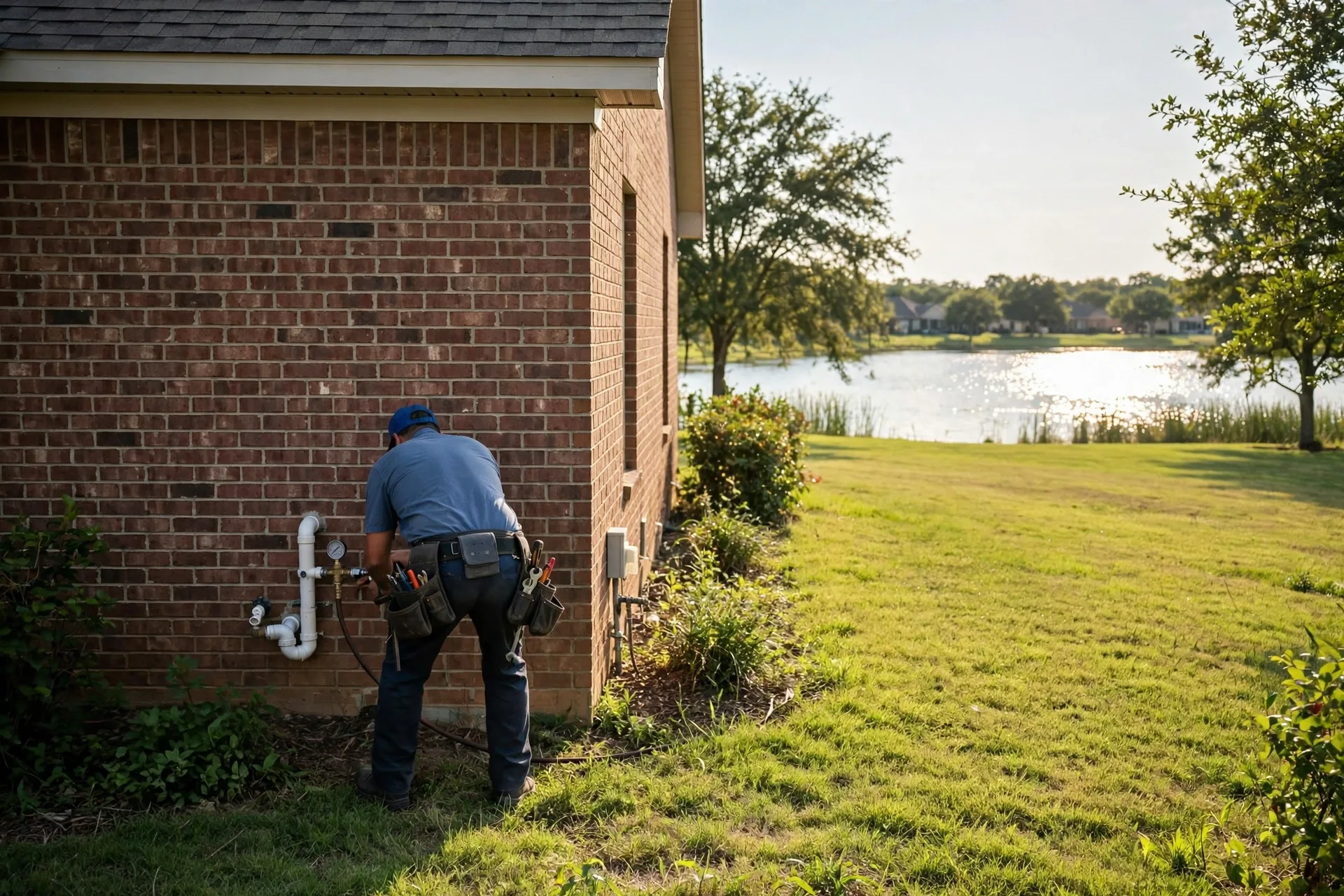
Slab Leak Repair Grand Prairie TX
Repair comes second. Until detection confirms the leak's location and the pipe's condition, choosing a repair method is guesswork, and pipe age here varies by seventy years between neighborhoods. Once the evidence is in, a licensed plumber chosen by you usually weighs the routes below. This website does not perform repairs, and the detection visit is separate from any repair quote.
Spot repair
The slab is opened at the pinpointed leak and the damaged section replaced. It fits when the pipe is otherwise sound and the failure is a single, isolated one.
Reroute
The leaking line is abandoned and a new line runs through walls or the attic. It often fits when the buried pipe has failed more than once.
Tunneling
Soil is dug from outside to reach the pipe from beneath the slab, so interior floors stay intact. It suits leaks deep under the house.
Pipe lining
A liner seals the pipe from within where shape and condition allow it. The provider confirms suitability after inspection.
Full repipe
All supply lines are replaced and the old buried lines abandoned. It is considered when leaks recur across an aging system, not for one isolated failure.
The right choice depends on pipe condition, how many failures there have been, access and flooring, so get the reasoning in writing first.
Slab Leak Detection Grand Prairie TX
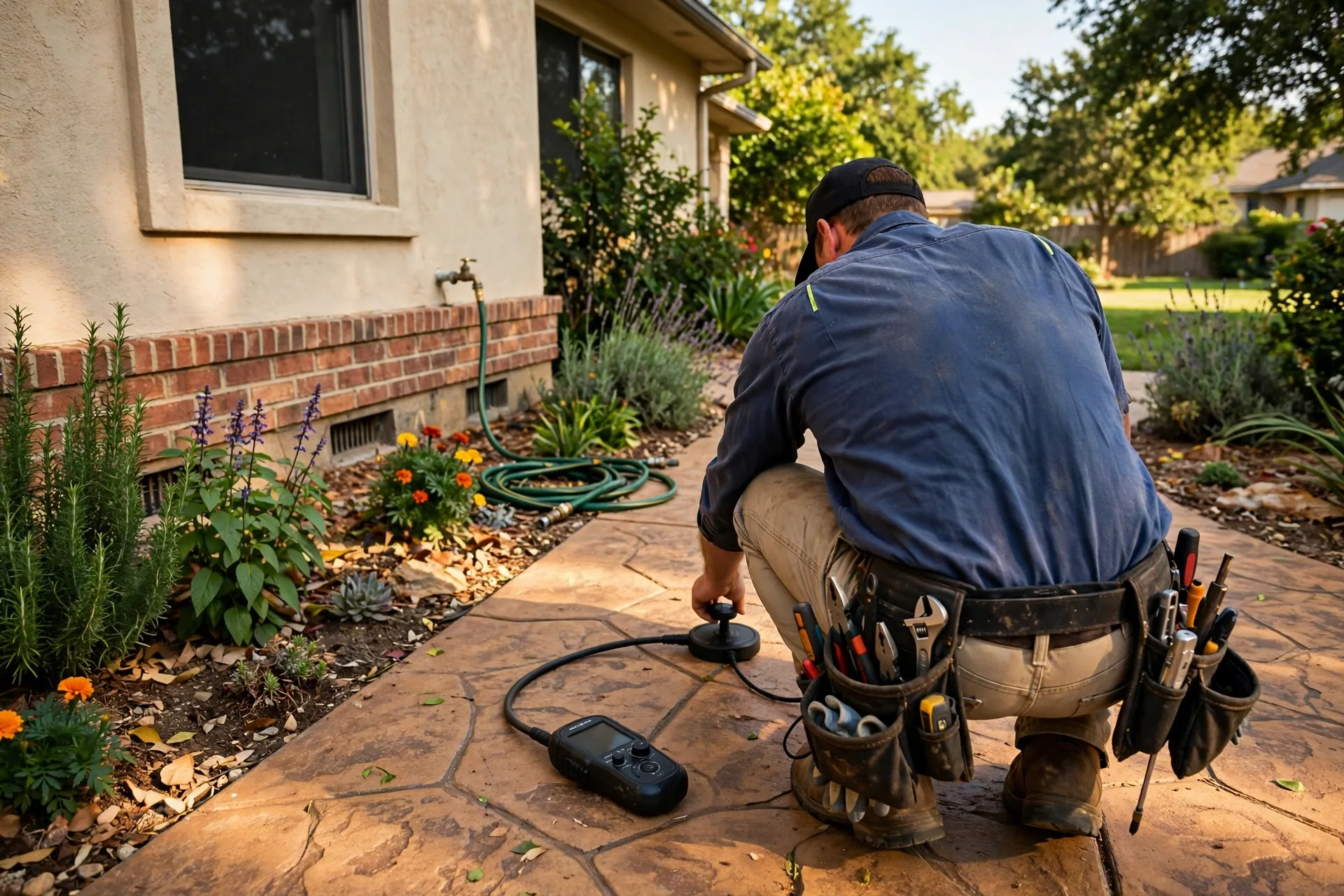
Detection starts with the pattern of signs: a warm spot on the floor, the sound of running water when nothing is on, a meter that will not sit still, or a bill that jumped without a change in use. A provider typically confirms the loss with a pressure test, then narrows the location with acoustic listening equipment that picks up the sound of pressurized water escaping under concrete. In the older cores the suspicion falls on corroded lines; in the newest southern subdivisions, on fittings stressed by settling lots. Pinpointing matters either way, because saturated clay loses strength and a long-running leak can undermine the slab it supports. For the full method, see slab leak detection.
Pool Leak Detection Grand Prairie TX
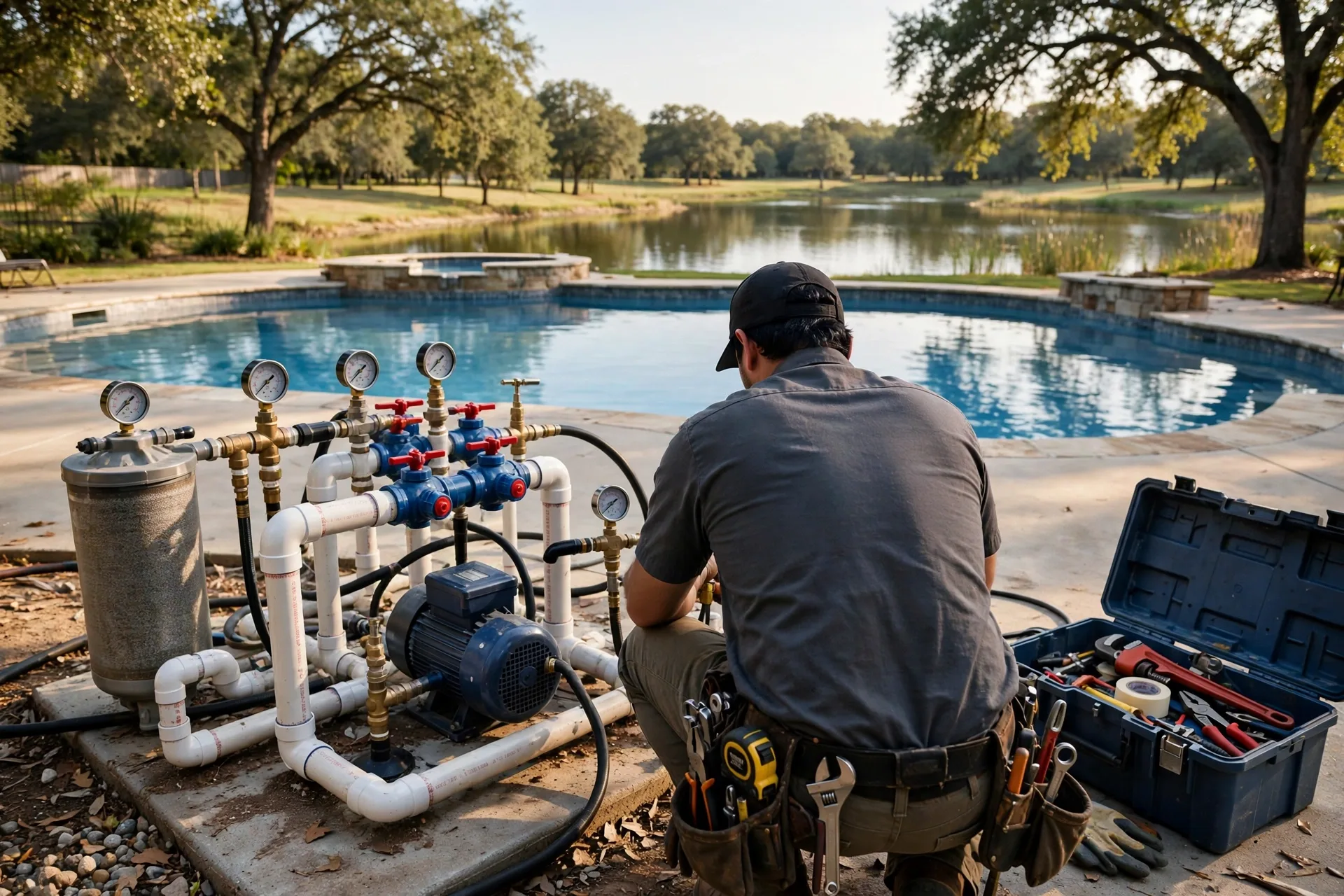
South Grand Prairie is pool country: the master-planned communities around Joe Pool Lake treat a backyard pool as standard equipment, and the established neighborhoods have decades of pools. The testing problem is the Texas summer, which can pull real water from a pool by evaporation in a week. A bucket test compares the pool's loss with a bucket set on the steps, and dye testing checks fittings, lights and seams for currents pulling dye outward. A complete test goes further and pressure-tests the whole system: shell, skimmer, main drain, return lines and equipment, because many pools leak at more than one point. See pool and spa leak detection for the full process.
Gas Leak Detection Grand Prairie TX
Once the gas utility or emergency responders have cleared a property, or when the concern is an HVAC system rather than a gas line, detection uses electronic detectors and pressure testing to find where refrigerant or gas is escaping. Refrigerant leaks usually show as weak cooling, ice on lines, or hissing near the coil. Read more on gas and HVAC refrigerant leak detection.
What Leak Detection Costs in Grand Prairie Depend On
There is no honest flat figure for detection in Grand Prairie, because the work changes with the leak and the home's era. What you are paying for is the testing time and equipment needed to turn a suspicion into a located, documented source.
| Method | What drives the cost |
|---|---|
| Meter and pressure testing | Time on site, and whether sections of the system must be isolated one by one |
| Acoustic pinpointing | Depth of the pipe, floor coverings, background noise, and how much slab must be scanned |
| Pool pressure testing | Number of lines and features tested, and access to the equipment pad and fittings |
| Older system assessment | How much of an original-era line run needs testing to judge its condition |
Home size, bathrooms, slab thickness and documentation needs matter too.
What a written quote should include
- Which tests are included, and what question each test is there to answer
- Whether locating is priced separately from opening or restoring any surface
- The written report of findings, which stays with you either way
- Who carries the license for the work, and who stands behind any repair
- Whether the job needs a permit, and whose job it is to pull it
Meter Tests and Asking Grand Prairie About a Bill Adjustment
Your first test is free and takes about ten minutes. Find the meter box, usually near the street, turn off every fixture and appliance that uses water, then watch the meter's leak indicator or dial. Movement with everything off means water is going somewhere it should not. Note the reading, and repeat the check later to confirm it. If a found and repaired leak drove a bill up, ask the City of Grand Prairie utility billing office whether a leak adjustment is available for your account: customers can usually support a request with proof that the leak was found and repaired. Policies change, so confirm the current requirements with the utility. Our guide to how a utility leak adjustment works explains the documentation side.
A City of Many Housing Eras
Grand Prairie straddles the Dallas and Tarrant County line, and almost every decade of North Texas building is represented inside it. The constant is the ground: expansive clay across most of the city, swelling when wet and shrinking in drought, with lakeside soil staying moister longer. The 1950s cores have the oldest copper and some galvanized, corroded through seventy cycles of movement. The boom-decade suburbs are at the age where pinholes cluster. The master-planned south is young, but its lots are still settling and its pools add a second pressurized system to nearly every yard.
Areas of Grand Prairie We Serve
Housing age and construction style change what a leak looks like, so local context matters:
- Downtown and Main Street corridors: 1950s and 1960s homes carrying the oldest lines in the city.
- Established neighborhoods along Carrier Parkway and Pioneer Parkway: 1970s to 1990s slab homes at the pinhole age.
- Master-planned communities in the south, including Grand Peninsula and Mira Lagos near Joe Pool Lake: newer builds, many with pools.
- Areas near Mountain Creek Lake and the northern freeway corridors: mixed residential and commercial stock of several eras.
What a Leak Detection Visit Includes
A visit usually begins with your symptoms and a meter check, then moves to the tests the evidence calls for: pressure testing, acoustic listening, moisture or thermal checks, or line isolation. The written report of what was tested, found and where goes to you, for the repair plumber you choose or your insurer. For the step-by-step version, see how leak detection works.
Frequently Asked Questions
Are pool leaks common in south Grand Prairie?
Yes, volume explains it. The lake-side master-planned communities made pools standard, so the south side holds thousands of them, each a second pressurized system of buried lines, fittings and equipment. New pools leak at stressed fittings, older ones at aging lines, and the meter of evidence is the same bucket test first.
How do I tell a pool leak from evaporation in Grand Prairie heat?
Run a bucket test. Fill a bucket, set it on the steps, mark its level and the pool's, and compare after a day or two of normal pump use. Evaporation lowers both together. If the pool drops clearly faster, water is escaping, and pressure testing the lines and fittings can locate the loss.
Which Grand Prairie homes are most at risk of slab leaks?
The oldest and the newest. Cores from the 1950s and 1960s carry lines corroded through seventy summers of clay movement, and the boom-era suburbs are arriving at the same age. At the other end, brand-new southern subdivisions leak at fittings stressed by settling lots. The meter check catches all three patterns.
How can I check whether my Grand Prairie home has a hidden leak?
Start at the meter box near the street. Everything in the house off, then watch the leak indicator or dial. Any movement means water is going somewhere it should not. Record the reading, repeat the check later to confirm, and keep both numbers ready for the provider when you call.
Does the City of Grand Prairie adjust water bills after a leak?
Ask the City of Grand Prairie utility billing office whether your account qualifies for a leak adjustment. The city sets the rules and generally asks for proof the leak was located and repaired, such as a detection report or invoice. Eligibility and paperwork change, so confirm the current process directly.
How much does leak detection cost in Grand Prairie, TX?
What your property needs decides it: the tests required, depth and access of the lines, the home's size and era, and the documentation you want. A meter and pressure check is the smaller job; scanning a slab or pressure-testing every pool line is the larger. Expect a written quote before testing begins.
What happens after the leak is found?
The findings are delivered in a written report, and the decision is yours. Most owners get licensed plumbers to quote the route the evidence supports, a spot repair, a reroute or something larger. DeSoto Leak Detection does not perform repairs, and you are free to choose any plumber you like.