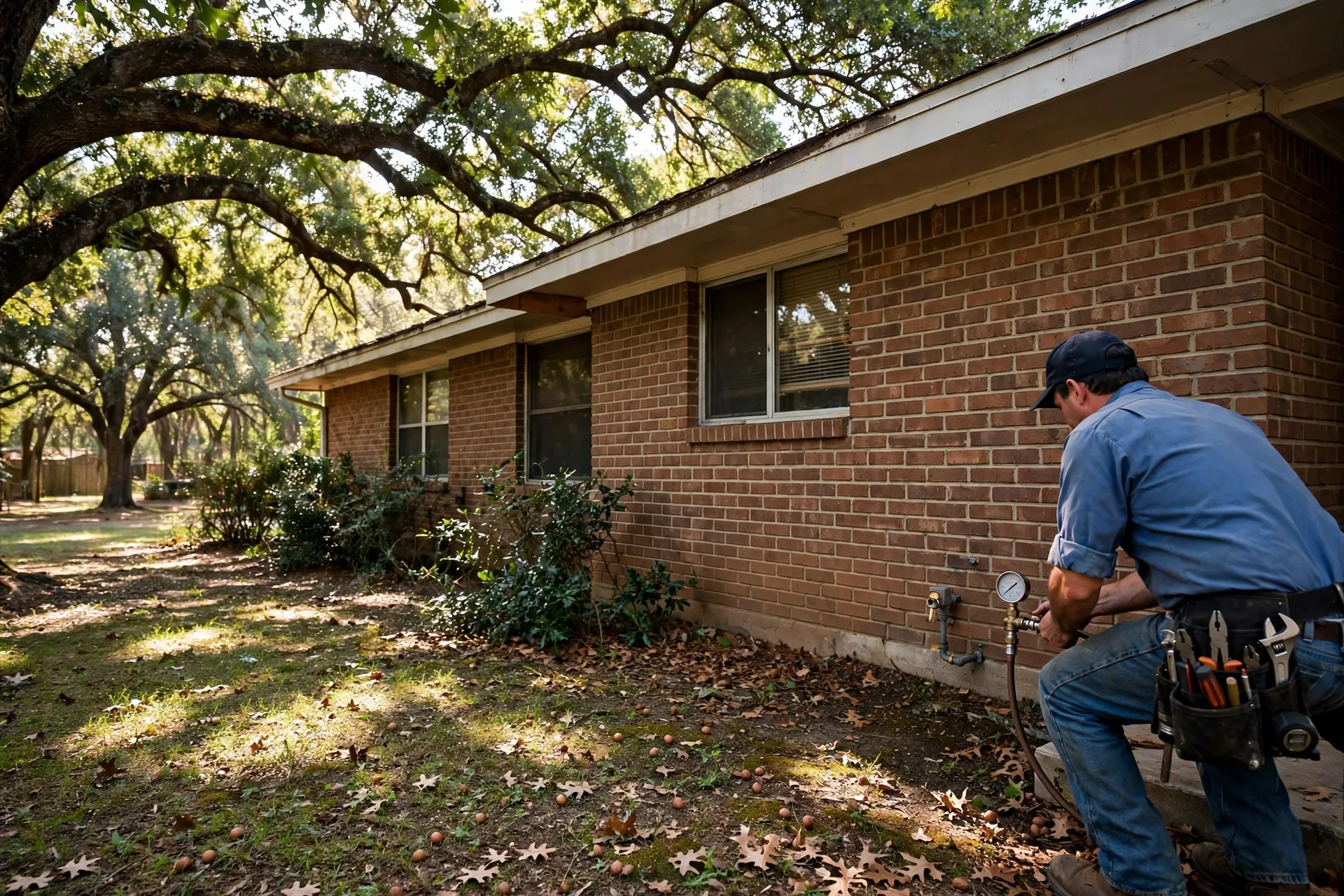
Slab Leak Repair Duncanville TX
On a 1970s slab, the repair question is rarely just about the one leak that showed up. Detection first establishes where the failure is and what shape the rest of the line is in, and only then does it make sense for a licensed plumber, chosen by you, to weigh the routes below. Repairs are not part of this service, and the detection visit stands on its own.
Reroute
The failed buried line is abandoned and a new line is run through walls or the attic. In older Duncanville homes this is often the front-runner, because it takes one aging under-slab line out of service for good instead of patching it.
Spot repair
The slab is opened at the pinpointed leak and the damaged section replaced. It fits when testing shows the rest of the pipe is sound and the failure is isolated.
Tunneling
Digging from outside the house reaches the pipe from beneath the slab, keeping interior floors intact. It suits leaks deep under the home, where opening from above would be the most disruptive route.
Pipe lining
A liner seals the pipe from the inside. Suitability depends on diameter, bends and condition, and the repair provider confirms it after inspection.
Full repipe
All supply lines are replaced and the old buried lines abandoned. It enters the conversation when leaks recur across a system of the same age, rather than after one failure.
Ask for the reasoning in writing, including what the tests showed about the rest of the line, before approving any route.
Slab Leak Detection Duncanville TX
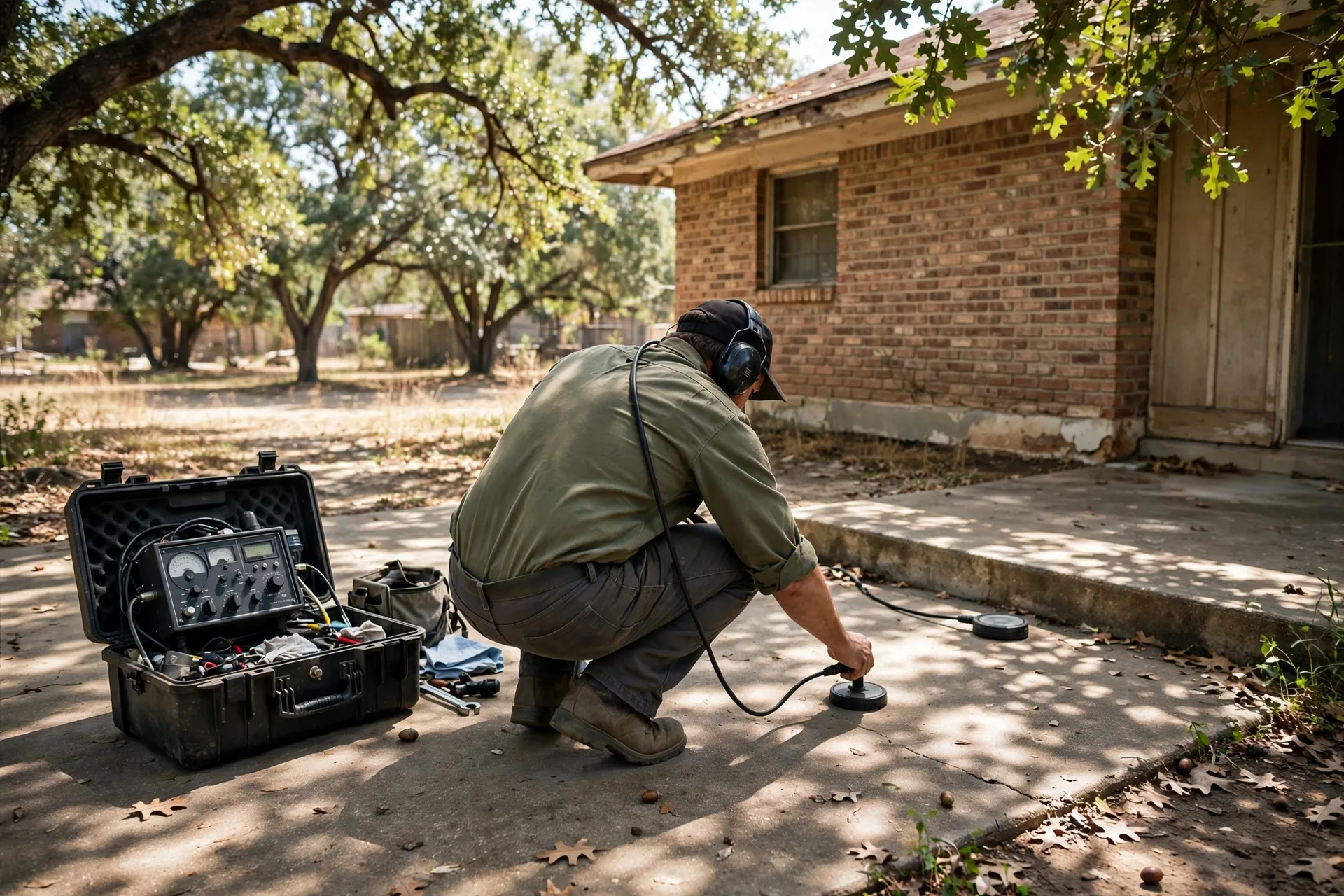
The classic Duncanville presentation is a bill that jumped, a warm strip across a floor, or the sound of water in a quiet house. A provider typically confirms the loss with a pressure test, then uses acoustic listening equipment to track the sound of escaping water under the concrete and pinpoint it before any opening is made. With post-war and 1970s copper, the question is often bigger than one pinhole: corrosion and soil movement act on the whole run, so the findings should describe the line's overall condition, not just the leak point. For the full method, see slab leak detection.
Pool Leak Detection Duncanville TX
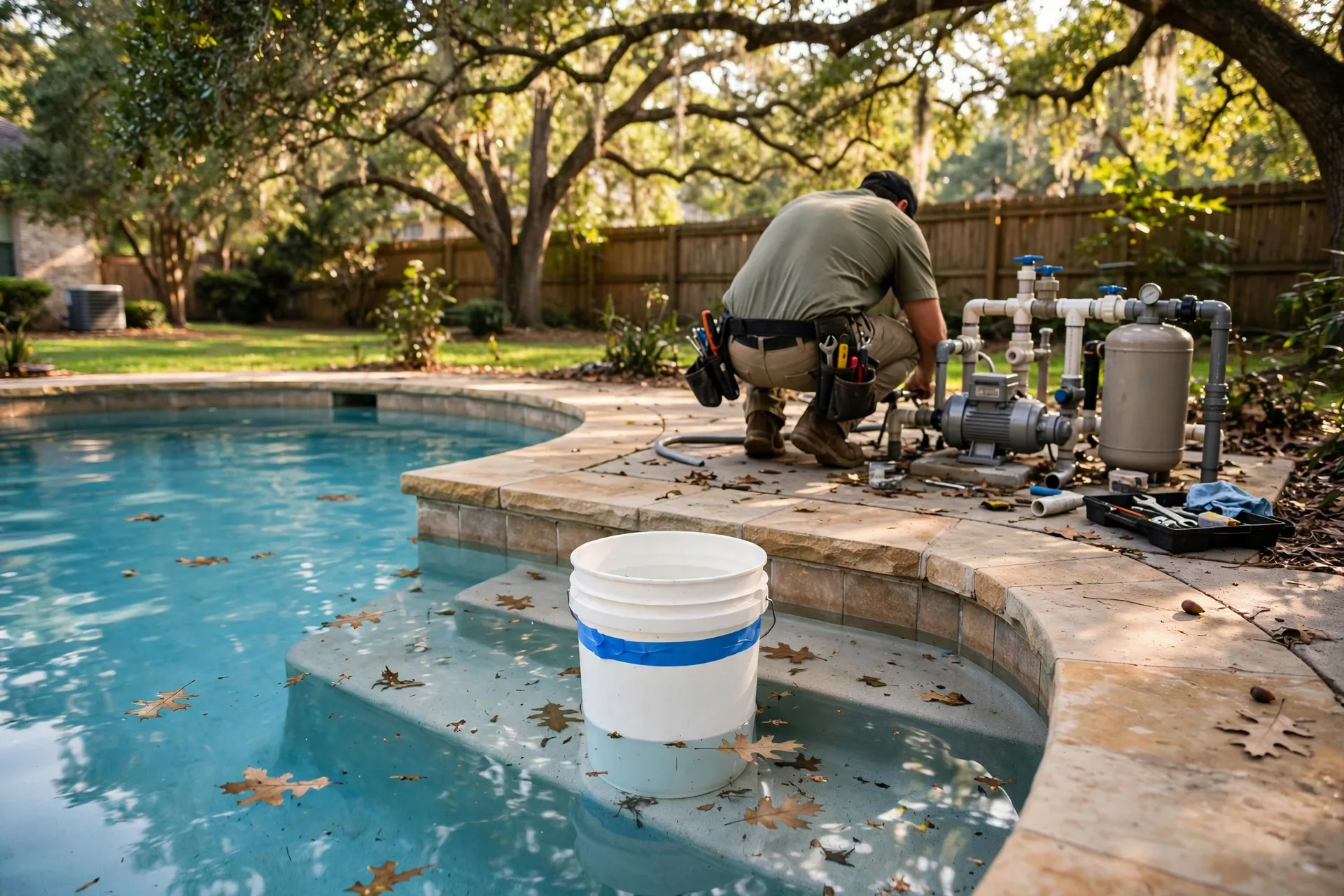
Many Duncanville pools were built with the houses in the 1970s and 1980s, which means the skimmers, return lines and equipment plumbing are the same age as the home's pipes. A bucket test first separates evaporation from real loss, dye testing checks the fittings and seams, and a complete pressure test covers the shell, skimmer, main drain, returns and equipment pad together. On an older pool, testing the whole system matters because more than one aging point can leak at once. See pool and spa leak detection for the full process.
Gas Leak Detection Duncanville TX
After the gas utility or emergency responders have cleared a property, or when the concern is a refrigerant line rather than a gas line, electronic detectors and pressure testing can pinpoint where gas or refrigerant is escaping. Refrigerant leaks tend to show up as weak cooling, ice on the lines or hissing near the coil. Read more on gas and HVAC refrigerant leak detection.
What Leak Detection Costs in Duncanville Depend On
Pricing follows the work involved, not a flat figure. What you are paying for is the testing time and the equipment needed to turn a suspicion into a located, documented source.
| Method | What drives the cost |
|---|---|
| Meter and pressure testing | Time on site, and whether the system must be isolated section by section |
| Acoustic pinpointing | Depth of the pipe, floor coverings, slab size and background noise |
| Pool pressure testing | Age and number of pool lines and features, and access at the equipment pad |
| Line condition assessment | How much of an older system needs testing to judge its overall state |
Home size, number of bathrooms and the documentation you need for a repair quote or insurance file also shape the scope.
What a written quote should include
- Which tests are included, and what question each test is there to answer
- Whether locating is priced separately from opening or restoring any surface
- The written report of findings, which stays with you either way
- Who carries the license for the work, and who stands behind any repair
- Whether the job needs a permit, and whose job it is to pull it
Meter Checks and Asking Duncanville About a Bill Adjustment
Your own first check costs nothing. Find the meter box near the street, shut off every fixture and appliance that uses water, and watch the meter's leak indicator or dial. Movement with everything off means water is escaping somewhere. Write down the reading and check again later to confirm. If a repaired leak pushed a bill up, ask the City of Duncanville utility billing office whether a leak adjustment is available for your account and what proof of repair they require. Policies are set by the city and can change, so confirm directly. Our guide to how a utility leak adjustment works covers the paperwork side.
Root Pressure and Aging Pipe in Duncanville
Two slow forces act on Duncanville plumbing. The first is time: post-war and 1970s copper and galvanized lines corrode from the inside, and decades of Dallas County clay swelling and shrinking flex the buried runs until a thinned spot gives way. The second is the tree canopy the city is known for. Large trees pull moisture from the soil around and under a home, which makes the clay shrink unevenly, and roots pressing toward moisture can bear on buried lines, especially at the joints of older drain lines. A leak here is rarely about one bad week of weather; it is usually the year the slow forces finally win.
Areas of Duncanville We Serve
Age and tree cover vary street by street, and both change what a leak looks like:
- Post-war neighborhoods near Main Street: some of the oldest supply and drain lines in the city.
- 1970s subdivisions around Camp Wisdom Road: slab homes and pools of the same era, aging together.
- Mature-tree streets off Clark Road and Wheatland Road: heavy root zones and moisture draw on clay soils.
- Homes near Armstrong Park and the city center: mixed housing ages and mixed pipe materials on the same streets.
What a Leak Detection Visit Includes
A visit usually begins with the symptoms you have noticed and a meter check, then moves to the tests the evidence calls for: pressure testing, acoustic listening, moisture or thermal checks, or isolating sections of line. You receive a written report of what was tested, what was found and where, which you can hand to the repair plumber you choose or to your insurer. For the step-by-step version, see how leak detection works.
Frequently Asked Questions
Can tree roots cause leaks in Duncanville homes?
Partly. Root systems pull moisture out of the clay, so the soil shrinks unevenly around buried lines, and roots can press on older runs, especially where drain joints already weep. Pressurized supply lines fail more from corrosion and age, but the soil movement trees create stresses everything buried, supply and drain alike.
My Duncanville house was built in the 1970s. Should I expect slab leaks?
It is worth watching for. Copper from that era has had fifty years of corrosion and soil movement, and neighborhoods tend to develop pinhole leaks in clusters as the lines age together. A meter check a few times a year is cheap insurance: movement with the house shut off is the early signal.
How do I check my water meter for a leak?
Shut everything off, including ice makers and irrigation, then open the meter box near the street and watch the leak indicator or dial. If it moves while the house uses nothing, water is leaving the system somewhere. Note the reading, repeat the test later to be sure, and then call for testing.
Does Duncanville offer a leak adjustment on water bills?
Ask the City of Duncanville utility billing office whether an adjustment exists for your account. Cities that offer one set their own eligibility rules and usually want proof of repair, like a detection report or invoice. Because policies change, confirm the current process with the utility office before you count on it.
What happens after the leak is found?
You get a written report of what was tested and found, and the repair choice stays with you. Most owners collect quotes from licensed plumbers against that report, for a spot repair, a reroute or a bigger job as the evidence suggests. The referral service itself does not do repair work.
How much does leak detection cost in Duncanville, TX?
It turns on the tests your property needs, the depth and access of the lines, the home's size, and the report detail you want. Checking one system is a smaller job than scanning a full slab and pressure-testing an older pool's lines as well. The provider should scope it and quote in writing first.
Will my insurance help with a slab leak?
Policies differ. Many treat the pipe repair and the resulting water damage as separate questions, and a sudden failure is usually viewed more kindly than slow wear. A dated detection report strengthens any claim because it fixes when the leak was identified. Ask your insurer what they need before repairs begin.