Slab Leak Repair Cedar Hill TX
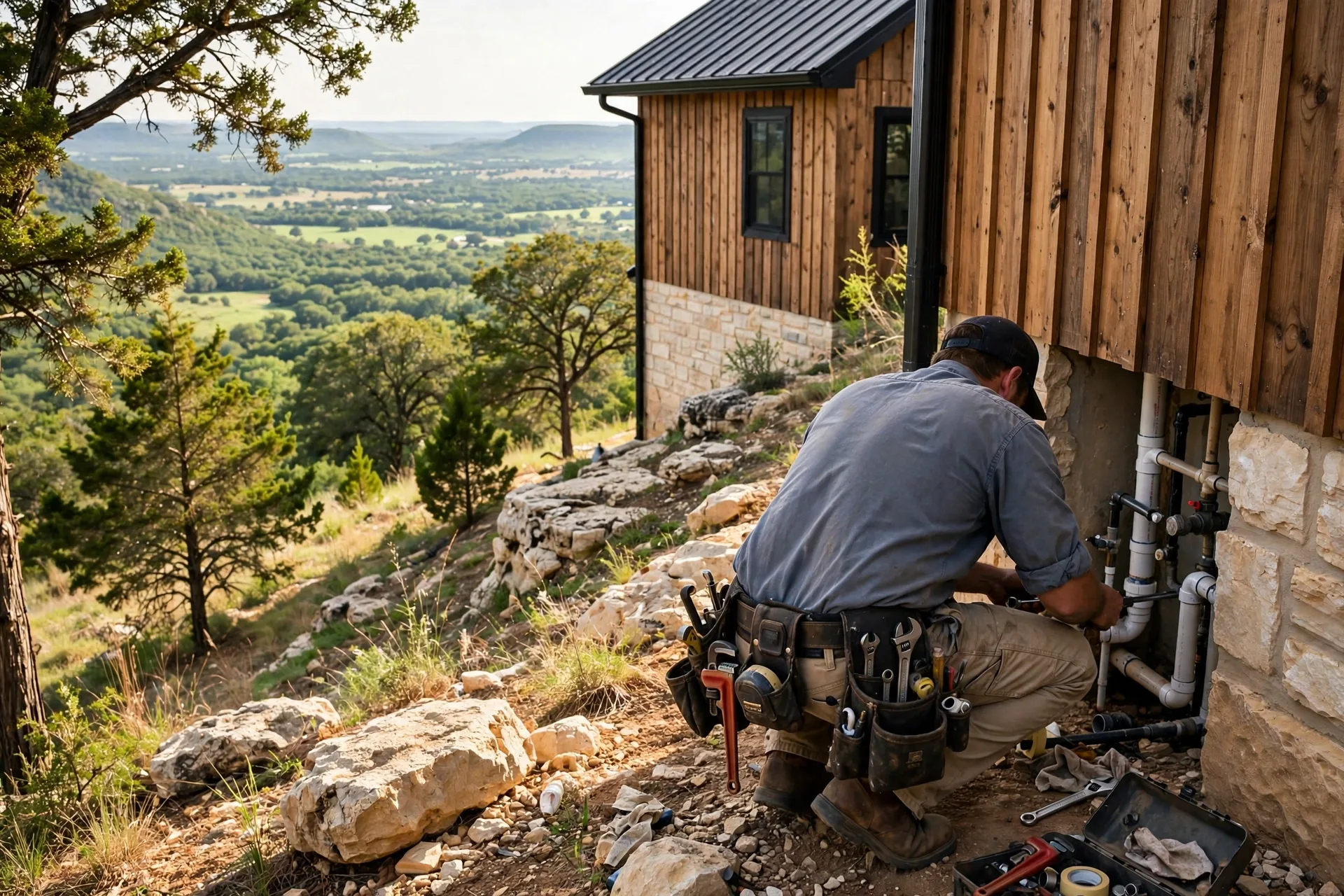
Repair follows detection, because on a hillside lot the visible symptom and the failed pipe are often not in the same place. Once testing establishes the location and the pipe's condition, a licensed plumber chosen by you weighs the routes below. This service does not perform repairs, and the detection visit is independent of any repair quote.
Spot repair
The slab is opened at the pinpointed leak and the damaged section is replaced. It fits when the rest of the pipe tests sound and the failure appears isolated.
Tunneling
Soil is dug from outside so the pipe is reached from beneath the slab and interior floors stay intact. On sloped lots it can be the practical route for leaks deep under the house, where interior access is most disruptive.
Reroute
The leaking line is abandoned and replaced with a run through walls or the attic. It often fits when the buried line has failed before, or when the slope makes under-slab access difficult.
Pipe lining
A liner seals the existing pipe from inside. Diameter, bends and condition decide whether it is viable, and the repair provider confirms after inspection.
Full repipe
Every supply line is replaced and the old buried lines are taken out of service. It is usually considered when failures recur across an aging system rather than after a single leak.
The right choice depends on pipe condition, failure history, access and the slope of the lot. Get the reasoning in writing before approving any route.
Slab Leak Detection Cedar Hill TX
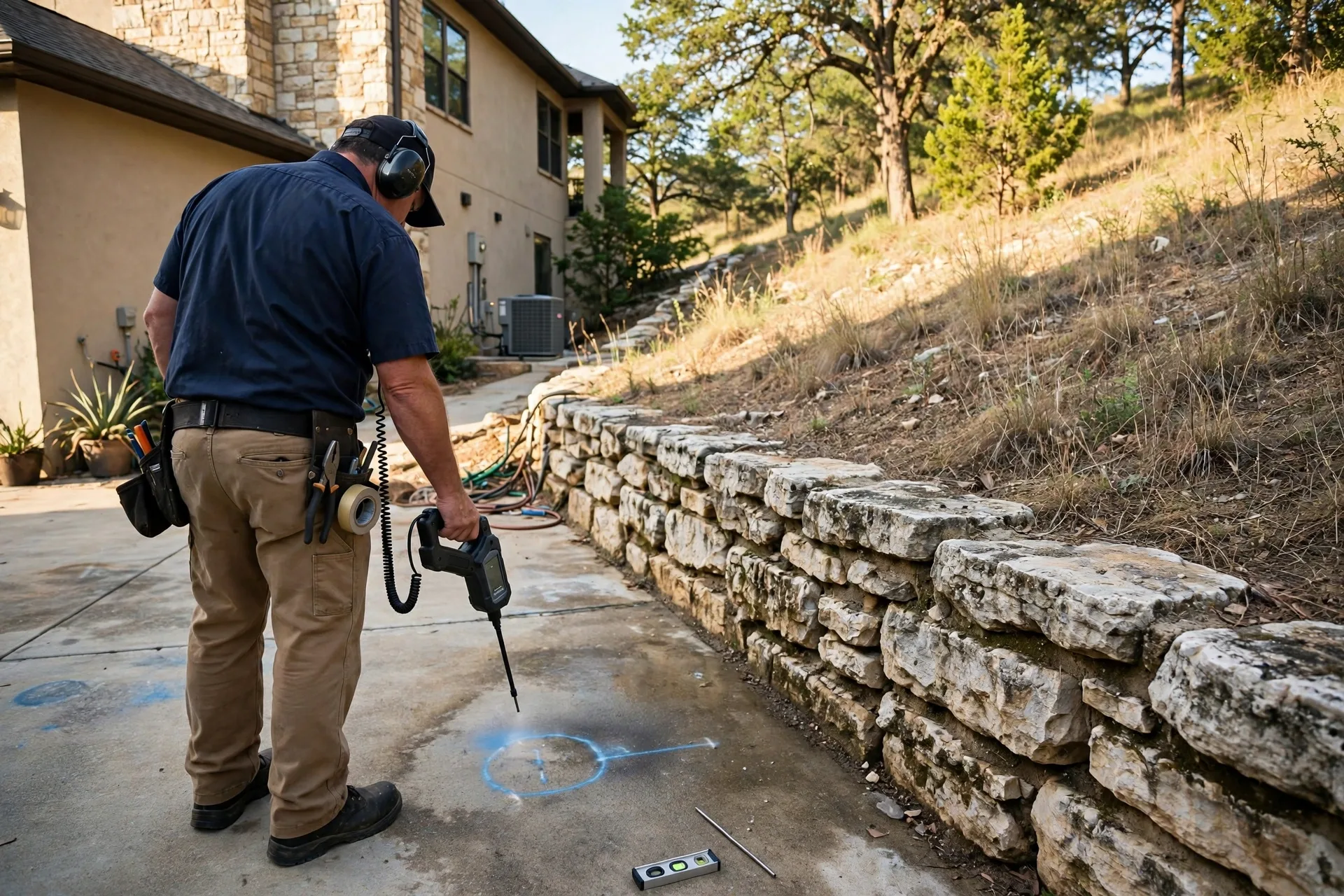
On Cedar Hill's slopes, the signs need careful reading: a damp patch at the low side of a house may have traveled downhill from a failure higher up. A provider typically starts with a pressure test to confirm the system is losing water, then uses acoustic listening equipment to trace the sound of the leak under the concrete, because gravity moves the evidence. Foundation movement adds context here: slabs on hillsides can shift as soil on the slope creeps and clay pockets dry unevenly, stressing the rigid lines beneath. For the full method, see slab leak detection.
Pool Leak Detection Cedar Hill TX
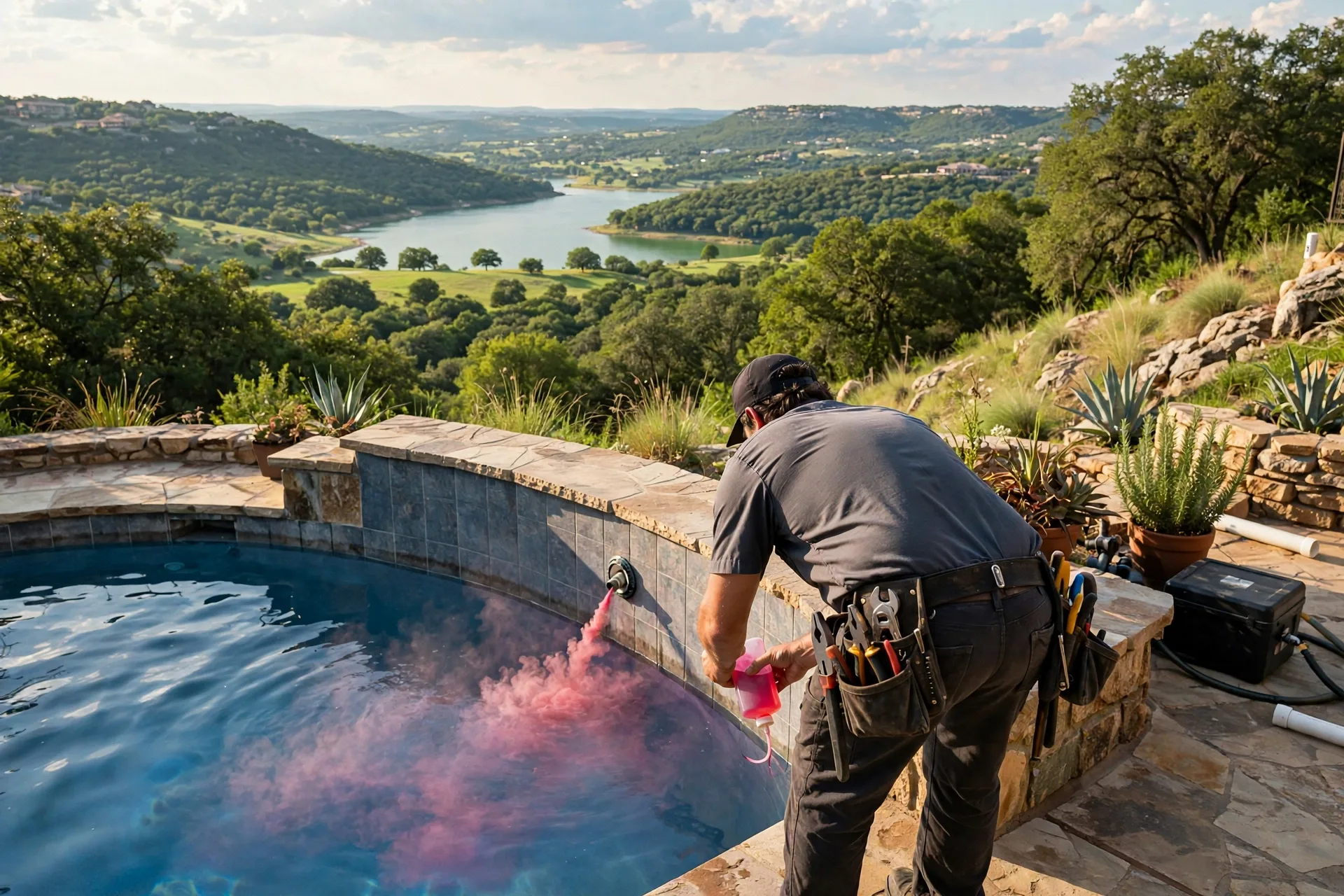
Hillside pools are common in Cedar Hill, and they hide leaks cleverly: escaping water runs downhill, so the wet ground may appear below the pool rather than beside it. A bucket test first separates evaporation from true loss. Dye testing checks the shell, lights and fittings, and a complete pressure test covers the skimmer, main drain, return lines and equipment, which on sloped lots often sits below pool level. See pool and spa leak detection for the full process.
Gas Leak Detection Cedar Hill TX
Once the gas utility or emergency responders have cleared a property, or when the concern is an HVAC refrigerant circuit instead of a gas line, electronic detectors and pressure testing can locate where gas or refrigerant is escaping. Weak cooling, ice forming on refrigerant lines or a hissing sound near the coil are the usual pointers. Read more on gas and HVAC refrigerant leak detection.
What Leak Detection Costs in Cedar Hill Depend On
There is no honest flat figure, because the work changes with the property. What you are paying for is the testing time and equipment needed to turn a suspicion into a located, documented source.
| Method | What drives the cost |
|---|---|
| Meter and pressure testing | Time on site, and whether sections of the system must be isolated one by one |
| Acoustic pinpointing | Slab depth, floor coverings, background noise and how far signs have traveled |
| Pool pressure testing | Number of lines and features, and access to equipment set below pool level |
| Main line checks | Length of the run from the street meter across a sloped or wooded lot |
Home size, number of bathrooms, terrain and the documentation you need all shape the final scope.
What a written quote should include
- A clear list of the tests planned and what each is expected to settle
- Whether the quote stops at locating, or also covers opening and making good
- Your copy of the written findings, usable with any repair plumber or insurer
- License details for the provider, and a named party responsible for repairs
- Any permit the city will want, and confirmation of who obtains it
Meter Checks and Asking Cedar Hill About a Bill Adjustment
Your first test is free and takes about ten minutes. Locate the meter box, usually near the street, turn off every fixture and appliance that uses water, and watch the leak indicator or dial. Movement with everything off means water is leaving the system somewhere. Jot the reading down and verify it with another check later. If a repaired leak drove a bill up, ask the City of Cedar Hill utility billing office whether a leak adjustment is available for your account and what proof of repair they ask for. Requirements are set by the city and can change, so confirm directly. Our guide to how a utility leak adjustment works explains the documentation side.
Slopes, Limestone and Soil Movement in Cedar Hill
Cedar Hill's escarpment ridges are limestone and shale capped in places with clay soils, and that combination behaves differently from the flat Blackland plain. Clay pockets swell when wet and shrink in drought, while the slope itself encourages slow downhill creep of soil and water. A slab poured across that terrain can be well supported on one side and stressed on the other, and the rigid pipes under it feel the difference as bending stress at joints and slab entry points. Elevation adds pressure differences across a system, and small weaknesses tend to announce themselves as leaks rather than staying quiet.
Areas of Cedar Hill We Serve
Terrain and housing age change the picture from one part of the city to another:
- Homes near Cedar Hill State Park and FM 1382: wooded lots, longer lines from the street and more ground for a leak to hide in.
- Hillside neighborhoods along the escarpment: elevation changes across a single lot, with slabs and pools set into slopes.
- Established areas near Belt Line Road: 1980s and 1990s slab homes whose copper lines are reaching the age for pinholes.
- Newer subdivisions toward Joe Pool Lake: young systems where fittings and early soil settlement are the first suspects.
What a Leak Detection Visit Includes
A visit usually starts with your account of the symptoms and a meter check, then moves to the tests that fit the evidence: pressure testing, acoustic listening, moisture or thermal checks, or isolating sections of the system. The provider writes up what was tested, what was found and where, in a report you can hand to the repair plumber you choose or to your insurer. For the step-by-step version, see how leak detection works.
Frequently Asked Questions
Does Cedar Hill's hilly terrain make slab leaks more likely?
Terrain changes the stress pattern. A slab on a slope sits over soil that creeps downhill and dries unevenly, so one side of the foundation can move more than the other. The buried pipes feel that difference as bending at joints and slab entries. Flat lots in the city follow the ordinary clay pattern.
Can a hillside pool leak show up downhill from the pool?
Yes, and it misleads many owners. Water leaving a hillside pool follows gravity, so the soggy patch or greener strip shows up below the pool, away from the failed line or fitting. That distance is exactly why hillside pools get a full pressure test of every line rather than a look at the wet spot.
How can I check whether my Cedar Hill home has a hidden leak?
Start with the meter test. Everything off, then watch the leak indicator for movement. On Cedar Hill's wooded and sloped lots also walk the downhill side of the house: damp ground that never dries can be leak water traveling. Note the meter reading, confirm it later, and report both when you call.
Does the City of Cedar Hill adjust water bills after a leak?
Ask the City of Cedar Hill utility billing office whether your account qualifies. The city sets the rules and the paperwork, and typically wants proof the leak was located and fixed, such as a report or repair invoice. Requirements change, so verify the current process with the utility office directly.
What happens after the leak is found?
The provider's findings arrive in a written report, and the next step is your decision. Owners generally get licensed plumbers to quote against the report, whether the evidence points to a spot repair, a reroute or more. We do not perform repairs, and you are free to use any plumber you choose.
How much does leak detection cost in Cedar Hill, TX?
Scope drives it: the tests required, pipe depth and access, the lot's terrain, and the documentation you need. A meter and pressure check is a smaller job than scanning a sloped slab or pressure-testing every pool line. Any provider should explain the scope and give a written quote before testing begins.
Can a hidden leak damage my foundation?
Yes. Water under a slab saturates the soil holding it up, and saturated clay shifts and loses strength. On a slope the softening is uneven, which is harder on a foundation than uniform support. The risk grows the longer the leak runs, so early location matters more than monitoring the stain.