Next useful step: slab leak detection can help when the symptom points to that system, while interior wall & ceiling leak detection covers a different diagnostic path. For local context, see leak detection in Cockrell Hill Estates. For the broader topic, return to the DeSoto leak detection homepage.
A leak can be obvious at the surface while its source is somewhere else. Water can travel through framing, flooring, soil or other building materials before it becomes visible. That is why leak detection is different from simply looking for wet spots. The goal is to reduce guesswork and identify the most likely source so the repair decision is based on better information.
What clues help identify the source of a leak?
The strongest clues are usually the pattern, location and timing of the symptom. Useful observations include:
- A water stain that returns after the area appears dry may indicate a continuing or intermittent source.
- A water meter that changes while the property is not using water can support the case for an active water leak.
- A wet area outside that does not match recent irrigation or weather may warrant an underground-line investigation.
- A warm or cool floor area, unexplained dampness, or a water sound near a slab can point toward a concealed plumbing issue.
- The symptom may change when a fixture, appliance or irrigation zone is used, which can help isolate the circuit involved.
How a professional evaluation is typically approached
A provider may combine multiple clues instead of relying on a single instrument.
Why the same test is not right for every leak
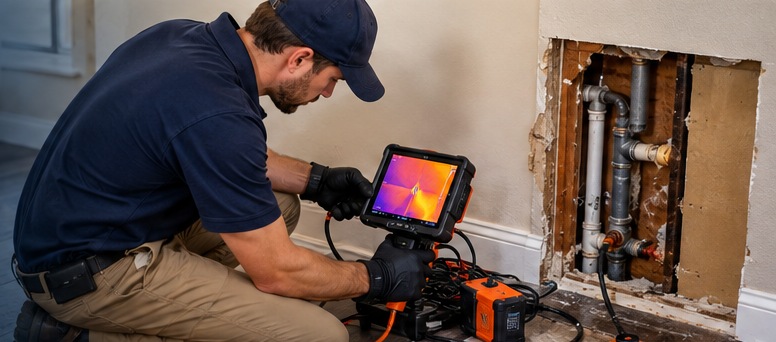
A thermal camera can reveal temperature differences associated with moisture patterns, but it does not directly identify every leak. Acoustic equipment can be useful for pressurized water leaks, while other situations may require a different approach. The most useful process matches the method to the suspected system and the physical conditions at the property.
For DeSoto properties, the practical search starts with the symptom rather than a generic checklist. A floor-level issue can lead toward slab-related questions, while wet soil or a meter anomaly can move the investigation outdoors. This symptom-to-method relationship is one reason a strong diagnostic process is more useful than a one-size-fits-all inspection.
What to have ready before you call
A few details can make the first conversation more productive:
- Exact room, floor or outdoor area where the symptom appears
- Whether the issue is active, intermittent or only appears after water use
- Any recent plumbing, remodeling, irrigation or appliance work
- Property type and the DeSoto ZIP serving the address
- Whether there is visible damage that needs immediate attention
Common questions
Does leak detection always require opening a wall or floor?
Not always. Many diagnostic methods are intended to narrow the likely source before repair access is selected. The provider decides whether any access is necessary.
Can a water meter help identify a hidden leak?
It can help indicate ongoing water use when fixtures and appliances are off. EPA WaterSense describes a two-hour no-use meter comparison as one homeowner check.
Can thermal imaging find every hidden water leak?
No. Thermal imaging is one diagnostic tool and works best when temperature differences and building conditions produce a useful signal. It may be combined with other methods.
Is leak detection the same as leak repair?
No. Detection is the effort to locate or characterize the source. Repair is a separate step that may involve opening finishes, replacing pipe or addressing another cause.
Practical, sourced and transparent
We separate what can be explained from general guidance, what depends on the property, and what must be confirmed by an independent provider or public authority.
Clear authorship
Prepared by the DeSoto Leak Detection Editorial Team with a reader-first editorial process.
Claim discipline
No fabricated reviews, licenses, awards, pricing promises, response times or field-work claims.
Primary-source links
Safety and utility topics point readers to official sources when a public authority is the right reference.
Sources and further reading
Sources & further reading
Need help with a suspected leak?
Call and explain the symptom, property type and ZIP. This referral service can help connect you with an appropriate local professional.